
Mars Maltesers 175 g
Mars, Mars Incorporated
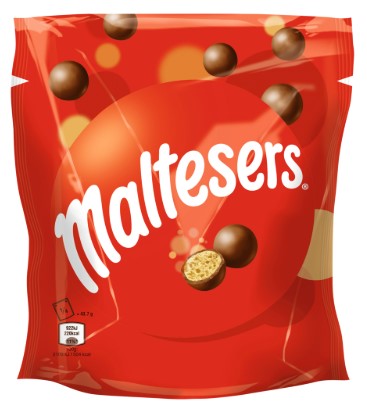
Mars Maltesers comes in a 175 g pack. It is sold under the Mars and Mars Incorporated brands. On Mamori it sits under Confectionery › Chocolates › Chocolate Bites. Its label lists 22 ingredients.
Mars Maltesers at a glance
Mars Maltesers fits Vegetarian, Pescatarian and Vegan + Dairy diets. It also carries the Crustaceans Free, Egg Free, Fish Free, Peanut Free, Tree Nut Free, Celery Free, Mustard Free, Sesame Free, Sulfite Free, Lupin Free, Mollusks Free, Artificial Flavourings Free, Beef Free, Citrus Fruit Free, Gelatin Free, Latex Free, Oats Free, Pork Free, Poultry Free, Rice Free and Rye Free badges. Nutrition-wise, it's High Calorie, High Carbs, High Saturated Fat, High in Sugars, Medium in Fiber, Medium in Protein and Medium Salt/Sodium. Worth knowing: it's marked Non-Vegan, Non-Low FODMAP, Non-Vegan + Eggs, Contains Gluten, Contains Soy, Contains Dairy, Contains Additives, Contains Barley, Contains Corn, Contains Emulsifier, Contains Fructose, Lactose, Contains Added Sugars, Contains Seed and Contains Wheat.
Diet and allergens
Suitable for vegetarian and pescatarian diets.
Not suitable for a vegan diet.
Contains gluten, soy and milk.
Free from crustaceans, eggs, fish, peanuts, tree nuts, celery, mustard, sesame, sulphites, lupin and molluscs.
Based on Mamori's check of the ingredients on the label. Recipes change, so always read the pack if you have an allergy or intolerance.
Size: 175 g
Last updated 2 November 2026
Ingredients
Sugar, Skimmed milk powder, Cocoa butter, Glucose syrup, Barley malt extract, Cocoa mass, Palm fat, Whey permeate, Anhydrous milk fat, Palm kernel fat, Emulsifiers, Soy lecithin, E492, Wheat flour, Raising agents, E341, E500, E501, Wheat gluten, Sweet whey powder, Salt, Coating agents: Pectins
Additives
- E492: Sorbitan Tristearate: Some concerns
Sorbitan tristearate (E492) is an emulsifier and stabiliser. It is made by combining sorbitol-derived sorbitan with stearic acid, a fatty acid that can come from vegetable or animal fats.
It helps keep fat and water mixed, improves texture, and can support stable foams or coatings. It may be used in products such as confectionery, desserts, fine bakery wares, emulsified sauces, and fat-based foods.
It is allowed in food, but some concerns have been raised. EFSA found that people who eat a lot of foods containing sorbitan esters, including E492, could go over the safe daily amount.
- E341: Calcium Phosphates (I) Monocalcium Phosphate (Ii) Dicalcium Phosphate (Iii) Tricalcium Phosphate: Some concerns
Calcium phosphates (E341) are mineral salts of calcium and phosphate. The group includes monocalcium phosphate, dicalcium phosphate and tricalcium phosphate, and they are forms of the same nutrients found naturally in bones and teeth.
They are used to control acidity, help powders flow, support raising agents, and sometimes add calcium. They can be found in foods such as flour mixes, baked goods, powdered drinks, processed cheese, and some supplements or fortified foods.
They are allowed in food, but there are some concerns. EFSA found that people who eat a lot of foods containing phosphate additives can exceed the safe daily amount, and people with kidney disease are often advised to limit phosphate intake.
- E500: Sodium Carbonates: (I) Sodium Carbonate (Ii) Sodium Bicarbonate (Sodium Hydrogen Carbonate) (Iii) Sodium Sesquicarbonate (Acidity Regulator): Generally safe
Sodium carbonates (E500) are a group of sodium salts, including sodium carbonate, sodium bicarbonate and sodium sesquicarbonate. The best-known is sodium bicarbonate, also called bicarbonate of soda.
They are used to control acidity, help baked goods rise by releasing carbon dioxide, and reduce clumping in some powdered foods. They can be found in baking powders, biscuits, cakes, self-raising flour, cocoa mixes and other dry food mixes.
E500 is generally considered safe. It is allowed in food in the EU after safety assessment, and the sources checked do not raise concerns at normal food amounts.
- E501: Potassium Carbonates: (I) Potassium Carbonate (Ii) Potassium Bicarbonate (Potassium Hydrogen Carbonate): Generally safe
Potassium carbonate and potassium bicarbonate are potassium salts, listed as E501. They are alkaline mineral compounds used to adjust acidity in foods.
They help control pH, act as raising agents, and can help prevent powders from clumping. They may be used in baked goods, cocoa and chocolate products, powdered mixes, and other foods where acidity control or anti-caking is needed.
E501 is generally considered safe at normal food-use levels. It is allowed in food in the EU after safety assessment, and the sources checked raise no concern at typical amounts.
- E440: Pectins (I) Pectin (Ii) Amidated Pectin: Generally safe
Pectins (E440) are natural gelling fibres found in the cell walls of fruits and vegetables, especially apples and citrus peel. E440 includes ordinary pectin and amidated pectin, a modified form that gels more easily in some foods.
They are used as thickeners, stabilisers and gelling agents. You may find them in jams, jellies, fruit spreads, desserts, confectionery, yoghurts and some drinks or sauces where a thicker texture is needed.
Pectins are generally considered safe. They are authorised for use in food in the EU after safety assessment, and the sources checked raise no concern at normal food amounts.
Questions and answers
Is Mars Maltesers vegan?
No. It contains milk, so it is not suitable for a vegan diet.
Is Mars Maltesers vegetarian?
Yes. It is suitable for a vegetarian diet.
Is Mars Maltesers suitable for a pescatarian diet?
Yes. It is suitable for a pescatarian diet.
Is Mars Maltesers suitable for a Low FODMAP diet?
No. It is not suitable for a Low FODMAP diet.
Is Mars Maltesers suitable for a Vegan + Dairy diet?
Yes. It is suitable for a Vegan + Dairy diet.
Is Mars Maltesers suitable for a Vegan + Eggs diet?
No. It is not suitable for a Vegan + Eggs diet.
Is Mars Maltesers gluten-free?
No. It contains gluten.
Does Mars Maltesers contain milk?
Yes. It contains milk.
Is Mars Maltesers nut-free?
Yes. Its ingredients include no peanuts or tree nuts, and its label gives no nut warning.
Does Mars Maltesers contain eggs?
No. Its ingredients include no eggs, and its label gives no egg warning.
Which allergens does Mars Maltesers contain?
It contains gluten, soy and milk.
More in Chocolate Bites
- Kinder ChocoBalls Milk & Caramel Biscuit
- Kinder choco bons
- Toblerone truffles
- Mister Choc Big Hit Milk Chocolate Peanuts
- Cadbury Easter egg hunt
- Mister Choc Big Hit milk chocolate
- Baileys Chocolate Truffles
- Balconi MixMax
- Dolciando crunchy Belgian chocolate
- Royal Family Mochi Salted Caramel
- Nestlé Quality Street
- Nestlé Little Rolo