
Loriana Pizza Joke 375 g
On the pack: Loriana Piada Pizza 375 g
Loriana
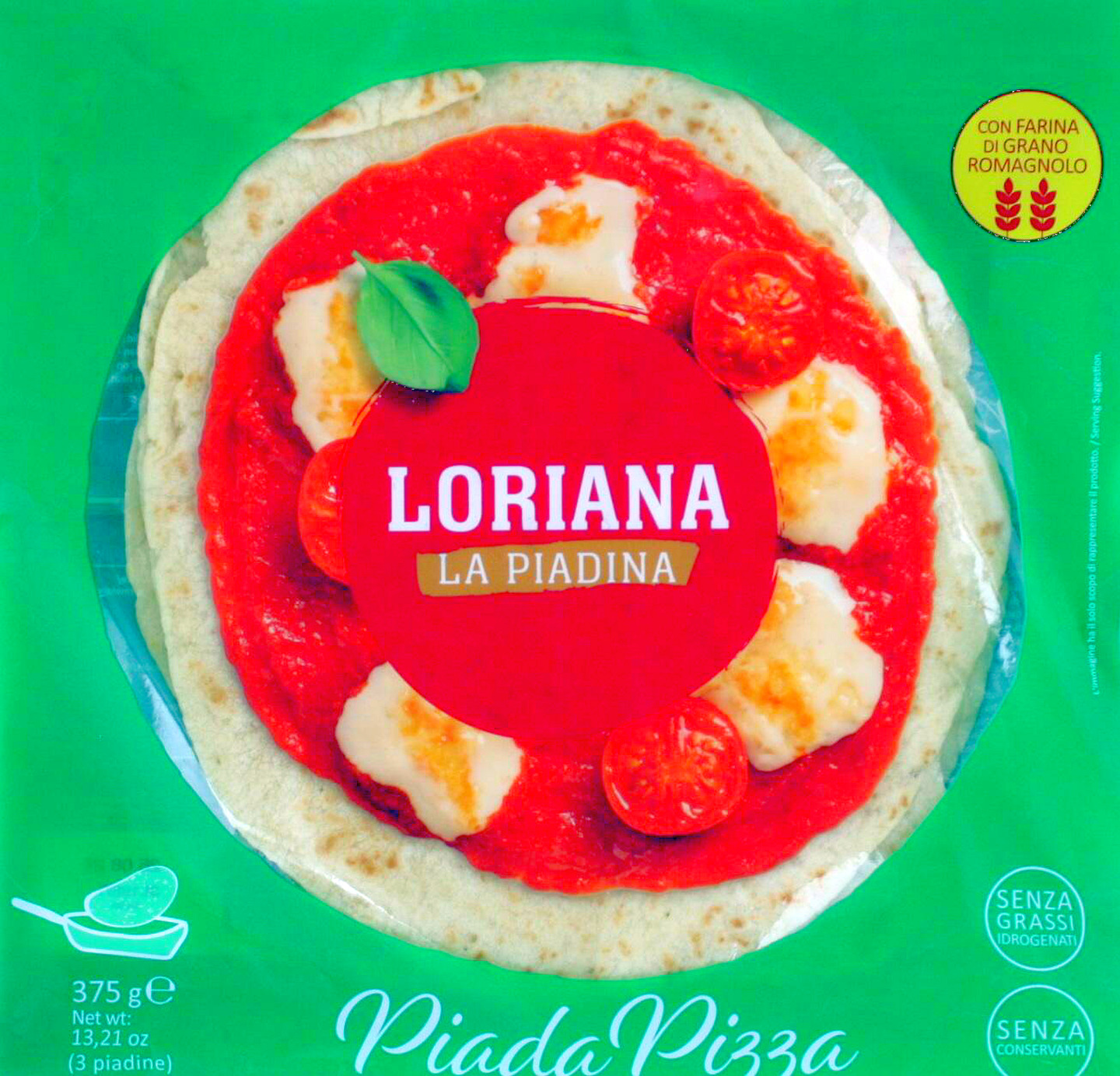
Loriana Pizza Joke comes in a 375 g pack. It is sold under the Loriana brand. On Mamori it sits under Chilled › Fresh Pasta › Fresh Puffs. Its label lists 12 ingredients.
Loriana Pizza Joke at a glance
Loriana Pizza Joke fits Vegan, Vegetarian, Pescatarian, Vegan + Dairy and Vegan + Eggs diets. It also carries the Crustaceans Free, Egg Free, Fish Free, Peanut Free, Dairy Free, Tree Nut Free, Celery Free, Sesame Free, Sulfite Free, Lupin Free, Mollusks Free, Barley Free, Beef Free, Citrus Fruit Free, Corn Free, Emulsifier Free, Fructose Free, Gelatin Free, Lactose Free, Latex Free, No Added Sugars, Oats Free, Pork Free, Poultry Free, Rice Free and Rye Free badges. Nutrition-wise, it's Low Saturated Fat, Low Sugars, High Carbs, Medium in Fiber, Medium in Protein, Medium in Calories and Medium Salt/Sodium. Worth knowing: it's marked Non-Low FODMAP, Contains Gluten, Contains Additives, Contains Artificial Flavourings, Contains Seed and Contains Wheat.
Diet and allergens
Suitable for vegan, vegetarian and pescatarian diets.
Contains gluten.
Free from crustaceans, eggs, fish, peanuts, milk, tree nuts, celery, sesame, sulphites, lupin and molluscs.
May contain: soy, mustard.
Based on Mamori's check of the ingredients on the label. Recipes change, so always read the pack if you have an allergy or intolerance.
Size: 375 g
Last updated 26 October 2026
Ingredients
Wheat Flour, Water, Sunflower Seed Oil, durum wheat semolina, Extra Virgin Olive Oil, leavening agents, monopotassium tartrate, disodium diphosphate, sodium bicarbonate, brewer's yeast, salt, flavorings
Additives & flavourings
Additives
- E336: Potassium Tartrates (I) Monopotassium Tartrate (Cream Of Tartar) (Ii) Dipotassium Tartrate: Generally safe
Potassium tartrates (E336) are salts of tartaric acid, a natural acid found in grapes and other fruits. The main forms are monopotassium tartrate, often called cream of tartar, and dipotassium tartrate.
They are used as acidity regulators and can also help stabilise foods. Cream of tartar is commonly used in baking powders and in whisked egg whites, while potassium tartrates may also be used where control of acidity is needed.
E336 is allowed in food in the EU after safety assessment. It is generally considered safe at normal food levels, and the sources checked raise no concern for typical use.
- E450: Diphosphates (I) Disodium Diphosphate (Ii) Trisodium Diphosphate (Iii) Tetrasodium Diphosphate (Iv) Dipotassium Diphosphate (V) Tetrapotassium Diphosphate (Vi) Dicalcium Diphosphate (Vii) Calcium Dihydrogen Diphosphate: Some concerns
Diphosphates (E450) are phosphate salts, including sodium, potassium and calcium diphosphates. They are mineral-based food additives used in several forms, such as disodium diphosphate and dicalcium diphosphate.
They help control acidity, improve texture, hold moisture, stabilise mixtures and support raising in baked goods. They may be found in processed meats, bakery products, cheese products, desserts, sauces and some powdered mixes.
They are allowed in food, but some concerns have been raised. EFSA found that people who eat a lot of foods containing phosphates can go over the safe daily amount, so high intake from many processed foods is the main issue.
- E500: Sodium Carbonates: (I) Sodium Carbonate (Ii) Sodium Bicarbonate (Sodium Hydrogen Carbonate) (Iii) Sodium Sesquicarbonate (Acidity Regulator): Generally safe
Sodium carbonates (E500) are a group of sodium salts, including sodium carbonate, sodium bicarbonate and sodium sesquicarbonate. The best-known is sodium bicarbonate, also called bicarbonate of soda.
They are used to control acidity, help baked goods rise by releasing carbon dioxide, and reduce clumping in some powdered foods. They can be found in baking powders, biscuits, cakes, self-raising flour, cocoa mixes and other dry food mixes.
E500 is generally considered safe. It is allowed in food in the EU after safety assessment, and the sources checked do not raise concerns at normal food amounts.
Flavourings
- flavorings: Flavouring (Regulation (EC) No 1334/2008 on flavourings, Article 16).
Questions and answers
Is Loriana Pizza Joke vegan?
Yes. It is suitable for a vegan diet.
Is Loriana Pizza Joke vegetarian?
Yes. It is suitable for a vegetarian diet.
Is Loriana Pizza Joke suitable for a pescatarian diet?
Yes. It is suitable for a pescatarian diet.
Is Loriana Pizza Joke suitable for a Low FODMAP diet?
No. It is not suitable for a Low FODMAP diet.
Is Loriana Pizza Joke suitable for a Vegan + Dairy diet?
Yes. It is suitable for a Vegan + Dairy diet.
Is Loriana Pizza Joke suitable for a Vegan + Eggs diet?
Yes. It is suitable for a Vegan + Eggs diet.
Is Loriana Pizza Joke gluten-free?
No. It contains gluten.
Does Loriana Pizza Joke contain milk?
No. Its ingredients include no milk, and its label gives no milk warning.
Is Loriana Pizza Joke nut-free?
Yes. Its ingredients include no peanuts or tree nuts, and its label gives no nut warning.
Does Loriana Pizza Joke contain eggs?
No. Its ingredients include no eggs, and its label gives no egg warning.
Which allergens does Loriana Pizza Joke contain?
It contains gluten. Its label also says it may contain: soy, mustard.