
Linea Sugar-Free Fiordilatte with Amarena 250 g
On the pack: Linea Senza Zucchero Fiordilatte All Amarena 250 g
Linea
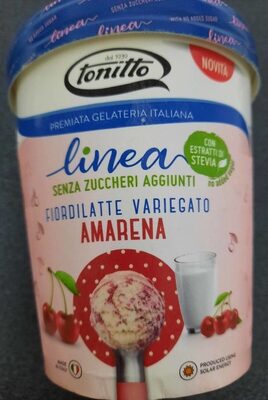
Linea Sugar-Free Fiordilatte with Amarena comes in a 250 g pack. It is sold under the Linea brand. On Mamori it sits under Additives › Flavor Enhancers › Yoghurt Flavour. Its label lists 18 ingredients.
Linea Sugar-Free Fiordilatte with Amarena at a glance
Linea Sugar-Free Fiordilatte with Amarena fits Vegetarian and Pescatarian diets. It also carries the Gluten Free, Crustaceans Free, Fish Free, Celery Free, Mustard Free, Sesame Free, Sulfite Free, Lupin Free, Mollusks Free, Barley Free, Beef Free, Citrus Fruit Free, Corn Free, Gelatin Free, Latex Free, No Added Sugars, Oats Free, Pork Free, Poultry Free, Rice Free, Rye Free and Wheat Free badges. Nutrition-wise, it's High Fiber, Low Salt/Sodium, Low Sugars, Low Protein, High Saturated Fat, Medium in Calories and Medium Carbs. Worth knowing: it's marked Non-Vegan, Non-Low FODMAP, Non-Vegan + Dairy, Non-Vegan + Eggs, Contains Dairy, Contains Additives, Contains Artificial Flavourings, Contains Emulsifier, Contains Fructose, Lactose and Contains Seed.
Diet and allergens
Suitable for vegetarian and pescatarian diets.
Not suitable for a vegan diet.
Contains milk.
Free from gluten, crustaceans, fish, celery, mustard, sesame, sulphites, lupin and molluscs.
May contain: tree nuts, soy, EGG.
Based on Mamori's check of the ingredients on the label. Recipes change, so always read the pack if you have an allergy or intolerance.
Size: 250 g
Last updated 2 November 2026
Ingredients
Reconstituted skimmed MILK, sweetener, maltitol, Isomalt, steviol glycosides: stevia, Coconut Oil, vegetable fiber: inulin, reconstituted sour cherry juice, emulsifiers, Mono- and diglycerides of fatty acids, propylene glycol esters of fatty acids, stabilizers, Locust Bean Gum, Guar Gum, Pectin, Acidity Regulator: Citric Acid, Flavors, colorant: anthocyanin
Additives & flavourings
Additives
- E965: Maltitol (I) Maltitol (Ii) Maltitol Syrup (Sweetener) (Stabiliser): Generally safe
Maltitols (E965) are sugar alcohol sweeteners. They include maltitol and maltitol syrup, made from starch sugars such as maltose, usually from maize or wheat starch.
They are used to sweeten foods with less sugar, add bulk, help keep moisture, and sometimes give a smooth texture or glossy coating. They are common in sugar-free sweets, chewing gum, chocolate, desserts, baked goods and low-sugar products.
Maltitols are generally considered safe at normal amounts and are authorised for use in the EU after safety assessment. Like other sugar alcohols, larger amounts can cause bloating or a laxative effect in some people.
- E953: Isomalt, Isomaltitol: Generally safe
Isomalt (E953), also called isomaltitol, is a sugar alcohol made from sugar beet sugar. It is a low-calorie sweetener and can also be used as a glazing agent.
It is used to add sweetness, bulk, or a smooth coating, especially in sugar-free sweets, chewing gum, chocolates, baked goods, and dessert products. It is often chosen because it is less sweet than sugar and does not brown easily.
Isomalt is generally considered safe. It is allowed in food in the EU after safety assessment, and the sources checked raise no concern at normal amounts.
- E960: Steviol Glycosides: Some concerns
Steviol glycosides, E960, are intensely sweet substances extracted from the leaves of the stevia plant. They are used as low-calorie sweeteners and are much sweeter than sugar, so only small amounts are needed.
They are found in foods and drinks such as soft drinks, flavoured dairy products, desserts, confectionery, tabletop sweeteners and some reduced-sugar products. Their main role is to add sweetness without adding much energy.
E960 is allowed in food, but some concerns have been raised. EFSA found that people who consume a lot of products sweetened with steviol glycosides could exceed the safe daily amount.
- E471: Mono- And Diglycerides Of Fatty Acids (Glyceryl Monostearate, Glyceryl Distearate): Generally safe
Mono- and diglycerides of fatty acids, or E471, are emulsifiers made from glycerol and fatty acids. The fatty acids can come from vegetable oils or animal fats, so the source is not always clear unless stated by the producer.
They help oil and water mix, improve texture, and keep foods stable. They are often used in baked goods, spreads, desserts, ice cream, sauces, and processed foods where a smooth or consistent texture is needed.
E471 is generally considered safe. It is allowed in food in the EU after safety assessment, and the sources we check raise no concern at normal amounts.
- E477: Propane-1,2-Diol Esters Of Fatty Acids, Propylene Glycol Esters Of Fatty Acids: Generally safe
Propane-1,2-diol esters of fatty acids (E477), also called propylene glycol esters of fatty acids, are emulsifiers made by combining propylene glycol with fatty acids. The fatty acids can come from vegetable or animal sources.
E477 helps oil and water mix, improves texture, and can help stabilise foods. It may be used in products such as cakes, whipped toppings, desserts, confectionery, and fat-based spreads, where a smooth or stable texture is needed.
E477 is generally considered safe at normal food-use levels. It is authorised for use in the EU after safety assessment, and the sources checked raise no concern at typical amounts.
- E410: Locust Bean Gum (Carob Gum) (Thickener) (Stabiliser) (Gelling Agent): Generally safe
Locust bean gum, or E410, is a natural gum made from the seeds of the carob tree. It is a type of soluble fibre and is also known as carob gum.
It is used to thicken, stabilise, and help give foods a smooth or gel-like texture. You may find it in products such as ice cream, dairy desserts, sauces, dressings, bakery fillings, and some processed foods.
It is generally considered safe at normal food-use amounts. It is allowed in the EU after EFSA safety assessment, and the sources checked raise no specific concern for typical dietary exposure.
- E412: Guar Gum (Thickener): Generally safe
Guar gum (E412) is a thickening fibre made from the seeds of the guar plant, a type of legume. It is a natural polysaccharide, meaning a long-chain carbohydrate that absorbs water easily.
It is used to thicken, stabilise or improve texture in foods such as sauces, dressings, dairy products, ice cream, gluten-free baked goods and processed foods. It can also help stop ingredients from separating.
Guar gum is generally considered safe at normal food amounts. It is allowed in food in the EU after safety assessment, and the sources checked raise no concern for typical use.
- E440: Pectins (I) Pectin (Ii) Amidated Pectin: Generally safe
Pectins (E440) are natural gelling fibres found in the cell walls of fruits and vegetables, especially apples and citrus peel. E440 includes ordinary pectin and amidated pectin, a modified form that gels more easily in some foods.
They are used as thickeners, stabilisers and gelling agents. You may find them in jams, jellies, fruit spreads, desserts, confectionery, yoghurts and some drinks or sauces where a thicker texture is needed.
Pectins are generally considered safe. They are authorised for use in food in the EU after safety assessment, and the sources checked raise no concern at normal food amounts.
- E330: Citric Acid: Generally safe
Citric acid (E330) is a natural organic acid found in citrus fruits and many other plants. The citric acid used in food is usually made by fermentation of sugars using micro-organisms.
It is used as an acidity regulator and antioxidant. It helps give a sharp, sour taste, control pH, and slow colour or flavour changes. It is common in soft drinks, sweets, jams, sauces, canned foods, and many processed foods.
Citric acid is generally considered safe at normal food levels. It is allowed in food in the EU after safety assessment, and the sources checked raise no concern for typical dietary amounts.
- E163: Anthocyanins: Generally safe
Anthocyanins (E163) are natural red, purple and blue colourants. They are pigments found in plants, especially in fruits and vegetables such as berries, grapes, red cabbage and black carrots.
In food, E163 is used to add or restore red to purple shades. It can be found in products such as sweets, drinks, desserts, jams and some processed foods where a plant-based colour is needed.
Anthocyanins are generally considered safe at normal food-use levels. They are allowed in food in the EU after EFSA safety assessment, and the sources checked raise no concern at typical amounts.
Flavourings
- Flavors: Flavouring (Regulation (EC) No 1334/2008 on flavourings, Article 16).
Questions and answers
Is Linea Sugar-Free Fiordilatte with Amarena vegan?
No. It contains milk, so it is not suitable for a vegan diet.
Is Linea Sugar-Free Fiordilatte with Amarena vegetarian?
Yes. It is suitable for a vegetarian diet.
Is Linea Sugar-Free Fiordilatte with Amarena suitable for a pescatarian diet?
Yes. It is suitable for a pescatarian diet.
Is Linea Sugar-Free Fiordilatte with Amarena suitable for a Low FODMAP diet?
No. It is not suitable for a Low FODMAP diet.
Is Linea Sugar-Free Fiordilatte with Amarena suitable for a Vegan + Dairy diet?
No. It is not suitable for a Vegan + Dairy diet.
Is Linea Sugar-Free Fiordilatte with Amarena suitable for a Vegan + Eggs diet?
No. It is not suitable for a Vegan + Eggs diet.
Is Linea Sugar-Free Fiordilatte with Amarena gluten-free?
Yes. Its ingredients include no gluten, and its label gives no gluten warning.
Does Linea Sugar-Free Fiordilatte with Amarena contain milk?
Yes. It contains milk.
Which allergens does Linea Sugar-Free Fiordilatte with Amarena contain?
It contains milk. Its label also says it may contain: tree nuts, soy, EGG.
More in Yoghurt Flavour
- Milbona Creamy
- Milbona Skyr Strawberry
- Muller Mul Rice Strawberry
- Muller Mul So Nocciola Twin Pack
- Zott Set Yogurt Maccaplat
- Yomino Squeeze Banana S11
- Carrefour Vanilla Yoghurt
- Sterzing Vipiteno Blueberry Yogurt
- Sterilgarda Yoghurts Strawberry Low-Fat Yogurt
- Sterilgarda Yoghurts Low-Fat Pineapple Yogurt
- Sterilgarda Yoghurts Strawberry Yogurt
- Sterilgarda Yoghurts Yogurt Mixed Berry