
Lindt Praline From Confis 250 g
On the pack: Lindt Praline Du Confiseur 250 g
Lindt
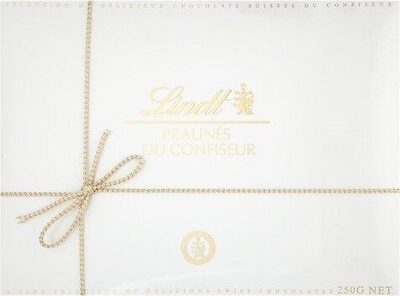
Lindt Praline From Confis comes in a 250 g pack. It is sold under the Lindt brand. On Mamori it sits under Confectionery › Chocolates › Praline. Its label lists 53 ingredients.
Lindt Praline From Confis at a glance
Lindt Praline From Confis fits Vegetarian and Pescatarian diets. It also carries the Crustaceans Free, Fish Free, Peanut Free, Celery Free, Mustard Free, Sesame Free, Lupin Free, Mollusks Free, Beef Free, Gelatin Free, Latex Free, Oats Free, Pork Free, Poultry Free and Rye Free badges. Nutrition-wise, it's Low Salt/Sodium, High Calorie, High Carbs, High Saturated Fat, High in Sugars, Medium in Fiber and Medium in Protein. Worth knowing: it's marked Non-Vegan, Non-Low FODMAP, Non-Vegan + Dairy, Non-Vegan + Eggs, Contains Gluten, Contains Egg, Contains Soy, Contains Dairy, Contains Tree Nut, Contains Additives, Contains Artificial Flavourings, Contains Barley, Contains Citrus Fruit, Contains Corn, Contains Emulsifier, Contains Fructose, Lactose, Contains Added Sugars, Contains Rice, Contains Seed and Contains Wheat.
Diet and allergens
Suitable for vegetarian and pescatarian diets.
Not suitable for a vegan diet.
Contains gluten, eggs, soy, milk and tree nuts.
Free from crustaceans, fish, peanuts, celery, mustard, sesame, lupin and molluscs.
Based on Mamori's check of the ingredients on the label. Recipes change, so always read the pack if you have an allergy or intolerance.
Size: 250 g
Last updated 2 November 2026
Ingredients
sugar, cocoa mass, cocoa butter, whole milk powder, almonds, vegetable fat, palm oil, coconut oil, shea oil, palm kernel oil, sunflower oil, anhydrous milk fat, lactose, skim milk powder, hazelnuts, glucose syrup, sweetened condensed milk, humectant, sorbitol syrup, invertase, invert sugar syrup, coffee, emulsifier: soya lecithin, butter, cream, invert sugar, egg white, wheat flour, fat reduced cocoa powder, orange peel, pistachios, cocoa kernels, barley malt extract, flavourings, orange juice concentrate, ethanol, modified starch, colours, curcumin, annatto, paprika extract, titanium dioxide, copper complexes of chlorophylls and chlorophyllins, maltodextrin, potato starch, spinach extract, wheat starch, stabilizer: sodium triphosphate, colouring concentrates, pumpkin, apple, raising agent: sodium bicarbonate, acid: citric acid
Additives & flavourings
Additives
- E420: Sorbitol (I) Sorbitol (Ii) Sorbitol Syrup (Emulsifier) (Sweetener): Generally safe
Sorbitols (E420) are sugar alcohols used as food additives. They include sorbitol and sorbitol syrup, made from glucose, often from starch sources. Despite the name, they are not alcoholic drinks.
They are used to add sweetness, keep foods moist, improve texture, and help stabilise mixtures. They are often found in sugar-free sweets and chewing gum, desserts, baked goods, sauces, and some processed foods.
Sorbitols are generally considered safe at normal food amounts. They are authorised for use in the EU after safety assessment, and the sources checked raise no concern for typical intake.
- E1103: Invertase: Generally safe
Invertase (E1103) is an enzyme, usually produced from yeast or other microorganisms. It breaks down sucrose, the sugar in table sugar, into glucose and fructose.
In food, it is used to soften or liquefy sugar centres and help control texture and sweetness. It is most often associated with confectionery, such as filled chocolates, fondant sweets and soft-centred products.
Invertase is generally considered safe at normal food-use amounts. It is allowed in food in the EU after safety assessment, and the sources checked raise no specific concern for typical use.
- E1510: Ethanol: Generally safe
Ethanol (E1510) is ordinary alcohol, the same type of alcohol found in alcoholic drinks. It is a small organic solvent made by fermentation of sugars or by industrial processes.
In food production, it can be used to dissolve or extract flavours, colours, aromas or other food ingredients, and may be present in trace amounts after processing. It is used for its solvent role rather than as a sweetener, preservative or colouring.
It is generally considered safe in the uses covered here. Under EU law, ethanol is not treated as a food additive; it is authorised separately as an extraction solvent for making foods and food ingredients.
- E1401: Modified Starch ((Acid-Treated Starch) Stabiliser): Generally safe
Acid-treated starch, often labelled E1401 in some systems, is a modified starch. It is made by treating ordinary starch from plants such as maize, potato or wheat with acid to change how it behaves in food.
It helps thicken, stabilise or improve texture, especially where a smooth, consistent result is needed. Modified starches are used in foods such as sauces, soups, desserts, fillings and processed meals.
It is generally considered safe. Under EU law, acid-treated starch is not classed as a food additive; it is treated as a food ingredient instead.
- E100: Curcumin (From Turmeric): Generally safe
Curcumin (E100) is a yellow-orange food colour made from turmeric, the spice from the root of the Curcuma longa plant. It is the main natural pigment in turmeric and may also be produced as a purified extract for food use.
It is used to give foods a yellow to orange colour. It can be found in products such as sauces, soups, snacks, confectionery, dairy products and processed foods where a warm yellow colour is wanted.
Curcumin is generally considered safe at normal food amounts. It is allowed for use in the EU after EFSA safety assessment, and the sources checked do not raise concerns for typical dietary exposure.
- E160B: Annatto, Bixin, Norbixin (E160b): Generally safe
Annatto, bixin and norbixin are orange-red colourings known as E160b. They are natural pigments extracted from the seeds of the annatto tree. Bixin is oil-soluble, while norbixin is water-soluble.
They are used to give foods a yellow, orange or red colour. They are commonly used in foods such as cheese, butter-like spreads, snacks, desserts and processed foods where a stable colour is needed.
E160b is generally considered safe at normal amounts. It is allowed in food in the EU after EFSA safety assessment, and the sources checked raise no concern for typical dietary exposure.
- E160c: Paprika Extract, Capsanthin, Capsorubin: Generally safe
Paprika extract, capsanthin and capsorubin (E160c) is a natural red-orange food colouring made from paprika peppers. The main colouring substances are carotenoids, especially capsanthin and capsorubin.
It is used to give or strengthen orange, red or reddish-brown colour in foods. It may be found in items such as cheeses, sauces, soups, snacks, meat products and seasonings.
It is generally considered safe at normal food-use amounts. It is authorised for use in the EU after EFSA safety assessment, and the sources checked raise no concern at typical levels of consumption.
- E171: Titanium Dioxide: Not allowed in the EU (Commission Regulation (EU) 2022/63)
Titanium dioxide, E171, is a white mineral-based colourant made from titanium and oxygen. It is a very fine, insoluble powder used to make foods look brighter or more opaque.
It has been used in products such as sweets, chewing gum, icing, bakery decorations and some sauces or processed foods, mainly to give a clean white colour.
Its safety status differs by region. In the EU, E171 is no longer authorised for use in food because regulators could not rule out concerns about possible effects on genetic material.
- E141: Copper Complexes Of Chlorophylls And Chlorophyllins (I) Copper Complexes Of Chlorophylls (Ii) Copper Complexes Of Chlorophyllins: Generally safe
Copper complexes of chlorophylls and chlorophyllins (E141) are green food colourings made by adding copper to chlorophyll, the natural green pigment in plants, or to chlorophyllin, a water-soluble form of it.
They are used to give or restore green colour in foods. They may be found in products such as confectionery, desserts, sauces, soups, processed vegetables and flavoured drinks, depending on local rules and recipes.
E141 is generally considered safe at normal amounts used in food. It is authorised in the EU after safety assessment, and the sources checked raise no specific concern for typical dietary exposure.
- E451: Triphosphates (I) Sodium Triphosphate (Pentasodium Triphosphate) (Ii) Pentapotassium Triphosphate: Some concerns
Triphosphates (E451) are phosphate salts, mainly sodium triphosphate and potassium triphosphate. They are made from phosphoric acid compounds and are part of the wider group of phosphate additives.
They help foods hold water, keep texture stable, and improve emulsions. They are used in some processed meats, seafood, processed cheese, sauces, and other foods where moisture retention, stability, or thickening is needed.
E451 is allowed in food, but some concerns have been raised. EFSA found that people who eat a lot of foods containing phosphate additives can go over the safe daily amount, and people with kidney disease are often advised to limit phosphate intake.
- E500: Sodium Carbonates: (I) Sodium Carbonate (Ii) Sodium Bicarbonate (Sodium Hydrogen Carbonate) (Iii) Sodium Sesquicarbonate (Acidity Regulator): Generally safe
Sodium carbonates (E500) are a group of sodium salts, including sodium carbonate, sodium bicarbonate and sodium sesquicarbonate. The best-known is sodium bicarbonate, also called bicarbonate of soda.
They are used to control acidity, help baked goods rise by releasing carbon dioxide, and reduce clumping in some powdered foods. They can be found in baking powders, biscuits, cakes, self-raising flour, cocoa mixes and other dry food mixes.
E500 is generally considered safe. It is allowed in food in the EU after safety assessment, and the sources checked do not raise concerns at normal food amounts.
- E330: Citric Acid: Generally safe
Citric acid (E330) is a natural organic acid found in citrus fruits and many other plants. The citric acid used in food is usually made by fermentation of sugars using micro-organisms.
It is used as an acidity regulator and antioxidant. It helps give a sharp, sour taste, control pH, and slow colour or flavour changes. It is common in soft drinks, sweets, jams, sauces, canned foods, and many processed foods.
Citric acid is generally considered safe at normal food levels. It is allowed in food in the EU after safety assessment, and the sources checked raise no concern for typical dietary amounts.
Flavourings
- flavourings: Flavouring (Regulation (EC) No 1334/2008 on flavourings, Article 16).
Questions and answers
Is Lindt Praline From Confis vegan?
No. It contains eggs and milk, so it is not suitable for a vegan diet.
Is Lindt Praline From Confis vegetarian?
Yes. It is suitable for a vegetarian diet.
Is Lindt Praline From Confis suitable for a pescatarian diet?
Yes. It is suitable for a pescatarian diet.
Is Lindt Praline From Confis suitable for a Low FODMAP diet?
No. It is not suitable for a Low FODMAP diet.
Is Lindt Praline From Confis suitable for a Vegan + Dairy diet?
No. It is not suitable for a Vegan + Dairy diet.
Is Lindt Praline From Confis suitable for a Vegan + Eggs diet?
No. It is not suitable for a Vegan + Eggs diet.
Is Lindt Praline From Confis gluten-free?
No. It contains gluten.
Does Lindt Praline From Confis contain milk?
Yes. It contains milk.
Is Lindt Praline From Confis nut-free?
No. It contains tree nuts.
Does Lindt Praline From Confis contain eggs?
Yes. It contains eggs.
Which allergens does Lindt Praline From Confis contain?
It contains gluten, eggs, soy, milk and tree nuts.
More in Praline
- Finest milk chocolate pralines with a soft milk filling
- Lini's Bites Pralines Raspberry Almond Caramel
- Damhert Praline Bars Lactose-Free Gluten-Free
- Cadbury Cad Treedec Parcel
- Cocoa Brazil Nuts In Raw Chocolate 70%
- Trefin Sea Shells
- Terre d'italia Sighs of Sardinia
- Terre D`italia Gianduiotti
- Sperlari Zanzibar Gianduia Chocolate
- Socado Gianduiotti
- Socado Hazelnut Pleasures
- Sapori The Sweet Hazelnut Cream