
Ko Co Vegan Kimchi Dumplings 420 g
On the pack: Ko Co Vegan Kimchi Mandu
Ko & Co
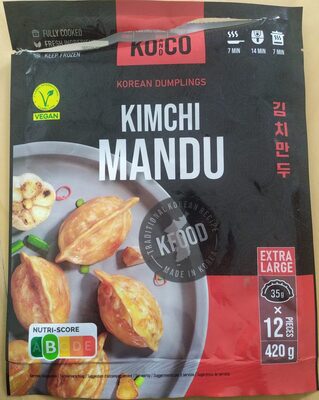
Ko Co Vegan Kimchi Dumplings comes in a 420 g pack. It is sold under the Ko & Co brand. On Mamori it sits under Produce › Vegetables › Kimchi Cabbage. Its label lists 70 ingredients.
Ko Co Vegan Kimchi Dumplings at a glance
Ko Co Vegan Kimchi Dumplings carries the Crustaceans Free, Egg Free, Fish Free, Peanut Free, Tree Nut Free, Celery Free, Mustard Free, Mollusks Free, Beef Free, Citrus Fruit Free, Gelatin Free, Latex Free, Oats Free, Pork Free and Rice Free badges. Nutrition-wise, it's High Fiber, Low Saturated Fat, Low Sugars, Medium in Protein, Medium in Calories, Medium Carbs and Medium Salt/Sodium. Worth knowing: it's marked Non-Vegan, Non-Vegetarian, Non-Pescatarian, Non-Low FODMAP, Non-Vegan + Dairy, Non-Vegan + Eggs, Contains Gluten, Contains Soy, Contains Sesame, Contains Additives, Contains Artificial Flavourings, Contains Barley, Contains Corn, Contains Emulsifier, Contains Fructose, Lactose, Contains Added Sugars, Contains Poultry, Contains Rye, Contains Seed and Contains Wheat.
Diet and allergens
Not suitable for vegan, vegetarian or pescatarian diets.
Contains gluten, soy and sesame.
Free from crustaceans, eggs, fish, peanuts, tree nuts, celery, mustard and molluscs.
Based on Mamori's check of the ingredients on the label. Recipes change, so always read the pack if you have an allergy or intolerance.
Size: 420 g
Last updated 26 October 2026
Ingredients
vegetables, salted Chinese cabbage, Chinese cabbage, salt, dried radish, spring onion, onion, chives, garlic, red chili pepper powder, red chili pepper, wheat flour, glass noodle: sweet potato starch, soybean oil, modified tapioca starch, tofu, soybeans, firming agent: E516, water, textured wheat protein, wheat protein, wheat flour, stabiliser: iii, E500: i, antioxidant: E306, textured soy protein, soy sauce, soybeans, wheat, salt, ethanol, water, soybean protein, sesame oil, vinegar, water, malt extract, ethanol, salt, thickener: E461, wheat fiber, modified starch, E1412, E1400, sugar, wheat gluten, seasoning preparation, yeast extract, salt, emulsifier: E1400, flavour enhancer: E635, corn starch, flavour enhancer: E635, wheat protein, wheat gluten, acidifier: E270, thickener: E464, potato starch, emulsifier, soybean oil, E322, ethanol, E475, sugar syrup, black pepper powder, stabiliser, E1400, E452: i, E452: ii, water
Additives
- E516: Calcium Sulfate: Generally safe
Calcium sulphate (E516) is a mineral salt made from calcium and sulphate. It occurs naturally as gypsum and can also be produced for food use. It is used as an acidity regulator, firming agent and anti-caking agent.
In food, it can help control acidity, improve texture, or stop powders from clumping. It may be found in products such as tofu, baked goods, flour-based mixes, desserts and some processed foods.
Calcium sulphate is generally considered safe at normal food-use levels. It is authorised for use in the EU after safety assessment, and the sources checked raise no concern for typical amounts in food.
- E500: Sodium Carbonates: (I) Sodium Carbonate (Ii) Sodium Bicarbonate (Sodium Hydrogen Carbonate) (Iii) Sodium Sesquicarbonate (Acidity Regulator): Generally safe
Sodium carbonates (E500) are a group of sodium salts, including sodium carbonate, sodium bicarbonate and sodium sesquicarbonate. The best-known is sodium bicarbonate, also called bicarbonate of soda.
They are used to control acidity, help baked goods rise by releasing carbon dioxide, and reduce clumping in some powdered foods. They can be found in baking powders, biscuits, cakes, self-raising flour, cocoa mixes and other dry food mixes.
E500 is generally considered safe. It is allowed in food in the EU after safety assessment, and the sources checked do not raise concerns at normal food amounts.
- E306: Tocopherol-Rich Extract: Generally safe
Tocopherol-rich extract (E306) is a natural form of vitamin E, made up of mixed tocopherols usually obtained from vegetable oils such as soya, sunflower or rapeseed oil.
It is used as an antioxidant, helping to slow rancidity and protect fats and oils from oxidation. It can be found in foods containing oils or fats, such as margarines, dressings, baked goods, snacks and some processed foods.
E306 is allowed in food in the EU after safety assessment. It is generally considered safe at normal amounts used in food, and the sources checked raise no specific concern.
- E1510: Ethanol: Generally safe
Ethanol (E1510) is ordinary alcohol, the same type of alcohol found in alcoholic drinks. It is a small organic solvent made by fermentation of sugars or by industrial processes.
In food production, it can be used to dissolve or extract flavours, colours, aromas or other food ingredients, and may be present in trace amounts after processing. It is used for its solvent role rather than as a sweetener, preservative or colouring.
It is generally considered safe in the uses covered here. Under EU law, ethanol is not treated as a food additive; it is authorised separately as an extraction solvent for making foods and food ingredients.
- E461: Methyl Cellulose: Generally safe
Methyl cellulose (E461) is a modified form of cellulose, the natural fibre found in plant cell walls. It is made by chemically changing cellulose so it can dissolve or swell in water and form gels.
In food, it works as a thickener, stabiliser and emulsifier. It helps improve texture, hold water, and keep ingredients evenly mixed. It may be used in sauces, bakery fillings, processed foods, and products where a thicker or more stable texture is needed.
It is generally considered safe at normal amounts. Methyl cellulose is allowed in food in the EU after EFSA safety assessment, and the sources checked raise no concern for typical food use.
- E1412: Distarch Phosphate Esterified With Sodium Trimetasphosphate; Esterified With Phosphorus Oxychloride (Stabiliser): Generally safe
Distarch phosphate (E1412) is a modified starch. It is made by treating starch, usually from maize, potato, tapioca or wheat, with phosphate compounds so the starch molecules are linked together and become more stable.
It is used as a thickener, stabiliser and texture improver. It helps foods stay smooth and resist breaking down during heating, freezing or mixing. It may be found in sauces, soups, desserts, fillings, dairy-style products and processed foods needing a stable texture.
E1412 is generally considered safe. It is allowed in food in the EU after safety assessment, and the sources checked raise no concern at normal amounts.
- E1400: Dextrin (Dextrins, Roasted Starch White And Yellow) (Stabiliser): Generally safe
Dextrin, also called E1400 or roasted starch, is a starch-based carbohydrate made by heating or treating starch from sources such as maize, potato or wheat. It may be white or yellow, depending on how it is produced.
In food, dextrins can help thicken, bind, stabilise or improve texture. They may be used in products where starch ingredients help hold mixtures together, add body or control consistency.
It is generally considered safe. Under EU law, dextrins and roasted starch are treated as food ingredients, not as food additives, so E1400 is not classed as an additive in the EU.
- E635: Disodium 5'-Ribonucleotides: Generally safe
Disodium 5'-ribonucleotides (E635) are flavour enhancers made from the sodium salts of natural nucleotides, usually guanylate and inosinate. They can be produced from yeast, fish, meat, or other sources, so they may be animal derived.
They boost savoury “umami” taste and are often used together with glutamate flavour enhancers. They may be found in savoury snacks, instant noodles, soups, sauces, seasonings, and processed meat products.
E635 is generally considered safe at normal food-use levels. It is authorised for use in the EU after safety assessment, and the sources checked raise no concern for typical amounts in food.
- E270: Lactic Acid (Preservative): Generally safe
Lactic acid (E270) is an organic acid found naturally in many foods and also made by fermenting sugars, often using bacteria. It is the same type of acid produced in foods such as yoghurt and fermented vegetables.
In food, it is used mainly as an acidity regulator and preservative, helping control pH and slow the growth of some microbes. It may be found in fermented foods, pickled products, drinks, sauces, confectionery and bakery products.
It is generally considered safe. It is allowed in food in the EU after safety assessment, and the sources checked raise no concern at normal amounts.
- E464: Hydroxypropyl Methyl Cellulose: Generally safe
Hydroxypropyl methyl cellulose, or E464, is also called hypromellose. It is a modified cellulose, made from plant fibre cellulose that has been chemically adjusted so it dissolves and works well in water.
In food, E464 acts as a thickener, stabiliser and emulsifier. It helps improve texture, hold mixtures together, and control moisture. It may be used in products such as sauces, bakery fillings, desserts, processed foods, and some gluten-free or reduced-fat foods.
It is generally considered safe. E464 is allowed in food in the EU after safety assessment, and the sources checked raise no concern at normal amounts.
- E322: Lecithins: Generally safe
Lecithins (E322) are a group of natural fatty substances found in plants and animals. Food-grade lecithin is usually made from soya, sunflower, rapeseed or egg, and in some cases may be animal derived.
They are mainly used as emulsifiers, helping oil and water mix and keeping textures smooth. They are found in foods such as chocolate, spreads, baked goods, sauces, margarines and instant powders.
Lecithins are generally considered safe at normal food amounts and are allowed in the EU after safety assessment. People with relevant allergies should note the source, especially soya or egg.
- E475: Polyglycerol Esters Of Fatty Acids: Generally safe
Polyglycerol esters of fatty acids, or E475, are emulsifiers made by combining polyglycerol with fatty acids. The fatty acids can come from vegetable or animal fats, so the source may matter for vegetarian, vegan, or certain religious diets.
E475 helps oil and water mix, improves texture, and can help keep foods stable. It may be used in products such as cakes, pastries, margarines, spreads, desserts, sauces, and other processed foods where emulsifying or stabilising is needed.
It is generally considered safe at normal food-use levels. It is authorised for use in the EU after safety assessment, and the sources checked raise no concern at typical amounts.
- E452: Polyphosphates (I) Sodium Polyphosphates (Ii) Potassium Polyphosphates (Iii) Sodium Calcium Polyphosphate (Iv) Calcium Polyphosphates (V) Ammonium Polyphosphate: Some concerns
Polyphosphates (E452) are phosphate salts, including sodium, potassium, sodium calcium, calcium and ammonium polyphosphates. They are made from phosphoric acid compounds and belong to the wider group of phosphate additives.
They help foods hold water, keep texture stable, emulsify mixtures and improve thickness. They are used in foods such as processed meat and fish products, cheese products, sauces, desserts and some bakery or potato products.
They are allowed in food, but some concerns have been raised. EFSA found that people who eat a lot of foods containing phosphate additives can exceed the safe daily amount, so exposure may be high for frequent consumers.
Questions and answers
Is Ko Co Vegan Kimchi Dumplings vegan?
No. It is not suitable for a vegan diet.
Is Ko Co Vegan Kimchi Dumplings vegetarian?
No. It is not suitable for a vegetarian diet.
Is Ko Co Vegan Kimchi Dumplings suitable for a pescatarian diet?
No. It is not suitable for a pescatarian diet.
Is Ko Co Vegan Kimchi Dumplings suitable for a Low FODMAP diet?
No. It is not suitable for a Low FODMAP diet.
Is Ko Co Vegan Kimchi Dumplings suitable for a Vegan + Dairy diet?
No. It is not suitable for a Vegan + Dairy diet.
Is Ko Co Vegan Kimchi Dumplings suitable for a Vegan + Eggs diet?
No. It is not suitable for a Vegan + Eggs diet.
Is Ko Co Vegan Kimchi Dumplings gluten-free?
No. It contains gluten.
Is Ko Co Vegan Kimchi Dumplings nut-free?
Yes. Its ingredients include no peanuts or tree nuts, and its label gives no nut warning.
Does Ko Co Vegan Kimchi Dumplings contain eggs?
No. Its ingredients include no eggs, and its label gives no egg warning.
Which allergens does Ko Co Vegan Kimchi Dumplings contain?
It contains gluten, soy and sesame.