
Kikkoman Tofu Miso Soup 30 g
Kikkoman
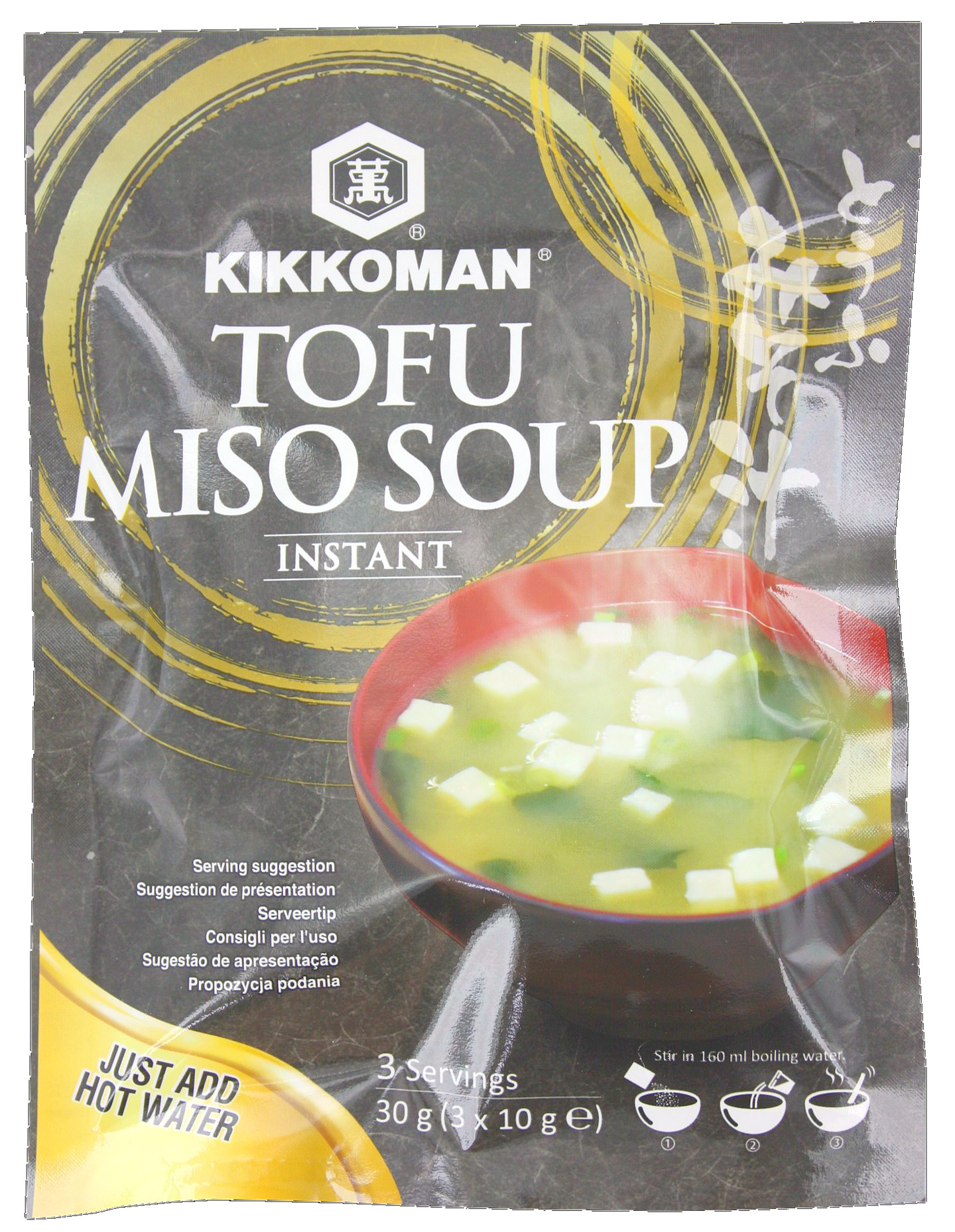
Kikkoman Tofu Miso Soup comes in a 30 g pack. It is sold under the Kikkoman brand. On Mamori it sits under Groceries › Soups & Ready Meals › Soups. Its label lists 29 ingredients.
Kikkoman Tofu Miso Soup at a glance
Kikkoman Tofu Miso Soup fits a Pescatarian diet. It also carries the Crustaceans Free, Egg Free, Peanut Free, Dairy Free, Tree Nut Free, Celery Free, Mustard Free, Sesame Free, Sulfite Free, Lupin Free, Mollusks Free, Barley Free, Beef Free, Citrus Fruit Free, Fructose Free, Gelatin Free, Lactose Free, Latex Free, No Added Sugars, Oats Free, Pork Free, Poultry Free and Rye Free badges. Nutrition-wise, it's High Protein, High Calorie, High Salt/Sodium, High Saturated Fat, High in Sugars, Medium in Fiber and Medium Carbs. Worth knowing: it's marked Non-Vegan, Non-Vegetarian, Non-Low FODMAP, Non-Vegan + Dairy, Non-Vegan + Eggs, Contains Gluten, Contains Soy, Contains Additives, Contains Artificial Flavourings, Contains Corn, Contains Emulsifier, Contains Rice, Contains Seed and Contains Wheat.
Diet and allergens
Suitable for a pescatarian diet.
Not suitable for vegan or vegetarian diets.
Contains gluten and soy.
Free from crustaceans, eggs, peanuts, milk, tree nuts, celery, mustard, sesame, sulphites, lupin and molluscs.
Based on Mamori's check of the ingredients on the label. Recipes change, so always read the pack if you have an allergy or intolerance.
Size: 30 g
Last updated 2 November 2026
Ingredients
white miso powder, Soybeans, rice, salt, red miso powder, Soybeans, rice, salt, dehydrated tofu, Soybeans, gelling agent: magnesium chloride, dehydrated seaweed, bleached starch, flavour enhancers, monosodium glutamate, Disodium Inosinate, Disodium guanylate, dehydrated spring onion, kelp powder, yeast extract, acidity regulator: sodium carbonates, dehydrated spinach, Spinach, Sorbitol, modified food starch, powdered bonito, dehydrated wheat gluten, powdered kelp, dehydrated green onion
Additives
- E511: Magnesium Chloride: Some concerns
Magnesium chloride (E511) is a mineral salt made from magnesium and chloride. It is a naturally occurring substance and can be obtained from seawater, brines or mineral sources.
In food, it is used as an acidity regulator, firming agent and anti-caking agent. It may be used where manufacturers need to control acidity, improve texture, or help powdered ingredients flow more freely.
It is permitted for use in food, but there are some concerns about exposure. EFSA found that people who eat larger amounts of foods containing magnesium chloride could exceed the safe daily amount, so the risk is mainly linked to high overall intake.
- E1403: Bleached Starch (Stabiliser): Generally safe
Bleached starch, often referred to as E1403, is starch that has been treated to make it whiter or to change some of its properties. It is usually made from plant starches such as maize, potato, wheat or tapioca.
In food, it can help give body, thickness or texture, especially in products where starch is used as an ingredient. It may be found in foods such as sauces, soups, bakery fillings, desserts and processed foods that need a smooth or stable texture.
It is generally considered safe. Under EU law, bleached starch is not classed as a food additive; it is treated as a food ingredient instead.
- E621: monosodium glutamate: Some concerns
Monosodium glutamate, or MSG (E621), is the sodium salt of glutamic acid, an amino acid found naturally in many foods. It is made as a purified flavour enhancer.
It boosts savoury “umami” taste and is used in foods such as soups, sauces, seasonings, savoury snacks, ready meals and processed meat or vegetable dishes.
It is allowed in food, but some concerns have been raised. EFSA found that people who eat a lot of foods containing glutamates can go over the safe daily amount, so exposure may be high for frequent consumers.
- E631: Disodium Inosinate: Generally safe
Disodium inosinate, or E631, is a flavour enhancer. It is the sodium salt of inosinic acid, a substance related to naturally occurring compounds found in some foods. It can be made from animal or microbial sources, so it may not always be suitable for vegetarian or vegan diets.
It is used to boost savoury, “umami” flavours, often together with glutamates such as MSG. It may be found in snack foods, seasoning mixes, instant noodles, soups, sauces and processed savoury foods.
It is allowed in food in the EU after safety assessment, and is generally considered safe at normal amounts used in foods. The sources checked raise no specific concern for typical dietary exposure.
- E627: Disodium Guanylate: Generally safe
Disodium guanylate (E627) is a flavour enhancer made from guanylic acid, a substance related to natural nucleotides found in living cells. It can be produced by fermentation or extracted from natural sources, and may sometimes be animal derived.
It is used to boost savoury, meaty or “umami” flavours, often together with monosodium glutamate (MSG). It may be found in foods such as soups, sauces, seasonings, savoury snacks, instant noodles and processed meat products.
E627 is generally considered safe at normal amounts used in food. It is authorised for use in the EU after safety assessment, and the sources checked raise no concern for typical dietary exposure.
- E500: Sodium Carbonates: (I) Sodium Carbonate (Ii) Sodium Bicarbonate (Sodium Hydrogen Carbonate) (Iii) Sodium Sesquicarbonate (Acidity Regulator): Generally safe
Sodium carbonates (E500) are a group of sodium salts, including sodium carbonate, sodium bicarbonate and sodium sesquicarbonate. The best-known is sodium bicarbonate, also called bicarbonate of soda.
They are used to control acidity, help baked goods rise by releasing carbon dioxide, and reduce clumping in some powdered foods. They can be found in baking powders, biscuits, cakes, self-raising flour, cocoa mixes and other dry food mixes.
E500 is generally considered safe. It is allowed in food in the EU after safety assessment, and the sources checked do not raise concerns at normal food amounts.
- E420: Sorbitol (I) Sorbitol (Ii) Sorbitol Syrup (Emulsifier) (Sweetener): Generally safe
Sorbitols (E420) are sugar alcohols used as food additives. They include sorbitol and sorbitol syrup, made from glucose, often from starch sources. Despite the name, they are not alcoholic drinks.
They are used to add sweetness, keep foods moist, improve texture, and help stabilise mixtures. They are often found in sugar-free sweets and chewing gum, desserts, baked goods, sauces, and some processed foods.
Sorbitols are generally considered safe at normal food amounts. They are authorised for use in the EU after safety assessment, and the sources checked raise no concern for typical intake.
Questions and answers
Is Kikkoman Tofu Miso Soup vegan?
No. It is not suitable for a vegan diet.
Is Kikkoman Tofu Miso Soup vegetarian?
No. It is not suitable for a vegetarian diet.
Is Kikkoman Tofu Miso Soup suitable for a pescatarian diet?
Yes. It is suitable for a pescatarian diet.
Is Kikkoman Tofu Miso Soup suitable for a Low FODMAP diet?
No. It is not suitable for a Low FODMAP diet.
Is Kikkoman Tofu Miso Soup suitable for a Vegan + Dairy diet?
No. It is not suitable for a Vegan + Dairy diet.
Is Kikkoman Tofu Miso Soup suitable for a Vegan + Eggs diet?
No. It is not suitable for a Vegan + Eggs diet.
Is Kikkoman Tofu Miso Soup gluten-free?
No. It contains gluten.
Does Kikkoman Tofu Miso Soup contain milk?
No. Its ingredients include no milk, and its label gives no milk warning.
Is Kikkoman Tofu Miso Soup nut-free?
Yes. Its ingredients include no peanuts or tree nuts, and its label gives no nut warning.
Does Kikkoman Tofu Miso Soup contain eggs?
No. Its ingredients include no eggs, and its label gives no egg warning.
Which allergens does Kikkoman Tofu Miso Soup contain?
It contains gluten and soy.
More in Soups
- Knorr Chicken with Crunchy Croutons Quick Soup
- activus Organic Čočková polévka
- Kania Pureed Vegetable Minestrone
- Eurospin Don Jerez Vegetable Broth with iodized salt cubes
- Activus Carrot Soup With Coconut Cream
- Knorr Chicken Quick Soup with Crunchy Croutons
- Delizie dal sole Minestrone
- Vallericca Cereal soup with Barley and Spelt
- Pedon Ready-made legume soup
- AUGA Activus Sweet corn soup organic
- Knorr Asparagus cream
- Knorr Thick vegetable soup