
INDOMIE Ind Special Chick Halal 75 g
INDOMIE
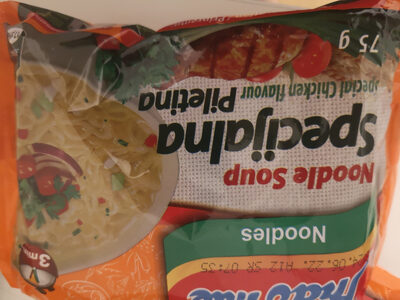
INDOMIE Ind Special Chick Halal comes in a 75 g pack. It is sold under the INDOMIE brand. On Mamori it sits under Groceries › Pasta, Rice & Noodles › Noodles. Its label lists 23 ingredients.
INDOMIE Ind Special Chick Halal at a glance
INDOMIE Ind Special Chick Halal fits Vegan, Vegetarian, Pescatarian, Vegan + Dairy and Vegan + Eggs diets. It also carries the Crustaceans Free, Egg Free, Fish Free, Peanut Free, Soy Free, Dairy Free, Tree Nut Free, Celery Free, Mustard Free, Sesame Free, Sulfite Free, Lupin Free, Mollusks Free, Barley Free, Beef Free, Citrus Fruit Free, Corn Free, Gelatin Free, Lactose Free, Latex Free, Oats Free, Pork Free, Poultry Free, Rice Free and Rye Free badges. Nutrition-wise, it's Low Sugars, High Calorie, High Carbs, High Salt/Sodium, High Saturated Fat, Medium in Fiber and Medium in Protein. Worth knowing: it's marked Non-Low FODMAP, Contains Gluten, Contains Additives, Contains Artificial Flavourings, Contains Emulsifier, Contains Fructose, Contains Added Sugars, Contains Seed and Contains Wheat.
Diet and allergens
Suitable for vegan, vegetarian and pescatarian diets.
Contains gluten.
Free from crustaceans, eggs, fish, peanuts, soy, milk, tree nuts, celery, mustard, sesame, sulphites, lupin and molluscs.
Based on Mamori's check of the ingredients on the label. Recipes change, so always read the pack if you have an allergy or intolerance.
Size: 75 g
Last updated 2 November 2026
Ingredients
Wheat Flour, refined palm oil: tertiary-butyl hydroquinone, salt, acidity regulators, Potassium Carbonates, Sodium Carbonates, Polyphosphates, thickener: guar gum, Vitamin B2: Riboflavin, Spice powder, salt, flavor enhancer: monosodium glutamate, yeast extract, sugar, pepper powder, Flavor, garlic powder, Onion Powder, ginger powder, Spice oil, refined palm oil: tertiary-butyl hydroquinone, Onion, chili powder
Additives & flavourings
Additives
- E324: Ethoxyquin: Not allowed in the EU (Regulation (EC) No 1333/2008, Article 4(1) and Annex II)
Ethoxyquin (E324) is a synthetic antioxidant. It is not a vitamin-type antioxidant, but a manufactured chemical used to slow down oxidation, especially in fats and oils.
In food, antioxidants help prevent rancidity, colour changes, and loss of quality during storage. Ethoxyquin has mainly been used in animal feed and some preserved ingredients where fats need protection, rather than in a wide range of everyday foods.
Safety is treated through legal limits rather than a simple “safe or unsafe” label here. Ethoxyquin is allowed in the EU within set limits, which are intended to control how much can be present in foods or feed.
- E501: Potassium Carbonates: (I) Potassium Carbonate (Ii) Potassium Bicarbonate (Potassium Hydrogen Carbonate): Generally safe
Potassium carbonate and potassium bicarbonate are potassium salts, listed as E501. They are alkaline mineral compounds used to adjust acidity in foods.
They help control pH, act as raising agents, and can help prevent powders from clumping. They may be used in baked goods, cocoa and chocolate products, powdered mixes, and other foods where acidity control or anti-caking is needed.
E501 is generally considered safe at normal food-use levels. It is allowed in food in the EU after safety assessment, and the sources checked raise no concern at typical amounts.
- E500: Sodium Carbonates: (I) Sodium Carbonate (Ii) Sodium Bicarbonate (Sodium Hydrogen Carbonate) (Iii) Sodium Sesquicarbonate (Acidity Regulator): Generally safe
Sodium carbonates (E500) are a group of sodium salts, including sodium carbonate, sodium bicarbonate and sodium sesquicarbonate. The best-known is sodium bicarbonate, also called bicarbonate of soda.
They are used to control acidity, help baked goods rise by releasing carbon dioxide, and reduce clumping in some powdered foods. They can be found in baking powders, biscuits, cakes, self-raising flour, cocoa mixes and other dry food mixes.
E500 is generally considered safe. It is allowed in food in the EU after safety assessment, and the sources checked do not raise concerns at normal food amounts.
- E452: Polyphosphates (I) Sodium Polyphosphates (Ii) Potassium Polyphosphates (Iii) Sodium Calcium Polyphosphate (Iv) Calcium Polyphosphates (V) Ammonium Polyphosphate: Some concerns
Polyphosphates (E452) are phosphate salts, including sodium, potassium, sodium calcium, calcium and ammonium polyphosphates. They are made from phosphoric acid compounds and belong to the wider group of phosphate additives.
They help foods hold water, keep texture stable, emulsify mixtures and improve thickness. They are used in foods such as processed meat and fish products, cheese products, sauces, desserts and some bakery or potato products.
They are allowed in food, but some concerns have been raised. EFSA found that people who eat a lot of foods containing phosphate additives can exceed the safe daily amount, so exposure may be high for frequent consumers.
- E412: Guar Gum (Thickener): Generally safe
Guar gum (E412) is a thickening fibre made from the seeds of the guar plant, a type of legume. It is a natural polysaccharide, meaning a long-chain carbohydrate that absorbs water easily.
It is used to thicken, stabilise or improve texture in foods such as sauces, dressings, dairy products, ice cream, gluten-free baked goods and processed foods. It can also help stop ingredients from separating.
Guar gum is generally considered safe at normal food amounts. It is allowed in food in the EU after safety assessment, and the sources checked raise no concern for typical use.
- E621: monosodium glutamate: Some concerns
Monosodium glutamate, or MSG (E621), is the sodium salt of glutamic acid, an amino acid found naturally in many foods. It is made as a purified flavour enhancer.
It boosts savoury “umami” taste and is used in foods such as soups, sauces, seasonings, savoury snacks, ready meals and processed meat or vegetable dishes.
It is allowed in food, but some concerns have been raised. EFSA found that people who eat a lot of foods containing glutamates can go over the safe daily amount, so exposure may be high for frequent consumers.
Flavourings
- Flavor: Flavouring (Regulation (EC) No 1334/2008 on flavourings, Article 16).
Questions and answers
Is INDOMIE Ind Special Chick Halal vegan?
Yes. It is suitable for a vegan diet.
Is INDOMIE Ind Special Chick Halal vegetarian?
Yes. It is suitable for a vegetarian diet.
Is INDOMIE Ind Special Chick Halal suitable for a pescatarian diet?
Yes. It is suitable for a pescatarian diet.
Is INDOMIE Ind Special Chick Halal suitable for a Low FODMAP diet?
No. It is not suitable for a Low FODMAP diet.
Is INDOMIE Ind Special Chick Halal suitable for a Vegan + Dairy diet?
Yes. It is suitable for a Vegan + Dairy diet.
Is INDOMIE Ind Special Chick Halal suitable for a Vegan + Eggs diet?
Yes. It is suitable for a Vegan + Eggs diet.
Is INDOMIE Ind Special Chick Halal gluten-free?
No. It contains gluten.
Does INDOMIE Ind Special Chick Halal contain milk?
No. Its ingredients include no milk, and its label gives no milk warning.
Is INDOMIE Ind Special Chick Halal nut-free?
Yes. Its ingredients include no peanuts or tree nuts, and its label gives no nut warning.
Does INDOMIE Ind Special Chick Halal contain eggs?
No. Its ingredients include no eggs, and its label gives no egg warning.
Which allergens does INDOMIE Ind Special Chick Halal contain?
It contains gluten.
More in Noodles
- Vitasia Glass Noodles
- Khan Easy Instant Noodles, Vegetable Flavour
- INDOMIE Mi Goreng Stir-Fry Noodles
- Mr Noodles Instant Noodles Chicken Flavor
- Nongshim Shin Cup Gourmet Spicy Noodle Soup
- Acecook Instant noodles chicken
- Vitasia Wok noodles curry
- SUN HEE UDON NOODLE BOWL Sesame Teriyaki
- Vitasia Rice Noodles
- Lidl Thai noodles Pad Thai
- Lidl Noodles Sweet and Sour
- Kania Thai Style Instant Noodles Beef Flavour