
Holland's Potato & Meat Pies
On the pack: Holland's Potato & Meat Pies 4 p
Holland's
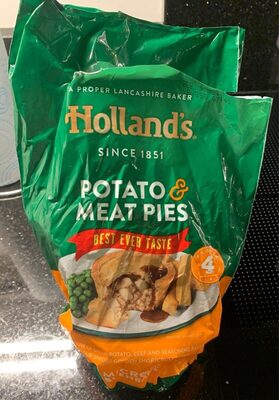
Holland's Potato & Meat Pies is listed on Mamori. It is sold under the Holland's brand. On Mamori it sits under Frozen › Pastry › Butter Puff Pastry. Its label lists 30 ingredients.
Holland's Potato & Meat Pies at a glance
Holland's Potato & Meat Pies carries the Crustaceans Free, Egg Free, Fish Free, Peanut Free, Soy Free, Tree Nut Free, Celery Free, Mustard Free, Sesame Free, Lupin Free, Mollusks Free, Barley Free, Citrus Fruit Free, Gelatin Free, Latex Free, Oats Free, Pork Free, Poultry Free and Rye Free badges. Nutrition-wise, it's Low Sugars, Medium in Fiber, Medium in Protein, Medium in Calories, Medium Carbs, Medium Salt/Sodium and Medium Saturated Fat. Worth knowing: it's marked Non-Vegan, Non-Vegetarian, Non-Pescatarian, Non-Low FODMAP, Non-Vegan + Dairy, Non-Vegan + Eggs, Contains Gluten, Contains Dairy, Contains Additives, Contains Artificial Flavourings, Contains Beef, Contains Corn, Contains Emulsifier, Contains Fructose, Lactose, Contains Added Sugars, Contains Rice, Contains Seed and Contains Wheat.
Diet and allergens
Not suitable for vegan, vegetarian or pescatarian diets.
Contains gluten and milk.
Free from crustaceans, eggs, fish, peanuts, soy, tree nuts, celery, mustard, sesame, lupin and molluscs.
Based on Mamori's check of the ingredients on the label. Recipes change, so always read the pack if you have an allergy or intolerance.
Last updated 26 October 2026
Ingredients
Water, fortified wheat flour, Wheat Flour, calcium carbonate, Iron, niacin, Thiamin, Potatoes, beef, Palm Oil, Rapeseed Oil, Modified Maize Starch, salt, Onions, yeast extract, Potassium Chloride, Onion Powder, milk proteins, sugar, Palm Stearine, White Pepper, Colour: Ammonia Caramel, Maltodextrin, Firming Agent: Calcium Sulphate, Emulsifier: Mono- and Di-glycerides of Fatty Acids, dextrose, Maize Starch, Colour: Carotenes, Flour Treatment Agent: L-Cysteine Hydrochloride, Acidity Regulator: Citric Acid
Additives
- E170: Calcium Carbonate, Chalk: Generally safe
Calcium carbonate (E170), also known as chalk, is a naturally occurring mineral made of calcium, carbon and oxygen. For food use it is purified, and it may come from sources such as limestone or shells.
It is mainly used as a white colourant, but it can also help with acidity control, anti-caking, or as a calcium source in some foods. It may be found in confectionery, chewing gum, bakery products, decorations and some supplements or fortified foods.
It is generally considered safe at normal food amounts. It is authorised for use in the EU after safety assessment, and the sources checked raise no concern for typical dietary exposure.
- E508: Potassium Chloride (Gelling Agent): Some concerns
Potassium chloride (E508) is a potassium salt, similar in structure to table salt but containing potassium instead of sodium. It is used as an acidity regulator, anti-caking agent and firming or gelling aid in some foods.
In food, it can help control acidity, improve texture, prevent powders from clumping, or partly replace ordinary salt. It may be found in processed foods such as seasonings, low-sodium salt products, soups, sauces, and some canned or prepared foods.
It is allowed for use, but some concerns have been raised. EFSA found that people with high intakes of foods containing potassium chloride could exceed the safe daily amount.
- E516: Calcium Sulfate: Generally safe
Calcium sulphate (E516) is a mineral salt made from calcium and sulphate. It occurs naturally as gypsum and can also be produced for food use. It is used as an acidity regulator, firming agent and anti-caking agent.
In food, it can help control acidity, improve texture, or stop powders from clumping. It may be found in products such as tofu, baked goods, flour-based mixes, desserts and some processed foods.
Calcium sulphate is generally considered safe at normal food-use levels. It is authorised for use in the EU after safety assessment, and the sources checked raise no concern for typical amounts in food.
- E471: Mono- And Diglycerides Of Fatty Acids (Glyceryl Monostearate, Glyceryl Distearate): Generally safe
Mono- and diglycerides of fatty acids, or E471, are emulsifiers made from glycerol and fatty acids. The fatty acids can come from vegetable oils or animal fats, so the source is not always clear unless stated by the producer.
They help oil and water mix, improve texture, and keep foods stable. They are often used in baked goods, spreads, desserts, ice cream, sauces, and processed foods where a smooth or consistent texture is needed.
E471 is generally considered safe. It is allowed in food in the EU after safety assessment, and the sources we check raise no concern at normal amounts.
- E160a: Carotenes: Generally safe
Carotenes (E160a) are orange-yellow colourants, including alpha-carotene, beta-carotene and gamma-carotene. They are pigments found naturally in plants such as carrots and leafy greens, and can also be made synthetically or obtained from natural sources. Some forms may be animal derived.
They are used to add or restore yellow to orange colour in foods. They may be found in products such as margarines, dairy products, desserts, sauces, drinks and confectionery.
E160a is allowed in food in the EU after safety assessment. It is generally considered safe at normal food amounts, and the sources checked raise no concern for typical use.
- E330: Citric Acid: Generally safe
Citric acid (E330) is a natural organic acid found in citrus fruits and many other plants. The citric acid used in food is usually made by fermentation of sugars using micro-organisms.
It is used as an acidity regulator and antioxidant. It helps give a sharp, sour taste, control pH, and slow colour or flavour changes. It is common in soft drinks, sweets, jams, sauces, canned foods, and many processed foods.
Citric acid is generally considered safe at normal food levels. It is allowed in food in the EU after safety assessment, and the sources checked raise no concern for typical dietary amounts.
Questions and answers
Is Holland's Potato & Meat Pies vegan?
No. It contains milk, so it is not suitable for a vegan diet.
Is Holland's Potato & Meat Pies vegetarian?
No. It is not suitable for a vegetarian diet.
Is Holland's Potato & Meat Pies suitable for a pescatarian diet?
No. It is not suitable for a pescatarian diet.
Is Holland's Potato & Meat Pies suitable for a Low FODMAP diet?
No. It is not suitable for a Low FODMAP diet.
Is Holland's Potato & Meat Pies suitable for a Vegan + Dairy diet?
No. It is not suitable for a Vegan + Dairy diet.
Is Holland's Potato & Meat Pies suitable for a Vegan + Eggs diet?
No. It is not suitable for a Vegan + Eggs diet.
Is Holland's Potato & Meat Pies gluten-free?
No. It contains gluten.
Does Holland's Potato & Meat Pies contain milk?
Yes. It contains milk.
Is Holland's Potato & Meat Pies nut-free?
Yes. Its ingredients include no peanuts or tree nuts, and its label gives no nut warning.
Does Holland's Potato & Meat Pies contain eggs?
No. Its ingredients include no eggs, and its label gives no egg warning.
Which allergens does Holland's Potato & Meat Pies contain?
It contains gluten and milk.
More in Butter Puff Pastry
- FILOSOPHY Greek feta P.D.O spinach triangles
- Tre mulini Puff pastry
- Nestlé Rectangular puff pastry
- Buitoni Shortcrust pastry
- Schar Gluten Free Mille-Feuille
- Buitoni Paste Delicate Split
- Glutx Gluten Free Frozen Puff Pastry
- Au Ble d'Or At the Golden Wheat Baklava Filo Pastry
- Findus Spinach Sofficini
- Tre Marie Classic Colomba
- Matilde Vicenzi Classic Italian Millefoglie
- Jus-rol Puff Pastry Sheets