
Heidrun Herring Fillets In Oil With Potatoes 200 g
On the pack: Herring Fillets In Oil K Kartoshke
Heidrun
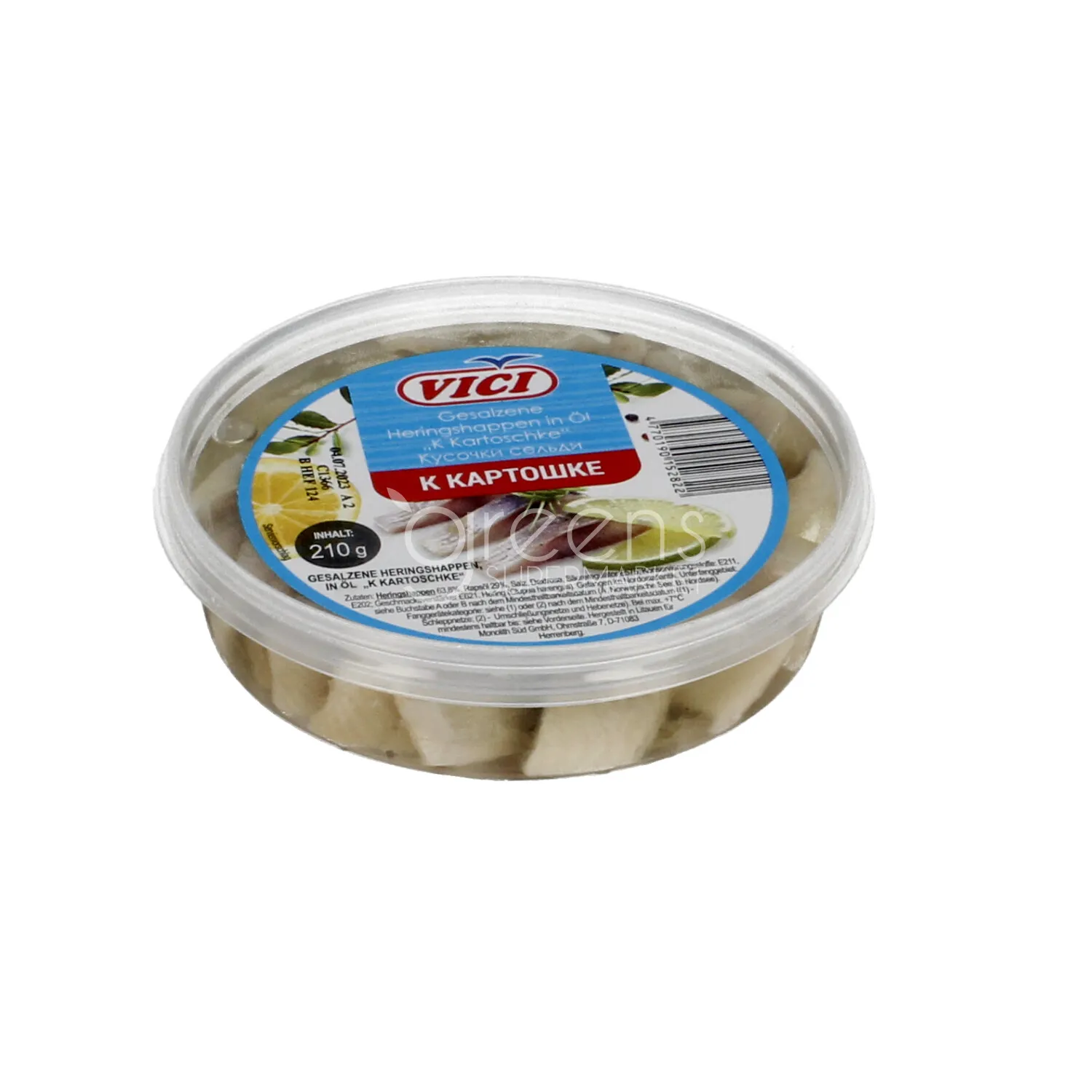
Heidrun Herring Fillets In Oil With Potatoes comes in a 200 g pack. It is sold under the Heidrun brand. On Mamori it sits under Groceries › Canned Fish. Its label lists 12 ingredients.
Heidrun Herring Fillets In Oil With Potatoes at a glance
Heidrun Herring Fillets In Oil With Potatoes fits Pescatarian and Low FODMAP diets. It also carries the Gluten Free, Crustaceans Free, Egg Free, Peanut Free, Soy Free, Dairy Free, Tree Nut Free, Celery Free, Mustard Free, Sesame Free, Sulfite Free, Lupin Free, Mollusks Free, Barley Free, Beef Free, Citrus Fruit Free, Emulsifier Free, Fructose Free, Gelatin Free, Lactose Free, Latex Free, Oats Free, Pork Free, Poultry Free, Rice Free, Rye Free and Wheat Free badges. Nutrition-wise, it's High Protein, Low Carbs, Low Sugars, Low Fiber, High Salt/Sodium, Medium in Calories and Medium Saturated Fat. Worth knowing: it's marked Non-Vegan, Non-Vegetarian, Non-Vegan + Dairy, Non-Vegan + Eggs, Contains Additives, Contains Artificial Flavourings, Contains Corn, Contains Added Sugars and Contains Seed.
Diet and allergens
Suitable for a pescatarian diet.
Not suitable for vegan or vegetarian diets.
Free from gluten, crustaceans, eggs, peanuts, soy, milk, tree nuts, celery, mustard, sesame, sulphites, lupin and molluscs.
Based on Mamori's check of the ingredients on the label. Recipes change, so always read the pack if you have an allergy or intolerance.
Size: 200 g
Last updated 13 October 2026
Ingredients
Herring, Rapeseed Oil, salt, Acidity regulator, Citric Acid, e575, E334, Flavor enhancer: E621, Preservatives, E211, E202, dextrose
Additives
- E330: Citric Acid: Generally safe
Citric acid (E330) is a natural organic acid found in citrus fruits and many other plants. The citric acid used in food is usually made by fermentation of sugars using micro-organisms.
It is used as an acidity regulator and antioxidant. It helps give a sharp, sour taste, control pH, and slow colour or flavour changes. It is common in soft drinks, sweets, jams, sauces, canned foods, and many processed foods.
Citric acid is generally considered safe at normal food levels. It is allowed in food in the EU after safety assessment, and the sources checked raise no concern for typical dietary amounts.
- E575: Glucono Delta-Lactone (Acidity Regulator): Generally safe
Glucono-delta-lactone, or E575, is an acidity regulator made from glucose. It is a mild acid-producing substance that slowly breaks down in water to form gluconic acid.
It helps control acidity, improve texture, and support setting or coagulation in foods. It is used in products such as tofu, cheese, bakery products, desserts, and some processed foods where gentle acidification is useful.
E575 is generally considered safe at normal food-use levels. It is authorised for use in the EU after safety assessment, and the sources checked raise no concern for typical amounts in food.
- E334: Tartaric Acid: Generally safe
Tartaric acid (L(+)-) (E334) is a naturally occurring organic acid. It is found in grapes and some other fruits, and the food additive is the same type of acid used to adjust acidity in foods.
It helps give foods a sharper taste, controls acidity, and can support antioxidant effects. It may be used in products such as sweets, jams, soft drinks, bakery mixes, and wine-related products.
It is generally considered safe at normal food amounts. It is authorised for use in the EU after safety assessment, and the sources checked raise no concern for typical dietary exposure.
- E621: monosodium glutamate: Some concerns
Monosodium glutamate, or MSG (E621), is the sodium salt of glutamic acid, an amino acid found naturally in many foods. It is made as a purified flavour enhancer.
It boosts savoury “umami” taste and is used in foods such as soups, sauces, seasonings, savoury snacks, ready meals and processed meat or vegetable dishes.
It is allowed in food, but some concerns have been raised. EFSA found that people who eat a lot of foods containing glutamates can go over the safe daily amount, so exposure may be high for frequent consumers.
- E211: Sodium Benzoate: Some concerns
Sodium benzoate (E211) is the sodium salt of benzoic acid, a preservative. It is a manufactured form of a substance that also occurs naturally in small amounts in some fruits and spices.
It helps stop the growth of yeasts, moulds and some bacteria, especially in acidic foods and drinks. It is often used in soft drinks, fruit juices, pickles, sauces, dressings and some jams or preserves.
It is allowed in food, but some concerns have been raised. EFSA found that people who eat a lot of foods containing benzoates may exceed the safe daily amount, so overall intake can be an issue for high consumers.
- E202: Potassium Sorbate: Some concerns
Potassium sorbate (E202) is the potassium salt of sorbic acid. It is a preservative used to slow the growth of moulds and yeasts in food and drink.
It is often used in products where spoilage by yeasts or moulds is a concern, such as sauces, bakery fillings, cheese products, fruit preparations, drinks and some processed foods.
It is allowed in food, but some concerns have been raised. EFSA found that people who eat a lot of foods containing sorbates could go over the safe daily amount, so overall exposure is the main issue.
Questions and answers
Is Heidrun Herring Fillets In Oil With Potatoes vegan?
No. It is not suitable for a vegan diet.
Is Heidrun Herring Fillets In Oil With Potatoes vegetarian?
No. It is not suitable for a vegetarian diet.
Is Heidrun Herring Fillets In Oil With Potatoes suitable for a pescatarian diet?
Yes. It is suitable for a pescatarian diet.
Is Heidrun Herring Fillets In Oil With Potatoes suitable for a Low FODMAP diet?
Yes. It is suitable for a Low FODMAP diet.
Is Heidrun Herring Fillets In Oil With Potatoes suitable for a Vegan + Dairy diet?
No. It is not suitable for a Vegan + Dairy diet.
Is Heidrun Herring Fillets In Oil With Potatoes suitable for a Vegan + Eggs diet?
No. It is not suitable for a Vegan + Eggs diet.
Is Heidrun Herring Fillets In Oil With Potatoes gluten-free?
Yes. Its ingredients include no gluten, and its label gives no gluten warning.
Does Heidrun Herring Fillets In Oil With Potatoes contain milk?
No. Its ingredients include no milk, and its label gives no milk warning.
Is Heidrun Herring Fillets In Oil With Potatoes nut-free?
Yes. Its ingredients include no peanuts or tree nuts, and its label gives no nut warning.
Does Heidrun Herring Fillets In Oil With Potatoes contain eggs?
No. Its ingredients include no eggs, and its label gives no egg warning.
More in Canned Fish
- Conad Filetti di sgombro grigliati
- Zarotti Natural tuna fillets
- Amberfish Riga Gold Smoked Sprats In Oil Shproti Riga Gold
- John west kippers
- Findus
- John west Wild Pacific Red Salmon
- John west Tuna Chunks In Sunflower Oil
- John west Tuna Chunks In Brine
- Alaska Pollock Shredded Jars
- Steinhauer Cod Liver In Natural Oil
- John west Soft Cod Roes
- John west Skippers In Sunflower Oil