
Hello Noodle Bowl Chicken 76 g
Hello
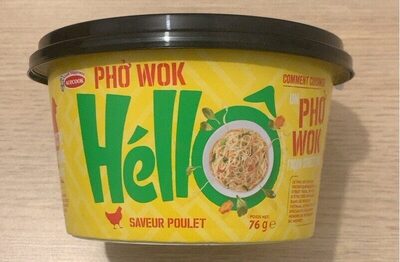
Hello Noodle Bowl Chicken comes in a 76 g pack. It is sold under the Hello brand. On Mamori it sits under Groceries › Pasta, Rice & Noodles › Noodles. Its label lists 30 ingredients.
Hello Noodle Bowl Chicken at a glance
Hello Noodle Bowl Chicken carries the Gluten Free, Crustaceans Free, Egg Free, Fish Free, Peanut Free, Dairy Free, Tree Nut Free, Celery Free, Mustard Free, Sesame Free, Sulfite Free, Lupin Free, Mollusks Free, Barley Free, Beef Free, Citrus Fruit Free, Gelatin Free, Lactose Free, Latex Free, Oats Free, Pork Free, Rye Free and Wheat Free badges. Nutrition-wise, it's Low Sugars, High Carbs, High Salt/Sodium, High Saturated Fat, Medium in Fiber, Medium in Protein and Medium in Calories. Worth knowing: it's marked Non-Vegan, Non-Vegetarian, Non-Pescatarian, Non-Low FODMAP, Non-Vegan + Dairy, Non-Vegan + Eggs, Contains Additives, Contains Artificial Flavourings, Contains Corn, Contains Emulsifier, Contains Fructose, Contains Added Sugars, Contains Poultry, Contains Rice and Contains Seed.
Diet and allergens
Not suitable for vegan, vegetarian or pescatarian diets.
Free from gluten, crustaceans, eggs, fish, peanuts, milk, tree nuts, celery, mustard, sesame, sulphites, lupin and molluscs.
Based on Mamori's check of the ingredients on the label. Recipes change, so always read the pack if you have an allergy or intolerance.
Size: 76 g
Last updated 2 November 2026
Ingredients
rice noodles, rice, tapioca starch, potato starch, salt, emulsifiers, E322, vegetable oil, palm oil, antioxidants, E320, E321, spices, chicken flavor, coloring: E160a, seasoning, sugar, salt, flavor enhancers, E621, E631, E627, spices, tapioca starch, chicken flavor, yeast extract, coloring: E150a, anti-caking agent: E551 nano, dehydrated carrots, dried spring onions
Additives & flavourings
Additives
- E424: Curdlan: Generally safe
- E322: Lecithins: Generally safe
Lecithins (E322) are a group of natural fatty substances found in plants and animals. Food-grade lecithin is usually made from soya, sunflower, rapeseed or egg, and in some cases may be animal derived.
They are mainly used as emulsifiers, helping oil and water mix and keeping textures smooth. They are found in foods such as chocolate, spreads, baked goods, sauces, margarines and instant powders.
Lecithins are generally considered safe at normal food amounts and are allowed in the EU after safety assessment. People with relevant allergies should note the source, especially soya or egg.
- E320: Butylated Hydroxyanisole (Bha): Generally safe
Butylated hydroxyanisole, or BHA (E320), is a synthetic antioxidant. It is a mixture of related organic compounds made for use in foods and other products to slow down oxidation.
In food, it helps stop fats and oils from going rancid and can help protect flavour and colour. It may be used in fat-containing foods such as snacks, cereals, chewing gum, dried mixes, and some processed potato products.
BHA is generally considered safe at normal food-use levels. It is authorised for use in the EU after EFSA safety assessment, and the sources checked raise no concern at typical amounts.
- E321: Butylated Hydroxytoluene (Bht): Generally safe
Butylated hydroxytoluene, or BHT (E321), is a synthetic antioxidant. It is a fat-soluble phenolic compound made to slow the breakdown of fats and oils.
In food, BHT helps prevent fats from going rancid and protects flavour, colour and shelf life. It may be used in fatty foods such as oils, shortenings, snack products, chewing gum and some processed foods where oxidation is a concern.
BHT is generally considered safe at normal food-use levels. It is authorised for use in the EU after EFSA safety assessment, and the sources checked raise no concern at typical amounts.
- E160a: Carotenes: Generally safe
Carotenes (E160a) are orange-yellow colourants, including alpha-carotene, beta-carotene and gamma-carotene. They are pigments found naturally in plants such as carrots and leafy greens, and can also be made synthetically or obtained from natural sources. Some forms may be animal derived.
They are used to add or restore yellow to orange colour in foods. They may be found in products such as margarines, dairy products, desserts, sauces, drinks and confectionery.
E160a is allowed in food in the EU after safety assessment. It is generally considered safe at normal food amounts, and the sources checked raise no concern for typical use.
- E621: monosodium glutamate: Some concerns
Monosodium glutamate, or MSG (E621), is the sodium salt of glutamic acid, an amino acid found naturally in many foods. It is made as a purified flavour enhancer.
It boosts savoury “umami” taste and is used in foods such as soups, sauces, seasonings, savoury snacks, ready meals and processed meat or vegetable dishes.
It is allowed in food, but some concerns have been raised. EFSA found that people who eat a lot of foods containing glutamates can go over the safe daily amount, so exposure may be high for frequent consumers.
- E631: Disodium Inosinate: Generally safe
Disodium inosinate, or E631, is a flavour enhancer. It is the sodium salt of inosinic acid, a substance related to naturally occurring compounds found in some foods. It can be made from animal or microbial sources, so it may not always be suitable for vegetarian or vegan diets.
It is used to boost savoury, “umami” flavours, often together with glutamates such as MSG. It may be found in snack foods, seasoning mixes, instant noodles, soups, sauces and processed savoury foods.
It is allowed in food in the EU after safety assessment, and is generally considered safe at normal amounts used in foods. The sources checked raise no specific concern for typical dietary exposure.
- E627: Disodium Guanylate: Generally safe
Disodium guanylate (E627) is a flavour enhancer made from guanylic acid, a substance related to natural nucleotides found in living cells. It can be produced by fermentation or extracted from natural sources, and may sometimes be animal derived.
It is used to boost savoury, meaty or “umami” flavours, often together with monosodium glutamate (MSG). It may be found in foods such as soups, sauces, seasonings, savoury snacks, instant noodles and processed meat products.
E627 is generally considered safe at normal amounts used in food. It is authorised for use in the EU after safety assessment, and the sources checked raise no concern for typical dietary exposure.
- E150A: Plain Caramel (E150a): Generally safe
Plain caramel, or E150a, is a brown food colour made by heating sugars under controlled conditions. It is the simplest type of caramel colour and is not the same as caramel flavour or caramel used as a sweet.
It is used to give foods and drinks a brown colour or to make colour more consistent. It can be found in products such as soft drinks, sauces, bakery products, confectionery and some processed foods.
Plain caramel is generally considered safe. It is allowed in food in the EU after safety assessment, and EFSA found no risk of people eating too much from normal dietary exposure.
- E551: Silicon Dioxide (Silica): Generally safe
Silicon dioxide (E551), also called silica, is a naturally occurring mineral substance made of silicon and oxygen. It is found in rocks, sand and many plants, and the food additive form is a fine, inert powder.
In food, it is mainly used as an anti-caking agent to help powders and granules flow freely. It may be found in products such as powdered seasonings, salt substitutes, dried soups, instant drinks and food supplement powders.
It is generally considered safe at normal food-use levels. It is authorised for use in the EU after safety assessment, and the sources checked raise no concern at typical amounts.
Flavourings
- chicken flavor: Flavouring (Regulation (EC) No 1334/2008 on flavourings, Article 16).
- chicken flavor: Flavouring (Regulation (EC) No 1334/2008 on flavourings, Article 16).
Questions and answers
Is Hello Noodle Bowl Chicken vegan?
No. It is not suitable for a vegan diet.
Is Hello Noodle Bowl Chicken vegetarian?
No. It is not suitable for a vegetarian diet.
Is Hello Noodle Bowl Chicken suitable for a pescatarian diet?
No. It is not suitable for a pescatarian diet.
Is Hello Noodle Bowl Chicken suitable for a Low FODMAP diet?
No. It is not suitable for a Low FODMAP diet.
Is Hello Noodle Bowl Chicken suitable for a Vegan + Dairy diet?
No. It is not suitable for a Vegan + Dairy diet.
Is Hello Noodle Bowl Chicken suitable for a Vegan + Eggs diet?
No. It is not suitable for a Vegan + Eggs diet.
Is Hello Noodle Bowl Chicken gluten-free?
Yes. Its ingredients include no gluten, and its label gives no gluten warning.
Does Hello Noodle Bowl Chicken contain milk?
No. Its ingredients include no milk, and its label gives no milk warning.
Is Hello Noodle Bowl Chicken nut-free?
Yes. Its ingredients include no peanuts or tree nuts, and its label gives no nut warning.
Does Hello Noodle Bowl Chicken contain eggs?
No. Its ingredients include no eggs, and its label gives no egg warning.
More in Noodles
- Vitasia Glass Noodles
- Khan Easy Instant Noodles, Vegetable Flavour
- INDOMIE Mi Goreng Stir-Fry Noodles
- Mr Noodles Instant Noodles Chicken Flavor
- Nongshim Shin Cup Gourmet Spicy Noodle Soup
- Acecook Instant noodles chicken
- Vitasia Wok noodles curry
- SUN HEE UDON NOODLE BOWL Sesame Teriyaki
- Vitasia Rice Noodles
- Lidl Thai noodles Pad Thai
- Lidl Noodles Sweet and Sour
- Kania Thai Style Instant Noodles Beef Flavour