
Happy Oro Caramel 140 g
Happy Oro
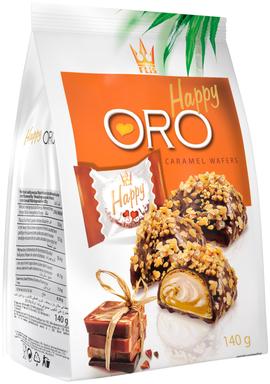
Happy Oro Caramel comes in a 140 g pack. It is sold under the Happy Oro brand. On Mamori it sits under Confectionery › Candy, Sweets & Nougat › Caramel. Its label lists 31 ingredients.
Happy Oro Caramel at a glance
Happy Oro Caramel fits Vegetarian and Pescatarian diets. It also carries the Crustaceans Free, Fish Free, Celery Free, Mustard Free, Lupin Free, Mollusks Free, Barley Free, Beef Free, Citrus Fruit Free, Gelatin Free, Latex Free, Oats Free, Pork Free, Rice Free and Rye Free badges. Nutrition-wise, it's Low Salt/Sodium, Low Protein, High Calorie, High Carbs, High Saturated Fat, High in Sugars and Medium in Fiber. Worth knowing: it's marked Non-Vegan, Non-Low FODMAP, Non-Vegan + Dairy, Non-Vegan + Eggs, Contains Gluten, Contains Egg, Contains Soy, Contains Dairy, Contains Additives, Contains Artificial Flavourings, Contains Corn, Contains Emulsifier, Contains Fructose, Lactose, Contains Added Sugars, Contains Poultry, Contains Seed and Contains Wheat.
Diet and allergens
Suitable for vegetarian and pescatarian diets.
Not suitable for a vegan diet.
Contains gluten, eggs, soy and milk.
Free from crustaceans, fish, celery, mustard, lupin and molluscs.
May contain: PEANUTS, other fruits peel, sesame.
Based on Mamori's check of the ingredients on the label. Recipes change, so always read the pack if you have an allergy or intolerance.
Size: 140 g
Last updated 2 November 2026
Ingredients
chocolate, Milk, Cocoa fat, whole milk powder, Cocoa paste, Whey powder, Palm fat, emulsifiers, soya lecithin, Polyglycerol Polyricinoleate, palm, sugar, Wheat Flour, pieces of candy, sugar, caramelized glucose syrup, cream caramel, butter caramel, Skimmed Milk Powder, Whey powder, Glucose, potato starch, Soy flour, Low Fat Cocoa Powder, food dye: carotenes, Flavourings, salt, Emulsifier: soy lecithin, burnt sugar syrup, Egg white powder, raising agent: sodium carbonates
Additives & flavourings
Additives
- E476: Polyglycerol Polyricinoleate: Generally safe
Polyglycerol polyricinoleate (E476), often shortened to PGPR, is an emulsifier made from polyglycerol and fatty acids from castor oil. It is a specialised fat-like substance used in small amounts.
It helps mix ingredients that do not normally blend well, especially fat and water-based parts. It is commonly used in chocolate and cocoa products to improve flow, and can also be used in some spreads, sauces, and similar processed foods.
E476 is generally considered safe. It is authorised for use in food in the EU after EFSA safety assessment, and the sources checked raise no concern at normal amounts.
- E160a: Carotenes: Generally safe
Carotenes (E160a) are orange-yellow colourants, including alpha-carotene, beta-carotene and gamma-carotene. They are pigments found naturally in plants such as carrots and leafy greens, and can also be made synthetically or obtained from natural sources. Some forms may be animal derived.
They are used to add or restore yellow to orange colour in foods. They may be found in products such as margarines, dairy products, desserts, sauces, drinks and confectionery.
E160a is allowed in food in the EU after safety assessment. It is generally considered safe at normal food amounts, and the sources checked raise no concern for typical use.
- E500: Sodium Carbonates: (I) Sodium Carbonate (Ii) Sodium Bicarbonate (Sodium Hydrogen Carbonate) (Iii) Sodium Sesquicarbonate (Acidity Regulator): Generally safe
Sodium carbonates (E500) are a group of sodium salts, including sodium carbonate, sodium bicarbonate and sodium sesquicarbonate. The best-known is sodium bicarbonate, also called bicarbonate of soda.
They are used to control acidity, help baked goods rise by releasing carbon dioxide, and reduce clumping in some powdered foods. They can be found in baking powders, biscuits, cakes, self-raising flour, cocoa mixes and other dry food mixes.
E500 is generally considered safe. It is allowed in food in the EU after safety assessment, and the sources checked do not raise concerns at normal food amounts.
Flavourings
- Flavourings: Flavouring (Regulation (EC) No 1334/2008 on flavourings, Article 16).
Questions and answers
Is Happy Oro Caramel vegan?
No. It contains eggs and milk, so it is not suitable for a vegan diet.
Is Happy Oro Caramel vegetarian?
Yes. It is suitable for a vegetarian diet.
Is Happy Oro Caramel suitable for a pescatarian diet?
Yes. It is suitable for a pescatarian diet.
Is Happy Oro Caramel suitable for a Low FODMAP diet?
No. It is not suitable for a Low FODMAP diet.
Is Happy Oro Caramel suitable for a Vegan + Dairy diet?
No. It is not suitable for a Vegan + Dairy diet.
Is Happy Oro Caramel suitable for a Vegan + Eggs diet?
No. It is not suitable for a Vegan + Eggs diet.
Is Happy Oro Caramel gluten-free?
No. It contains gluten.
Does Happy Oro Caramel contain milk?
Yes. It contains milk.
Does Happy Oro Caramel contain eggs?
Yes. It contains eggs.
Which allergens does Happy Oro Caramel contain?
It contains gluten, eggs, soy and milk. Its label also says it may contain: PEANUTS, other fruits peel, sesame.
More in Caramel
- Crosse & Blackwell Brownong
- Rossana Salted caramel
- Werther's Original Creme
- Tre Marie The Dove Caramel
- Storck Werthers Original Apple Sugar Free
- Pionir Russian Food Milk Caramel With Hazelnuts
- Lir Salted Caramel Truffles
- Halter Caramel
- Baileys Sea Salt & Caramel Fudge
- Alpenliebe Caramel Chocolate
- Natura Green Rice Caramel Creamy Dessert
- Maclloyd Kimifinne Organic Salted Caramel Hearts