
HANINI Light Yogurt Pomegranate & Blueberry 160 g
HANINI
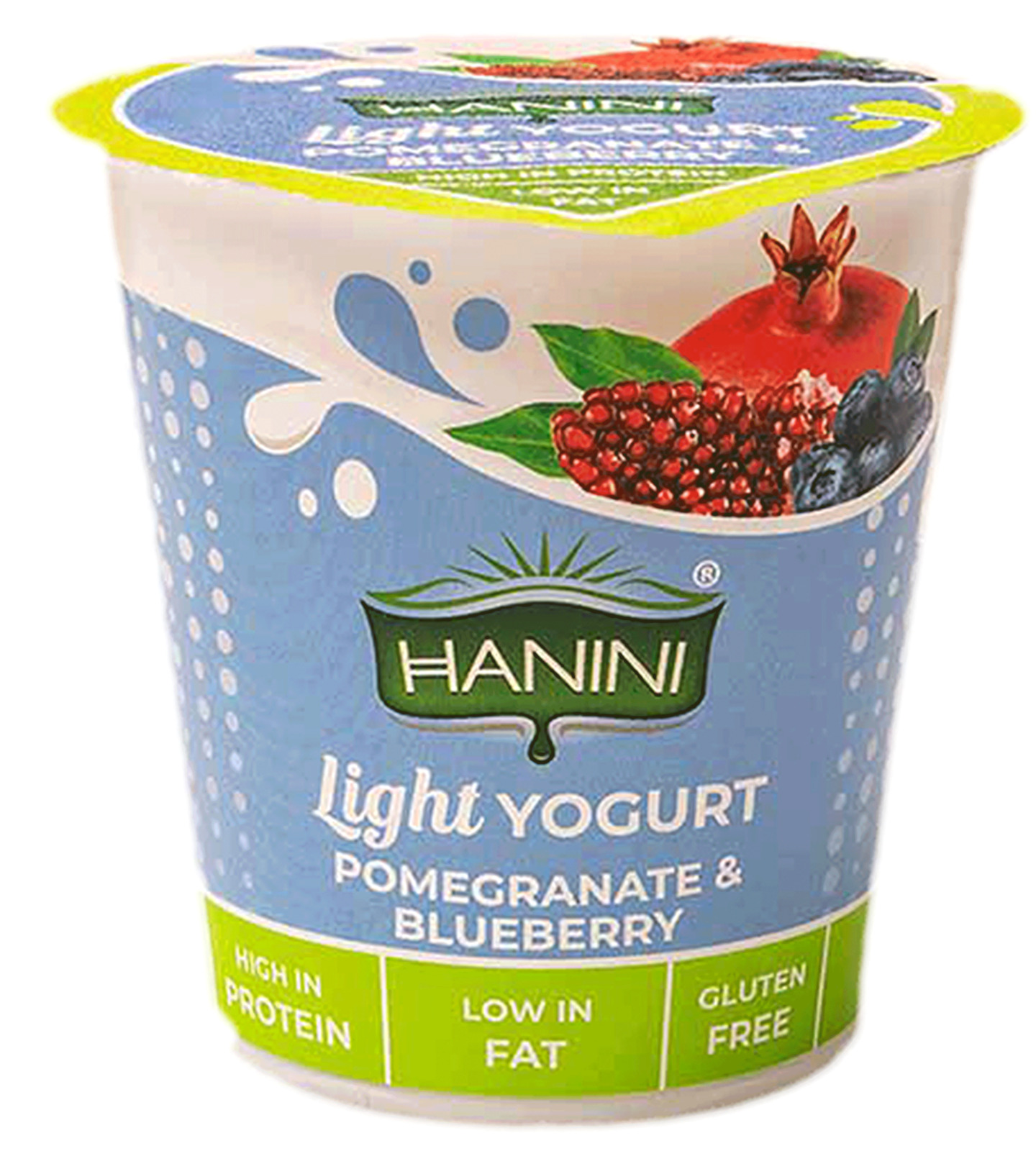
HANINI Light Yogurt Pomegranate & Blueberry comes in a 160 g pack. It is sold under the HANINI brand. On Mamori it sits under Chilled › Yogurts & Sweets › Skimmed Milk Yogurt Powder. Its label lists 18 ingredients.
HANINI Light Yogurt Pomegranate & Blueberry at a glance
HANINI Light Yogurt Pomegranate & Blueberry carries the Gluten Free, Crustaceans Free, Egg Free, Fish Free, Peanut Free, Soy Free, Tree Nut Free, Celery Free, Mustard Free, Sesame Free, Sulfite Free, Lupin Free, Mollusks Free, Barley Free, Beef Free, Citrus Fruit Free, Emulsifier Free, Latex Free, Oats Free, Pork Free, Poultry Free, Rice Free, Rye Free and Wheat Free badges. Nutrition-wise, it's Low Salt/Sodium, Low Saturated Fat, Low Protein, Medium in Fiber, Medium in Calories, Medium Carbs and Medium in Sugars. Worth knowing: it's marked Non-Vegan, Non-Vegetarian, Non-Pescatarian, Non-Low FODMAP, Non-Vegan + Dairy, Non-Vegan + Eggs, Contains Dairy, Contains Additives, Contains Artificial Flavourings, Contains Corn, Contains Fructose, Contains Gelatin, Lactose, Contains Added Sugars and Contains Seed.
Diet and allergens
Not suitable for vegan, vegetarian or pescatarian diets.
Contains milk.
Free from gluten, crustaceans, eggs, fish, peanuts, soy, tree nuts, celery, mustard, sesame, sulphites, lupin and molluscs.
Based on Mamori's check of the ingredients on the label. Recipes change, so always read the pack if you have an allergy or intolerance.
Size: 160 g
Last updated 2 November 2026
Ingredients
yogurt, skimmed milk, stabilisers, modified maize starch, pectin, yogurt culture, pomegranate & blueberry preparation, blueberries, oligofructose syrup, water, pomegranate juice from concentrate, modified tapioca starch, sugar, carrot juice from concentrate, modified guar gum, sweeteners, aspartame, acesulfame K
Additives
- E440: Pectins (I) Pectin (Ii) Amidated Pectin: Generally safe
Pectins (E440) are natural gelling fibres found in the cell walls of fruits and vegetables, especially apples and citrus peel. E440 includes ordinary pectin and amidated pectin, a modified form that gels more easily in some foods.
They are used as thickeners, stabilisers and gelling agents. You may find them in jams, jellies, fruit spreads, desserts, confectionery, yoghurts and some drinks or sauces where a thicker texture is needed.
Pectins are generally considered safe. They are authorised for use in food in the EU after safety assessment, and the sources checked raise no concern at normal food amounts.
- E412: Guar Gum (Thickener): Generally safe
Guar gum (E412) is a thickening fibre made from the seeds of the guar plant, a type of legume. It is a natural polysaccharide, meaning a long-chain carbohydrate that absorbs water easily.
It is used to thicken, stabilise or improve texture in foods such as sauces, dressings, dairy products, ice cream, gluten-free baked goods and processed foods. It can also help stop ingredients from separating.
Guar gum is generally considered safe at normal food amounts. It is allowed in food in the EU after safety assessment, and the sources checked raise no concern for typical use.
- E951: Aspartame: Some concerns
Aspartame (E951) is an artificial intense sweetener. It is made from two amino acids, aspartic acid and phenylalanine, joined with a small methanol component, and is much sweeter than sugar.
It is used to give sweetness with very little energy. It is found in many “diet” or “sugar-free” soft drinks, chewing gum, desserts, yoghurts, tabletop sweeteners and some medicines.
Aspartame is allowed for use, but some concerns have been raised. In 2023, IARC classed it as “possibly causing cancer” (Group 2B), while food safety bodies kept the acceptable daily intake; foods containing it must warn people with phenylketonuria that it contains phenylalanine.
- E950: Acesulfame K: Generally safe
Acesulfame K, also called acesulfame potassium or E950, is an artificial sweetener. It is a potassium salt of a synthetic sweet-tasting compound and is much sweeter than sugar, so only small amounts are used.
It is used to sweeten foods and drinks without adding much energy. It is often found in sugar-free or reduced-sugar soft drinks, desserts, chewing gum, tabletop sweeteners and some special dietary foods.
It is generally considered safe at normal amounts. It is authorised for use in the EU after safety assessment, and the sources checked raise no concern when it is used within permitted limits.
Questions and answers
Is HANINI Light Yogurt Pomegranate & Blueberry vegan?
No. It contains milk, so it is not suitable for a vegan diet.
Is HANINI Light Yogurt Pomegranate & Blueberry vegetarian?
No. It is not suitable for a vegetarian diet.
Is HANINI Light Yogurt Pomegranate & Blueberry suitable for a pescatarian diet?
No. It is not suitable for a pescatarian diet.
Is HANINI Light Yogurt Pomegranate & Blueberry suitable for a Low FODMAP diet?
No. It is not suitable for a Low FODMAP diet.
Is HANINI Light Yogurt Pomegranate & Blueberry suitable for a Vegan + Dairy diet?
No. It is not suitable for a Vegan + Dairy diet.
Is HANINI Light Yogurt Pomegranate & Blueberry suitable for a Vegan + Eggs diet?
No. It is not suitable for a Vegan + Eggs diet.
Is HANINI Light Yogurt Pomegranate & Blueberry gluten-free?
Yes. Its ingredients include no gluten, and its label gives no gluten warning.
Does HANINI Light Yogurt Pomegranate & Blueberry contain milk?
Yes. It contains milk.
Is HANINI Light Yogurt Pomegranate & Blueberry nut-free?
Yes. Its ingredients include no peanuts or tree nuts, and its label gives no nut warning.
Does HANINI Light Yogurt Pomegranate & Blueberry contain eggs?
No. Its ingredients include no eggs, and its label gives no egg warning.
Which allergens does HANINI Light Yogurt Pomegranate & Blueberry contain?
It contains milk.