
Green's Greens Tuna Chunks In Sunflower Oil 2 l
Green's
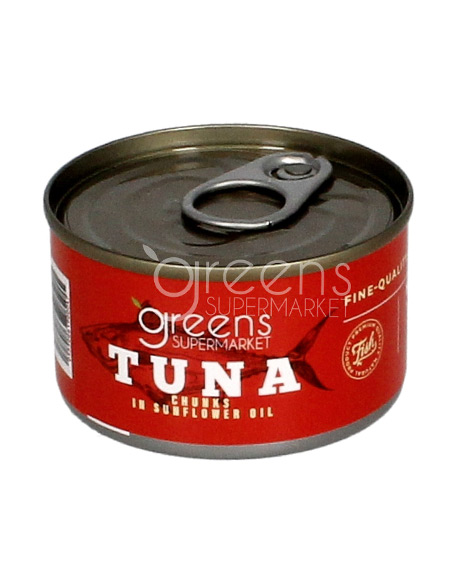
Green's Greens Tuna Chunks In Sunflower Oil comes in a 2 l pack. It is sold under the Green's brand. On Mamori it sits under Groceries › Canned Fish. Its label lists 19 ingredients.
Green's Greens Tuna Chunks In Sunflower Oil at a glance
Green's Greens Tuna Chunks In Sunflower Oil fits Vegetarian, Pescatarian and Vegan + Dairy diets. It also carries the Crustaceans Free, Egg Free, Fish Free, Peanut Free, Celery Free, Mustard Free, Sesame Free, Sulfite Free, Lupin Free, Mollusks Free, Artificial Flavourings Free, Barley Free, Beef Free, Citrus Fruit Free, Gelatin Free, Latex Free, Oats Free, Pork Free, Rye Free and Wheat Free badges. Nutrition-wise, it's Low Salt/Sodium, Low Saturated Fat, Low Sugars, Low Fiber, Low Protein, Medium in Calories and Medium Carbs. Worth knowing: it's marked Non-Vegan, Non-Low FODMAP, Non-Vegan + Eggs, Contains Dairy, Contains Tree Nut, Contains Additives, Contains Corn, Contains Emulsifier, Contains Fructose, Lactose, Contains Added Sugars, Contains Poultry, Contains Rice and Contains Seed.
Diet and allergens
Suitable for vegetarian and pescatarian diets.
Not suitable for a vegan diet.
Contains milk and tree nuts.
Free from crustaceans, eggs, fish, peanuts, celery, mustard, sesame, sulphites, lupin and molluscs.
Based on Mamori's check of the ingredients on the label. Recipes change, so always read the pack if you have an allergy or intolerance.
Size: 2 l
Last updated 2 November 2026
Ingredients
Water, Sugar, Full Fat Milk Powder, Ice-Cream Base, Stabilizer, E412, E407a, Emulsifiers, E472b, E477, E473, Starch, Fully Hydrogenated Vegetable Fat, Soluble Cocoa Powder, Tartufo Paste, HazelNuts, Sugar, Emulsifier: E322, Antioxidant: E307
Additives
- E412: Guar Gum (Thickener): Generally safe
Guar gum (E412) is a thickening fibre made from the seeds of the guar plant, a type of legume. It is a natural polysaccharide, meaning a long-chain carbohydrate that absorbs water easily.
It is used to thicken, stabilise or improve texture in foods such as sauces, dressings, dairy products, ice cream, gluten-free baked goods and processed foods. It can also help stop ingredients from separating.
Guar gum is generally considered safe at normal food amounts. It is allowed in food in the EU after safety assessment, and the sources checked raise no concern for typical use.
- E407a: Processed Euchema Seaweed: Some concerns
Processed euchema seaweed, or E407a, is a seaweed-derived additive made from certain red seaweeds. It is closely related to carrageenan and is mainly a fibre-like polysaccharide used for its gelling and thickening properties.
It helps foods hold water, thicken, gel, and stay evenly mixed. It may be used in products such as dairy desserts, flavoured milks, ice cream, sauces, processed meat products, and other foods where a stable texture is needed.
It is allowed in food, but some concerns have been raised. EFSA found that people who eat a lot of foods containing E407a can exceed the safe daily amount, so overall exposure is the main issue.
- E472B: Lactic Acid Esters Of Mono- And Diglycerides Of Fatty Acids (E472b): Generally safe
Lactic acid esters of mono- and diglycerides of fatty acids, or E472b, are emulsifiers made by combining lactic acid with mono- and diglycerides of fatty acids. The fatty acids can come from vegetable or animal fats, so the source is not always suitable for all diets.
They help oil and water mix, improve texture, and keep foods stable. They are used in baked goods, whipped toppings, desserts, margarines, and other processed foods where a smooth or stable texture is needed.
E472b is generally considered safe at normal food levels. It is authorised for use in the EU after safety assessment, and the sources checked raise no concern at typical amounts.
- E477: Propane-1,2-Diol Esters Of Fatty Acids, Propylene Glycol Esters Of Fatty Acids: Generally safe
Propane-1,2-diol esters of fatty acids (E477), also called propylene glycol esters of fatty acids, are emulsifiers made by combining propylene glycol with fatty acids. The fatty acids can come from vegetable or animal sources.
E477 helps oil and water mix, improves texture, and can help stabilise foods. It may be used in products such as cakes, whipped toppings, desserts, confectionery, and fat-based spreads, where a smooth or stable texture is needed.
E477 is generally considered safe at normal food-use levels. It is authorised for use in the EU after safety assessment, and the sources checked raise no concern at typical amounts.
- E473: Sucrose Esters Of Fatty Acids: Some concerns
Sucrose esters of fatty acids (E473) are emulsifiers made by combining sucrose, a sugar, with fatty acids. The fatty acids may come from vegetable or animal fats, depending on the source.
They help oil and water mix, improve texture, and stabilise foods. They may be used in products such as baked goods, desserts, sauces, confectionery, drinks, and some dairy-style or fat-based foods.
E473 is allowed in food, but some concerns have been raised. EFSA found that people who eat a lot of foods containing it could exceed the safe daily amount, so exposure may be an issue for high consumers.
- E322: Lecithins: Generally safe
Lecithins (E322) are a group of natural fatty substances found in plants and animals. Food-grade lecithin is usually made from soya, sunflower, rapeseed or egg, and in some cases may be animal derived.
They are mainly used as emulsifiers, helping oil and water mix and keeping textures smooth. They are found in foods such as chocolate, spreads, baked goods, sauces, margarines and instant powders.
Lecithins are generally considered safe at normal food amounts and are allowed in the EU after safety assessment. People with relevant allergies should note the source, especially soya or egg.
- E307: Alpha-Tocopherol (Synthetic): Generally safe
Alpha-tocopherol (E307) is a form of vitamin E used as a food additive. It can be made synthetically or obtained from vegetable oils, and belongs to a group of fat-soluble antioxidant substances called tocopherols.
It helps protect fats and oils from oxidation, which can cause rancid flavours and loss of quality. It may be used in foods containing oils or fats, such as spreads, dressings, snacks, baked goods and some processed foods.
E307 is generally considered safe at normal amounts used in food. It is authorised for use in the EU after EFSA safety assessment, and the sources checked raise no concern for typical dietary exposure.
Questions and answers
Is Green's Greens Tuna Chunks In Sunflower Oil vegan?
No. It contains milk, so it is not suitable for a vegan diet.
Is Green's Greens Tuna Chunks In Sunflower Oil vegetarian?
Yes. It is suitable for a vegetarian diet.
Is Green's Greens Tuna Chunks In Sunflower Oil suitable for a pescatarian diet?
Yes. It is suitable for a pescatarian diet.
Is Green's Greens Tuna Chunks In Sunflower Oil suitable for a Low FODMAP diet?
No. It is not suitable for a Low FODMAP diet.
Is Green's Greens Tuna Chunks In Sunflower Oil suitable for a Vegan + Dairy diet?
Yes. It is suitable for a Vegan + Dairy diet.
Is Green's Greens Tuna Chunks In Sunflower Oil suitable for a Vegan + Eggs diet?
No. It is not suitable for a Vegan + Eggs diet.
Does Green's Greens Tuna Chunks In Sunflower Oil contain milk?
Yes. It contains milk.
Is Green's Greens Tuna Chunks In Sunflower Oil nut-free?
No. It contains tree nuts.
Does Green's Greens Tuna Chunks In Sunflower Oil contain eggs?
No. Its ingredients include no eggs, and its label gives no egg warning.
Which allergens does Green's Greens Tuna Chunks In Sunflower Oil contain?
It contains milk and tree nuts.
More in Canned Fish
- Conad Filetti di sgombro grigliati
- Zarotti Natural tuna fillets
- Amberfish Riga Gold Smoked Sprats In Oil Shproti Riga Gold
- John west kippers
- Findus
- John west Wild Pacific Red Salmon
- John west Tuna Chunks In Sunflower Oil
- John west Tuna Chunks In Brine
- Alaska Pollock Shredded Jars
- Steinhauer Cod Liver In Natural Oil
- John west Soft Cod Roes
- John west Skippers In Sunflower Oil