
paw patrol Funlab Fun Lollipop 80 g
paw patrol
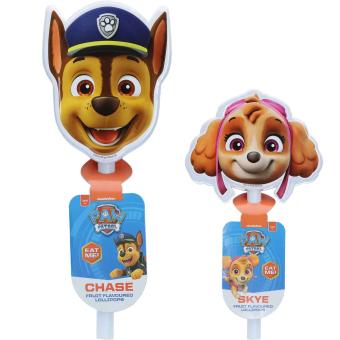
paw patrol Funlab Fun Lollipop comes in a 80 g pack. It is sold under the paw patrol brand. On Mamori it sits under Confectionery › Candy, Sweets & Nougat › Lollipop. Its label lists 9 ingredients.
paw patrol Funlab Fun Lollipop at a glance
paw patrol Funlab Fun Lollipop fits Vegan, Vegetarian, Pescatarian, Vegan + Dairy and Vegan + Eggs diets. It also carries the Gluten Free, Crustaceans Free, Egg Free, Fish Free, Peanut Free, Soy Free, Dairy Free, Tree Nut Free, Celery Free, Mustard Free, Sesame Free, Sulfite Free, Lupin Free, Mollusks Free, Barley Free, Beef Free, Citrus Fruit Free, Emulsifier Free, Gelatin Free, Lactose Free, Latex Free, Oats Free, Pork Free, Poultry Free, Rice Free, Rye Free, Seed Free and Wheat Free badges. Nutrition-wise, it's Low Salt/Sodium, Low Saturated Fat, Low Fiber, Low Protein, High Calorie, High Carbs and High in Sugars. Worth knowing: it's marked Non-Low FODMAP, Contains Additives, Contains Artificial Flavourings, Contains Corn, Contains Fructose and Contains Added Sugars.
Diet and allergens
Suitable for vegan, vegetarian and pescatarian diets.
Free from all 14 major allergens: gluten, crustaceans, eggs, fish, peanuts, soy, milk, tree nuts, celery, mustard, sesame, sulphites, lupin and molluscs.
Based on Mamori's check of the ingredients on the label. Recipes change, so always read the pack if you have an allergy or intolerance.
Size: 80 g
Last updated 17 August 2026
Ingredients
Glucose syrup, Sugar, Water, Flavors, Colorings, E133, E141, E100, E162
Additives & flavourings
Additives
- E133: Brilliant Blue Fcf (Fd&C Blue 1): Some concerns
Brilliant Blue FCF (E133), also known as FD&C Blue 1, is a synthetic blue food colour. It is a water-soluble dye made from petroleum-derived chemical compounds.
It is used to give foods and drinks a bright blue colour, or mixed with other colours to make shades such as green or purple. It can be found in sweets, soft drinks, desserts, ice lollies, decorations and some processed snack foods.
It is allowed for use, but some concerns have been raised. EFSA found that people who eat a lot of foods containing E133 may exceed the safe daily amount, so over-exposure is the main issue.
- E141: Copper Complexes Of Chlorophylls And Chlorophyllins (I) Copper Complexes Of Chlorophylls (Ii) Copper Complexes Of Chlorophyllins: Generally safe
Copper complexes of chlorophylls and chlorophyllins (E141) are green food colourings made by adding copper to chlorophyll, the natural green pigment in plants, or to chlorophyllin, a water-soluble form of it.
They are used to give or restore green colour in foods. They may be found in products such as confectionery, desserts, sauces, soups, processed vegetables and flavoured drinks, depending on local rules and recipes.
E141 is generally considered safe at normal amounts used in food. It is authorised in the EU after safety assessment, and the sources checked raise no specific concern for typical dietary exposure.
- E100: Curcumin (From Turmeric): Generally safe
Curcumin (E100) is a yellow-orange food colour made from turmeric, the spice from the root of the Curcuma longa plant. It is the main natural pigment in turmeric and may also be produced as a purified extract for food use.
It is used to give foods a yellow to orange colour. It can be found in products such as sauces, soups, snacks, confectionery, dairy products and processed foods where a warm yellow colour is wanted.
Curcumin is generally considered safe at normal food amounts. It is allowed for use in the EU after EFSA safety assessment, and the sources checked do not raise concerns for typical dietary exposure.
- E162: Beetroot Red, Betanin: Generally safe
Beetroot Red, or betanin (E162), is a natural red food colour made mainly from beetroot. Its main colouring substance is betanin, a plant pigment from the betalain family.
It is used to give foods a red, pink, or purple colour. It may be found in products such as yoghurts, desserts, ice creams, sweets, sauces, and some drinks, especially where a plant-based colour is wanted.
It is generally considered safe at normal food levels. It is authorised for use in the EU after EFSA safety assessment, and the checked sources raise no concern for typical amounts in food.
Flavourings
- Flavors: Flavouring (Regulation (EC) No 1334/2008 on flavourings, Article 16).
Questions and answers
Is paw patrol Funlab Fun Lollipop vegan?
Yes. It is suitable for a vegan diet.
Is paw patrol Funlab Fun Lollipop vegetarian?
Yes. It is suitable for a vegetarian diet.
Is paw patrol Funlab Fun Lollipop suitable for a pescatarian diet?
Yes. It is suitable for a pescatarian diet.
Is paw patrol Funlab Fun Lollipop suitable for a Low FODMAP diet?
No. It is not suitable for a Low FODMAP diet.
Is paw patrol Funlab Fun Lollipop suitable for a Vegan + Dairy diet?
Yes. It is suitable for a Vegan + Dairy diet.
Is paw patrol Funlab Fun Lollipop suitable for a Vegan + Eggs diet?
Yes. It is suitable for a Vegan + Eggs diet.
Is paw patrol Funlab Fun Lollipop gluten-free?
Yes. Its ingredients include no gluten, and its label gives no gluten warning.
Does paw patrol Funlab Fun Lollipop contain milk?
No. Its ingredients include no milk, and its label gives no milk warning.
Is paw patrol Funlab Fun Lollipop nut-free?
Yes. Its ingredients include no peanuts or tree nuts, and its label gives no nut warning.
Does paw patrol Funlab Fun Lollipop contain eggs?
No. Its ingredients include no eggs, and its label gives no egg warning.
More in Lollipop
- Bazooka Topps Juicy Drop Pop lollipop with liquid candy
- Hamlet Bag Rock Lollipop Mix
- Fundiez Smileypops Tutti Frutti
- Nestlé Pop'up
- Barratt Dip Dab Strawberry
- Relkon Paw Patrol Marshmallow Lollipops
- Chupa Chups Melody Pop
- Heidrun Swizzles Luscious Lollies
- Johnny Bee Baby Sucker
- Chupa Chups Melody Pops
- Heidrun Storck Werther's Original Sugar Free
- Johnny Bee Twisty Treats