
Dr Schar Magdalenas Cup 200 g
Dr.Schar
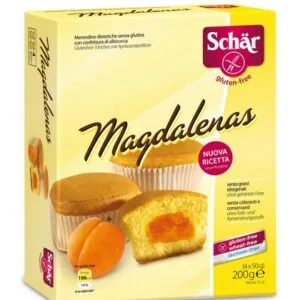
Dr Schar Magdalenas Cup comes in a 200 g pack. It is sold under the Dr.Schar brand. On Mamori it sits under Snacks › Desserts › Muffins. Its label lists 26 ingredients.
Dr Schar Magdalenas Cup at a glance
Dr Schar Magdalenas Cup fits Vegetarian, Pescatarian and Vegan + Eggs diets. It also carries the Gluten Free, Crustaceans Free, Fish Free, Peanut Free, Soy Free, Dairy Free, Tree Nut Free, Celery Free, Mustard Free, Sesame Free, Sulfite Free, Lupin Free, Mollusks Free, Barley Free, Beef Free, Citrus Fruit Free, Gelatin Free, Lactose Free, Latex Free, Oats Free, Pork Free, Poultry Free, Rye Free and Wheat Free badges. Nutrition-wise, it's Low Protein, High Carbs, High in Sugars, Medium in Fiber, Medium in Calories, Medium Salt/Sodium and Medium Saturated Fat. Worth knowing: it's marked Non-Vegan, Non-Low FODMAP, Non-Vegan + Dairy, Contains Egg, Contains Additives, Contains Artificial Flavourings, Contains Corn, Contains Emulsifier, Contains Fructose, Contains Added Sugars, Contains Rice and Contains Seed.
Diet and allergens
Suitable for vegetarian and pescatarian diets.
Not suitable for a vegan diet.
Contains eggs.
Free from gluten, crustaceans, fish, peanuts, soy, milk, tree nuts, celery, mustard, sesame, sulphites, lupin and molluscs.
Based on Mamori's check of the ingredients on the label. Recipes change, so always read the pack if you have an allergy or intolerance.
Size: 200 g
Last updated 2 November 2026
Ingredients
EGG, Rice flour, apricot jam, Glucose-fructose syrup, apricot purée, Sucrose, Thickener: pectin, Acidity Regulator: Citric Acid, sugar, Sunflower oil, Maize Starch, Stabiliser: Sorbitol, Emulsifier: Mono- and Diglycerides of Fatty Acids, apple purée, Apples, antioxidants: ascorbic acid, Rice starch, raising agents, monopotassium tartrate, glucono delta-lactone, Sodium Hydrogen Carbonate, thickeners, Locust Bean Gum, Xanthan Gum, salt, Natural flavour
Additives & flavourings
Additives
- E440: Pectins (I) Pectin (Ii) Amidated Pectin: Generally safe
Pectins (E440) are natural gelling fibres found in the cell walls of fruits and vegetables, especially apples and citrus peel. E440 includes ordinary pectin and amidated pectin, a modified form that gels more easily in some foods.
They are used as thickeners, stabilisers and gelling agents. You may find them in jams, jellies, fruit spreads, desserts, confectionery, yoghurts and some drinks or sauces where a thicker texture is needed.
Pectins are generally considered safe. They are authorised for use in food in the EU after safety assessment, and the sources checked raise no concern at normal food amounts.
- E330: Citric Acid: Generally safe
Citric acid (E330) is a natural organic acid found in citrus fruits and many other plants. The citric acid used in food is usually made by fermentation of sugars using micro-organisms.
It is used as an acidity regulator and antioxidant. It helps give a sharp, sour taste, control pH, and slow colour or flavour changes. It is common in soft drinks, sweets, jams, sauces, canned foods, and many processed foods.
Citric acid is generally considered safe at normal food levels. It is allowed in food in the EU after safety assessment, and the sources checked raise no concern for typical dietary amounts.
- E420: Sorbitol (I) Sorbitol (Ii) Sorbitol Syrup (Emulsifier) (Sweetener): Generally safe
Sorbitols (E420) are sugar alcohols used as food additives. They include sorbitol and sorbitol syrup, made from glucose, often from starch sources. Despite the name, they are not alcoholic drinks.
They are used to add sweetness, keep foods moist, improve texture, and help stabilise mixtures. They are often found in sugar-free sweets and chewing gum, desserts, baked goods, sauces, and some processed foods.
Sorbitols are generally considered safe at normal food amounts. They are authorised for use in the EU after safety assessment, and the sources checked raise no concern for typical intake.
- E471: Mono- And Diglycerides Of Fatty Acids (Glyceryl Monostearate, Glyceryl Distearate): Generally safe
Mono- and diglycerides of fatty acids, or E471, are emulsifiers made from glycerol and fatty acids. The fatty acids can come from vegetable oils or animal fats, so the source is not always clear unless stated by the producer.
They help oil and water mix, improve texture, and keep foods stable. They are often used in baked goods, spreads, desserts, ice cream, sauces, and processed foods where a smooth or consistent texture is needed.
E471 is generally considered safe. It is allowed in food in the EU after safety assessment, and the sources we check raise no concern at normal amounts.
- E300: Ascorbic Acid (Vitamin C): Generally safe
Ascorbic acid (E300) is vitamin C, a water-soluble substance found naturally in many fruits and vegetables. As a food additive, it is usually made by controlled industrial production and used in purified form.
It helps prevent oxidation, which can stop foods from browning or developing off-flavours. It can also adjust acidity. It is used in a range of foods, especially fruit products, drinks, bakery products, meat products and foods where colour or freshness needs protecting.
It is generally considered safe at normal food amounts. It is authorised for use in the EU after safety assessment, and EFSA’s re-evaluation did not raise concern for its use as a food additive.
- E336: Potassium Tartrates (I) Monopotassium Tartrate (Cream Of Tartar) (Ii) Dipotassium Tartrate: Generally safe
Potassium tartrates (E336) are salts of tartaric acid, a natural acid found in grapes and other fruits. The main forms are monopotassium tartrate, often called cream of tartar, and dipotassium tartrate.
They are used as acidity regulators and can also help stabilise foods. Cream of tartar is commonly used in baking powders and in whisked egg whites, while potassium tartrates may also be used where control of acidity is needed.
E336 is allowed in food in the EU after safety assessment. It is generally considered safe at normal food levels, and the sources checked raise no concern for typical use.
- E575: Glucono Delta-Lactone (Acidity Regulator): Generally safe
Glucono-delta-lactone, or E575, is an acidity regulator made from glucose. It is a mild acid-producing substance that slowly breaks down in water to form gluconic acid.
It helps control acidity, improve texture, and support setting or coagulation in foods. It is used in products such as tofu, cheese, bakery products, desserts, and some processed foods where gentle acidification is useful.
E575 is generally considered safe at normal food-use levels. It is authorised for use in the EU after safety assessment, and the sources checked raise no concern for typical amounts in food.
- E500: Sodium Carbonates: (I) Sodium Carbonate (Ii) Sodium Bicarbonate (Sodium Hydrogen Carbonate) (Iii) Sodium Sesquicarbonate (Acidity Regulator): Generally safe
Sodium carbonates (E500) are a group of sodium salts, including sodium carbonate, sodium bicarbonate and sodium sesquicarbonate. The best-known is sodium bicarbonate, also called bicarbonate of soda.
They are used to control acidity, help baked goods rise by releasing carbon dioxide, and reduce clumping in some powdered foods. They can be found in baking powders, biscuits, cakes, self-raising flour, cocoa mixes and other dry food mixes.
E500 is generally considered safe. It is allowed in food in the EU after safety assessment, and the sources checked do not raise concerns at normal food amounts.
- E410: Locust Bean Gum (Carob Gum) (Thickener) (Stabiliser) (Gelling Agent): Generally safe
Locust bean gum, or E410, is a natural gum made from the seeds of the carob tree. It is a type of soluble fibre and is also known as carob gum.
It is used to thicken, stabilise, and help give foods a smooth or gel-like texture. You may find it in products such as ice cream, dairy desserts, sauces, dressings, bakery fillings, and some processed foods.
It is generally considered safe at normal food-use amounts. It is allowed in the EU after EFSA safety assessment, and the sources checked raise no specific concern for typical dietary exposure.
- E415: Xanthan Gum (Thickener): Generally safe
Xanthan gum (E415) is a thickening and stabilising gum made by fermenting sugars with the bacterium Xanthomonas campestris, then purifying and drying the resulting substance.
It helps foods hold water, thicken, and keep ingredients evenly mixed. It is often used in sauces, dressings, desserts, bakery products, gluten-free foods, and drinks where a smooth or stable texture is needed.
Xanthan gum is generally considered safe. It is allowed in food in the EU after EFSA assessment, and the sources checked do not raise concerns at normal amounts used in foods.
Flavourings
- Natural flavour: Natural flavouring (Regulation (EC) No 1334/2008 on flavourings, Article 16).
Questions and answers
Is Dr Schar Magdalenas Cup vegan?
No. It contains eggs, so it is not suitable for a vegan diet.
Is Dr Schar Magdalenas Cup vegetarian?
Yes. It is suitable for a vegetarian diet.
Is Dr Schar Magdalenas Cup suitable for a pescatarian diet?
Yes. It is suitable for a pescatarian diet.
Is Dr Schar Magdalenas Cup suitable for a Low FODMAP diet?
No. It is not suitable for a Low FODMAP diet.
Is Dr Schar Magdalenas Cup suitable for a Vegan + Dairy diet?
No. It is not suitable for a Vegan + Dairy diet.
Is Dr Schar Magdalenas Cup suitable for a Vegan + Eggs diet?
Yes. It is suitable for a Vegan + Eggs diet.
Is Dr Schar Magdalenas Cup gluten-free?
Yes. Its ingredients include no gluten, and its label gives no gluten warning.
Does Dr Schar Magdalenas Cup contain milk?
No. Its ingredients include no milk, and its label gives no milk warning.
Is Dr Schar Magdalenas Cup nut-free?
Yes. Its ingredients include no peanuts or tree nuts, and its label gives no nut warning.
Does Dr Schar Magdalenas Cup contain eggs?
Yes. It contains eggs.
Which allergens does Dr Schar Magdalenas Cup contain?
It contains eggs.
More in Muffins
- Lidl Muffins choco drop XXL
- Misura Tortine ciliegia e mirtillo
- Aunt Mabel's Chocolate & Banana Muffin
- Firenze Mini Gluten-Free Muffin Nastrecce
- St Michel Madeleines moelleuses
- Dolciando Chocolate chip cake
- Schär Muffin
- Proceli Magdalenes Without Gluten
- Diablo Chocolate muffin
- MRS. MUFFIN Mini Muffins White Chocolate Chips
- Schar Snack Carrotinis
- Mangiar Sano No Sugar Added Carrot & Almond Tortino