
Diablo Sweet Strawberry & Cream 75 g
Diablo
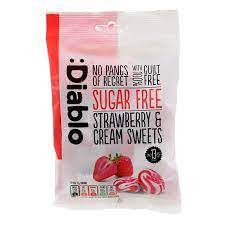
Diablo Sweet Strawberry & Cream comes in a 75 g pack. It is sold under the Diablo brand. On Mamori it sits under Produce › Fruits › Strawberry. Its label lists 21 ingredients.
Diablo Sweet Strawberry & Cream at a glance
Diablo Sweet Strawberry & Cream fits Vegetarian, Pescatarian and Vegan + Dairy diets. It also carries the Gluten Free, Crustaceans Free, Egg Free, Fish Free, Peanut Free, Tree Nut Free, Celery Free, Mustard Free, Sesame Free, Lupin Free, Mollusks Free, Barley Free, Beef Free, Corn Free, Gelatin Free, Latex Free, Oats Free, Pork Free, Poultry Free, Rice Free, Rye Free and Seed Free badges. Nutrition-wise, it's Low Sugars, Low Fiber, Low Protein, High Carbs, High Saturated Fat, Medium in Calories and Medium Salt/Sodium. Worth knowing: it's marked Non-Vegan, Non-Low FODMAP, Non-Vegan + Eggs, Contains Soy, Contains Additives, Contains Artificial Flavourings, Contains Citrus Fruit, Contains Emulsifier, Contains Fructose, Lactose, Contains Added Sugars and Contains Wheat.
Diet and allergens
Suitable for vegetarian and pescatarian diets.
Not suitable for a vegan diet.
Contains soy.
Free from gluten, crustaceans, eggs, fish, peanuts, tree nuts, celery, mustard, sesame, lupin and molluscs.
Based on Mamori's check of the ingredients on the label. Recipes change, so always read the pack if you have an allergy or intolerance.
Size: 75 g
Last updated 2 November 2026
Ingredients
sweetener, Isomalt, maltitol, acesulfame, water, vegetable fats, Coconut Oil, palm kernel oil, cream, flavouring, fruit juice, orange juice, Apple Juice, Grape juice, humectant: glycerine, emulsifier: soya lecithin, salt, acid: lactic acid, colouring, E171, E129
Additives & flavourings
Additives
- E953: Isomalt, Isomaltitol: Generally safe
Isomalt (E953), also called isomaltitol, is a sugar alcohol made from sugar beet sugar. It is a low-calorie sweetener and can also be used as a glazing agent.
It is used to add sweetness, bulk, or a smooth coating, especially in sugar-free sweets, chewing gum, chocolates, baked goods, and dessert products. It is often chosen because it is less sweet than sugar and does not brown easily.
Isomalt is generally considered safe. It is allowed in food in the EU after safety assessment, and the sources checked raise no concern at normal amounts.
- E965: Maltitol (I) Maltitol (Ii) Maltitol Syrup (Sweetener) (Stabiliser): Generally safe
Maltitols (E965) are sugar alcohol sweeteners. They include maltitol and maltitol syrup, made from starch sugars such as maltose, usually from maize or wheat starch.
They are used to sweeten foods with less sugar, add bulk, help keep moisture, and sometimes give a smooth texture or glossy coating. They are common in sugar-free sweets, chewing gum, chocolate, desserts, baked goods and low-sugar products.
Maltitols are generally considered safe at normal amounts and are authorised for use in the EU after safety assessment. Like other sugar alcohols, larger amounts can cause bloating or a laxative effect in some people.
- E950: Acesulfame K: Generally safe
Acesulfame K, also called acesulfame potassium or E950, is an artificial sweetener. It is a potassium salt of a synthetic sweet-tasting compound and is much sweeter than sugar, so only small amounts are used.
It is used to sweeten foods and drinks without adding much energy. It is often found in sugar-free or reduced-sugar soft drinks, desserts, chewing gum, tabletop sweeteners and some special dietary foods.
It is generally considered safe at normal amounts. It is authorised for use in the EU after safety assessment, and the sources checked raise no concern when it is used within permitted limits.
- E422: Glycerol (Emulsifier): Generally safe
Glycerol, or E422, is a clear, sweet-tasting liquid also known as glycerine. It is a type of sugar alcohol and can be made from vegetable oils, animal fats, or produced synthetically.
In food, it helps keep moisture in, thickens texture, stabilises mixtures, and can help emulsions stay smooth. It is used in a range of foods where softness, moisture retention, or smooth texture is needed, such as confectionery, baked goods, icings, and some drinks.
Glycerol is generally considered safe at normal food amounts. It is allowed in food in the EU after safety assessment, and the sources checked raise no concern for typical use.
- E270: Lactic Acid (Preservative): Generally safe
Lactic acid (E270) is an organic acid found naturally in many foods and also made by fermenting sugars, often using bacteria. It is the same type of acid produced in foods such as yoghurt and fermented vegetables.
In food, it is used mainly as an acidity regulator and preservative, helping control pH and slow the growth of some microbes. It may be found in fermented foods, pickled products, drinks, sauces, confectionery and bakery products.
It is generally considered safe. It is allowed in food in the EU after safety assessment, and the sources checked raise no concern at normal amounts.
- E171: Titanium Dioxide: Not allowed in the EU (Commission Regulation (EU) 2022/63)
Titanium dioxide, E171, is a white mineral-based colourant made from titanium and oxygen. It is a very fine, insoluble powder used to make foods look brighter or more opaque.
It has been used in products such as sweets, chewing gum, icing, bakery decorations and some sauces or processed foods, mainly to give a clean white colour.
Its safety status differs by region. In the EU, E171 is no longer authorised for use in food because regulators could not rule out concerns about possible effects on genetic material.
- E129: Allura Red Ac (Fd&C Red 40): Some concerns
Allura Red AC (E129), also known as FD&C Red 40, is a synthetic red azo dye. It is a water-soluble colourant made for use in foods and drinks.
It gives a bright red to orange-red colour and is used in some sweets, soft drinks, desserts, ice lollies, bakery decorations and snack foods.
It is allowed for use, and EFSA’s 2015 assessment did not find a risk of eating too much at typical exposure levels. However, in the EU, foods containing it must carry a warning that it may have an adverse effect on activity and attention in children.
Flavourings
- flavouring: Flavouring (Regulation (EC) No 1334/2008 on flavourings, Article 16).
Questions and answers
Is Diablo Sweet Strawberry & Cream vegan?
No. It is not suitable for a vegan diet.
Is Diablo Sweet Strawberry & Cream vegetarian?
Yes. It is suitable for a vegetarian diet.
Is Diablo Sweet Strawberry & Cream suitable for a pescatarian diet?
Yes. It is suitable for a pescatarian diet.
Is Diablo Sweet Strawberry & Cream suitable for a Low FODMAP diet?
No. It is not suitable for a Low FODMAP diet.
Is Diablo Sweet Strawberry & Cream suitable for a Vegan + Dairy diet?
Yes. It is suitable for a Vegan + Dairy diet.
Is Diablo Sweet Strawberry & Cream suitable for a Vegan + Eggs diet?
No. It is not suitable for a Vegan + Eggs diet.
Is Diablo Sweet Strawberry & Cream gluten-free?
Yes. Its ingredients include no gluten, and its label gives no gluten warning.
Is Diablo Sweet Strawberry & Cream nut-free?
Yes. Its ingredients include no peanuts or tree nuts, and its label gives no nut warning.
Does Diablo Sweet Strawberry & Cream contain eggs?
No. Its ingredients include no eggs, and its label gives no egg warning.
Which allergens does Diablo Sweet Strawberry & Cream contain?
It contains soy.
More in Strawberry
- Darta Green's Strawberry
- Zero Bonbons Zero Sugar Free Strawberry Flip Top
- Askeys Treat Strawberry
- Heidrun Innocent Strawberry & Banana
- Heidrun Monin Strawberry Syrup
- Bear Yoyo Multipack Strawberry
- Rauch Happy Day Strawberry
- Ritter Sport Ritter Strawberry
- Ella's Kitchen Organic Apples & Strawberries 4m+
- Conaxess trade norway Quick Milk Strawberry Straw
- Organix Stage 1 6m+ Strawberry banana
- Step Strawberry