
Diablo Butter Flavored Candies 75 g
On the pack: :Diablo - Caramelos Sabor Mantequilla
Diablo
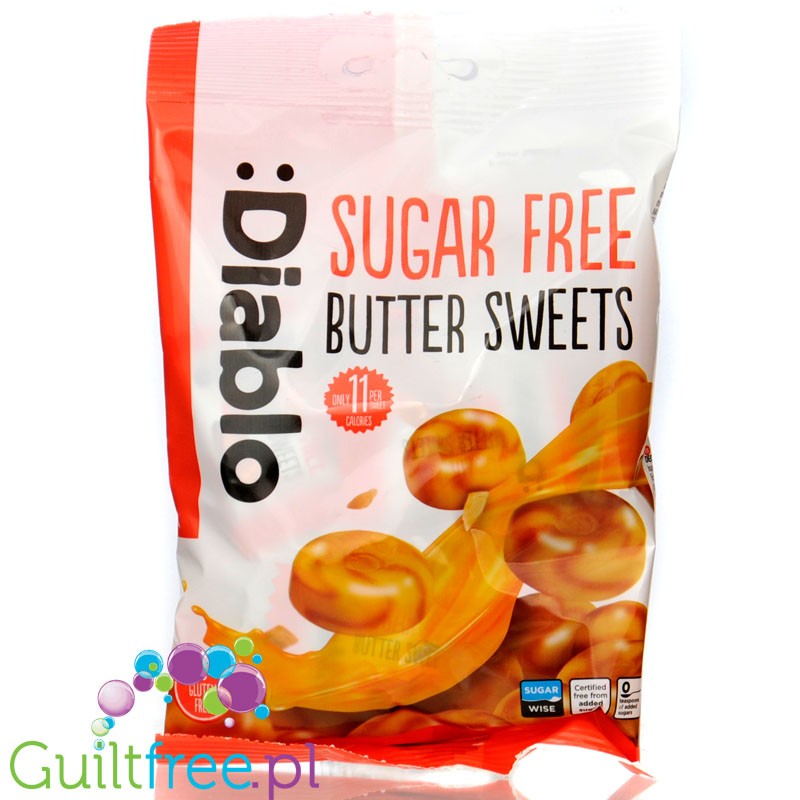
Diablo Butter Flavored Candies comes in a 75 g pack. It is sold under the Diablo brand. On Mamori it sits under Additives › Flavor Enhancers › Buttery Flavour. Its label lists 12 ingredients.
Diablo Butter Flavored Candies at a glance
Diablo Butter Flavored Candies carries the Gluten Free, Crustaceans Free, Egg Free, Fish Free, Peanut Free, Soy Free, Dairy Free, Tree Nut Free, Celery Free, Mustard Free, Sesame Free, Lupin Free, Mollusks Free, Barley Free, Citrus Fruit Free, Corn Free, Fructose Free, Lactose Free, Latex Free, No Added Sugars, Oats Free, Poultry Free, Rice Free, Rye Free, Seed Free and Wheat Free badges. Nutrition-wise, it's Low Salt/Sodium, Low Sugars, Low Fiber, Low Protein, High Carbs, Medium in Calories and Medium Saturated Fat. Worth knowing: it's marked Non-Vegan, Non-Vegetarian, Non-Pescatarian, Non-Low FODMAP, Non-Vegan + Dairy, Non-Vegan + Eggs, Contains Additives, Contains Artificial Flavourings, Contains Beef, Contains Emulsifier, Contains Gelatin and Contains Pork.
Diet and allergens
Not suitable for vegan, vegetarian or pescatarian diets.
Free from gluten, crustaceans, eggs, fish, peanuts, soy, milk, tree nuts, celery, mustard, sesame, lupin and molluscs.
Based on Mamori's check of the ingredients on the label. Recipes change, so always read the pack if you have an allergy or intolerance.
Size: 75 g
Last updated 26 October 2026
Ingredients
Maltitol, Isomalt, Water, Humectant: Sorbitol, Vegetable Fats Fully Hydrogenated, Coconut, Palm Kernel, Emulsifier: Mono & Diglycerides of Fatty Acids, Acid: Citric Acid, Gelatine, Flavouring, Sweetener: Acesulfame K
Additives & flavourings
Additives
- E965: Maltitol (I) Maltitol (Ii) Maltitol Syrup (Sweetener) (Stabiliser): Generally safe
Maltitols (E965) are sugar alcohol sweeteners. They include maltitol and maltitol syrup, made from starch sugars such as maltose, usually from maize or wheat starch.
They are used to sweeten foods with less sugar, add bulk, help keep moisture, and sometimes give a smooth texture or glossy coating. They are common in sugar-free sweets, chewing gum, chocolate, desserts, baked goods and low-sugar products.
Maltitols are generally considered safe at normal amounts and are authorised for use in the EU after safety assessment. Like other sugar alcohols, larger amounts can cause bloating or a laxative effect in some people.
- E953: Isomalt, Isomaltitol: Generally safe
Isomalt (E953), also called isomaltitol, is a sugar alcohol made from sugar beet sugar. It is a low-calorie sweetener and can also be used as a glazing agent.
It is used to add sweetness, bulk, or a smooth coating, especially in sugar-free sweets, chewing gum, chocolates, baked goods, and dessert products. It is often chosen because it is less sweet than sugar and does not brown easily.
Isomalt is generally considered safe. It is allowed in food in the EU after safety assessment, and the sources checked raise no concern at normal amounts.
- E420: Sorbitol (I) Sorbitol (Ii) Sorbitol Syrup (Emulsifier) (Sweetener): Generally safe
Sorbitols (E420) are sugar alcohols used as food additives. They include sorbitol and sorbitol syrup, made from glucose, often from starch sources. Despite the name, they are not alcoholic drinks.
They are used to add sweetness, keep foods moist, improve texture, and help stabilise mixtures. They are often found in sugar-free sweets and chewing gum, desserts, baked goods, sauces, and some processed foods.
Sorbitols are generally considered safe at normal food amounts. They are authorised for use in the EU after safety assessment, and the sources checked raise no concern for typical intake.
- E471: Mono- And Diglycerides Of Fatty Acids (Glyceryl Monostearate, Glyceryl Distearate): Generally safe
Mono- and diglycerides of fatty acids, or E471, are emulsifiers made from glycerol and fatty acids. The fatty acids can come from vegetable oils or animal fats, so the source is not always clear unless stated by the producer.
They help oil and water mix, improve texture, and keep foods stable. They are often used in baked goods, spreads, desserts, ice cream, sauces, and processed foods where a smooth or consistent texture is needed.
E471 is generally considered safe. It is allowed in food in the EU after safety assessment, and the sources we check raise no concern at normal amounts.
- E330: Citric Acid: Generally safe
Citric acid (E330) is a natural organic acid found in citrus fruits and many other plants. The citric acid used in food is usually made by fermentation of sugars using micro-organisms.
It is used as an acidity regulator and antioxidant. It helps give a sharp, sour taste, control pH, and slow colour or flavour changes. It is common in soft drinks, sweets, jams, sauces, canned foods, and many processed foods.
Citric acid is generally considered safe at normal food levels. It is allowed in food in the EU after safety assessment, and the sources checked raise no concern for typical dietary amounts.
- E441: Gelatine (Emulsifier): Generally safe
Gelatine, sometimes listed as E441, is a protein-based ingredient made by processing collagen from animal skin, bones and connective tissue, usually from pigs or cattle.
It helps foods set, thicken, stabilise or give a smooth texture. It is commonly used in jellies, marshmallows, gummy sweets, desserts, yoghurts and some low-fat spreads or meat products.
It is generally considered safe for most people. Under EU law, edible gelatine is treated as a food ingredient rather than a food additive, so it is not classed as an additive in Regulation (EC) No 1333/2008.
- E950: Acesulfame K: Generally safe
Acesulfame K, also called acesulfame potassium or E950, is an artificial sweetener. It is a potassium salt of a synthetic sweet-tasting compound and is much sweeter than sugar, so only small amounts are used.
It is used to sweeten foods and drinks without adding much energy. It is often found in sugar-free or reduced-sugar soft drinks, desserts, chewing gum, tabletop sweeteners and some special dietary foods.
It is generally considered safe at normal amounts. It is authorised for use in the EU after safety assessment, and the sources checked raise no concern when it is used within permitted limits.
Flavourings
- Flavouring: Flavouring (Regulation (EC) No 1334/2008 on flavourings, Article 16).
Questions and answers
Is Diablo Butter Flavored Candies vegan?
No. It is not suitable for a vegan diet.
Is Diablo Butter Flavored Candies vegetarian?
No. It is not suitable for a vegetarian diet.
Is Diablo Butter Flavored Candies suitable for a pescatarian diet?
No. It is not suitable for a pescatarian diet.
Is Diablo Butter Flavored Candies suitable for a Low FODMAP diet?
No. It is not suitable for a Low FODMAP diet.
Is Diablo Butter Flavored Candies suitable for a Vegan + Dairy diet?
No. It is not suitable for a Vegan + Dairy diet.
Is Diablo Butter Flavored Candies suitable for a Vegan + Eggs diet?
No. It is not suitable for a Vegan + Eggs diet.
Is Diablo Butter Flavored Candies gluten-free?
Yes. Its ingredients include no gluten, and its label gives no gluten warning.
Does Diablo Butter Flavored Candies contain milk?
No. Its ingredients include no milk, and its label gives no milk warning.
Is Diablo Butter Flavored Candies nut-free?
Yes. Its ingredients include no peanuts or tree nuts, and its label gives no nut warning.
Does Diablo Butter Flavored Candies contain eggs?
No. Its ingredients include no eggs, and its label gives no egg warning.
More in Flavor Enhancers
- Kania Cream with porcini mushrooms
- Eurospin Vanilla-flavored soy drink
- Qnt LIFE PROTEIN WATER
- Milbona Creamy
- Ferrero Mini Hazelnut Eggs
- Milbona British Mild Cheddar
- Cantina Orsogna Nero D'avola Sicily
- Milbona Skyr Strawberry
- Mlekovita Cheddar cheese shavings
- Alsa Vanilla sugar packets
- Sapori Ricciarelli Pistachio
- Shan Haleem Mix Complete