
Deco Choko Peanuts 200 g
Decò
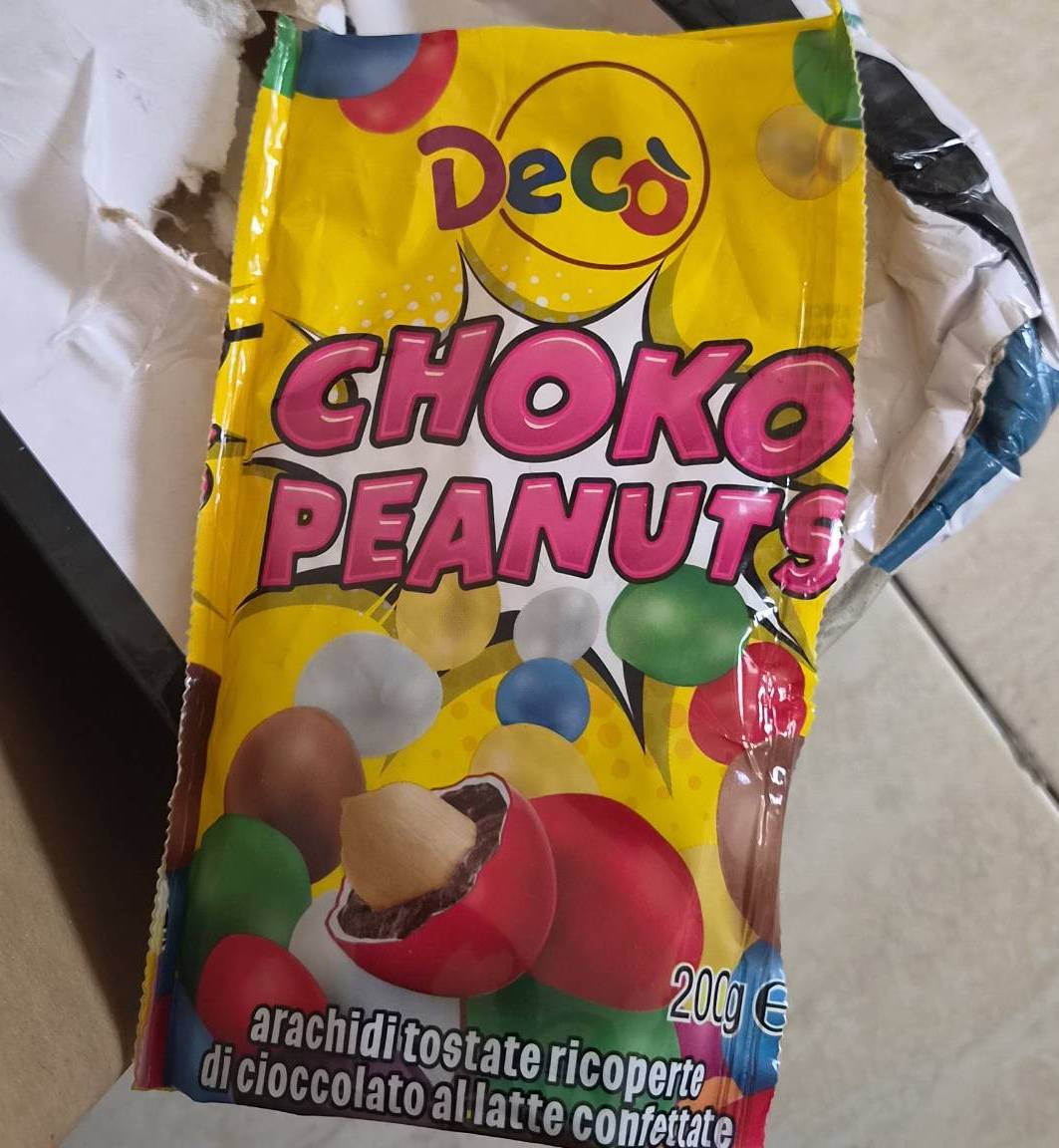
Deco Choko Peanuts comes in a 200 g pack. It is sold under the Decò brand. On Mamori it sits under Snacks › Nuts › Peanuts. Its label lists 16 ingredients.
Deco Choko Peanuts at a glance
Deco Choko Peanuts fits Vegetarian, Pescatarian and Vegan + Dairy diets. It also carries the Gluten Free, Crustaceans Free, Egg Free, Fish Free, Peanut Free, Tree Nut Free, Celery Free, Mustard Free, Sesame Free, Sulfite Free, Lupin Free, Mollusks Free, Barley Free, Beef Free, Citrus Fruit Free, Fructose Free, Gelatin Free, Latex Free, No Added Sugars, Oats Free, Pork Free, Poultry Free, Rye Free, Seed Free and Wheat Free badges. Nutrition-wise, it's Low Salt/Sodium, High Calorie, High Carbs, High Saturated Fat, High in Sugars, Medium in Fiber and Medium in Protein. Worth knowing: it's marked Non-Vegan, Non-Low FODMAP, Non-Vegan + Eggs, Contains Soy, Contains Dairy, Contains Additives, Contains Artificial Flavourings, Contains Corn, Contains Emulsifier, Lactose and Contains Rice.
Diet and allergens
Suitable for vegetarian and pescatarian diets.
Not suitable for a vegan diet.
Contains soy and milk.
Free from gluten, crustaceans, eggs, fish, peanuts, tree nuts, celery, mustard, sesame, sulphites, lupin and molluscs.
Based on Mamori's check of the ingredients on the label. Recipes change, so always read the pack if you have an allergy or intolerance.
Size: 200 g
Last updated 2 November 2026
Ingredients
milk chocolate, cocoa butter, whole milk, cocoa, whey powder, soy lecithin, flavor: vanillin, external coating, rice starch, corn starch, gelling agent: gum arabic, colorants, curcumin, riboflavin: brilliant FCF, brilliant black vegetable, paprika extract
Additives & flavourings
Additives
- E414: Gum Arabic (Acacia Gum): Generally safe
Gum arabic, or acacia gum, is E414. It is a natural gum obtained from the dried sap of acacia trees. It is a soluble dietary fibre made mainly of complex carbohydrates.
In food, it is used as a thickener, stabiliser and emulsifier. It helps keep mixtures even, improves texture, and can help hold flavours or colours in place. It may be found in sweets, soft drinks, icings, baked goods and flavourings.
It is generally considered safe at normal food amounts. It is authorised for use in the EU after safety assessment, and the sources checked raise no concern for typical use.
- E100: Curcumin (From Turmeric): Generally safe
Curcumin (E100) is a yellow-orange food colour made from turmeric, the spice from the root of the Curcuma longa plant. It is the main natural pigment in turmeric and may also be produced as a purified extract for food use.
It is used to give foods a yellow to orange colour. It can be found in products such as sauces, soups, snacks, confectionery, dairy products and processed foods where a warm yellow colour is wanted.
Curcumin is generally considered safe at normal food amounts. It is allowed for use in the EU after EFSA safety assessment, and the sources checked do not raise concerns for typical dietary exposure.
- E151: Brilliant Black PN: Generally safe
Brilliant Black PN (E151), also called Brilliant Black BN, is a synthetic black food colour. It is a water-soluble dye made for adding a dark black or greyish colour to foods and drinks.
It is used where a strong black colour is needed, often in confectionery, desserts, decorations, sauces, and some flavoured drinks. Like other colourants, it mainly affects appearance, not flavour or texture.
It is generally considered safe at normal food amounts. It is authorised for use in the EU, and an EFSA exposure review found no risk of people eating too much from typical dietary sources.
- E160c: Paprika Extract, Capsanthin, Capsorubin: Generally safe
Paprika extract, capsanthin and capsorubin (E160c) is a natural red-orange food colouring made from paprika peppers. The main colouring substances are carotenoids, especially capsanthin and capsorubin.
It is used to give or strengthen orange, red or reddish-brown colour in foods. It may be found in items such as cheeses, sauces, soups, snacks, meat products and seasonings.
It is generally considered safe at normal food-use amounts. It is authorised for use in the EU after EFSA safety assessment, and the sources checked raise no concern at typical levels of consumption.
Flavourings
- flavor: vanillin: Flavouring (EU Union list of flavouring substances: Vanillin). Vanillin is a flavouring substance on the EU Union list.
Questions and answers
Is Deco Choko Peanuts vegan?
No. It contains milk, so it is not suitable for a vegan diet.
Is Deco Choko Peanuts vegetarian?
Yes. It is suitable for a vegetarian diet.
Is Deco Choko Peanuts suitable for a pescatarian diet?
Yes. It is suitable for a pescatarian diet.
Is Deco Choko Peanuts suitable for a Low FODMAP diet?
No. It is not suitable for a Low FODMAP diet.
Is Deco Choko Peanuts suitable for a Vegan + Dairy diet?
Yes. It is suitable for a Vegan + Dairy diet.
Is Deco Choko Peanuts suitable for a Vegan + Eggs diet?
No. It is not suitable for a Vegan + Eggs diet.
Is Deco Choko Peanuts gluten-free?
Yes. Its ingredients include no gluten, and its label gives no gluten warning.
Does Deco Choko Peanuts contain milk?
Yes. It contains milk.
Is Deco Choko Peanuts nut-free?
Yes. Its ingredients include no peanuts or tree nuts, and its label gives no nut warning.
Does Deco Choko Peanuts contain eggs?
No. Its ingredients include no eggs, and its label gives no egg warning.
Which allergens does Deco Choko Peanuts contain?
It contains soy and milk.
More in Peanuts
- Serano Family Pack
- Lorenz The Double Crunch Peanuts Sour Cream Style
- Milbona Vanilla Protein Quark
- Alesto Crispy Coated Peanuts BBQ flavoured
- Mccall Farms Boiled Peanuts
- Zigi Peanuts Marinated Honey Mustard
- Lorenz Peanuts roasted & salted
- Tadim Peanuts
- Alesto Peanuts roasted & salted
- Lorenz Nic Nacs Original
- Lorenz Curly Pnuts Classic