
Damel Sour Mix 100 g
Damel
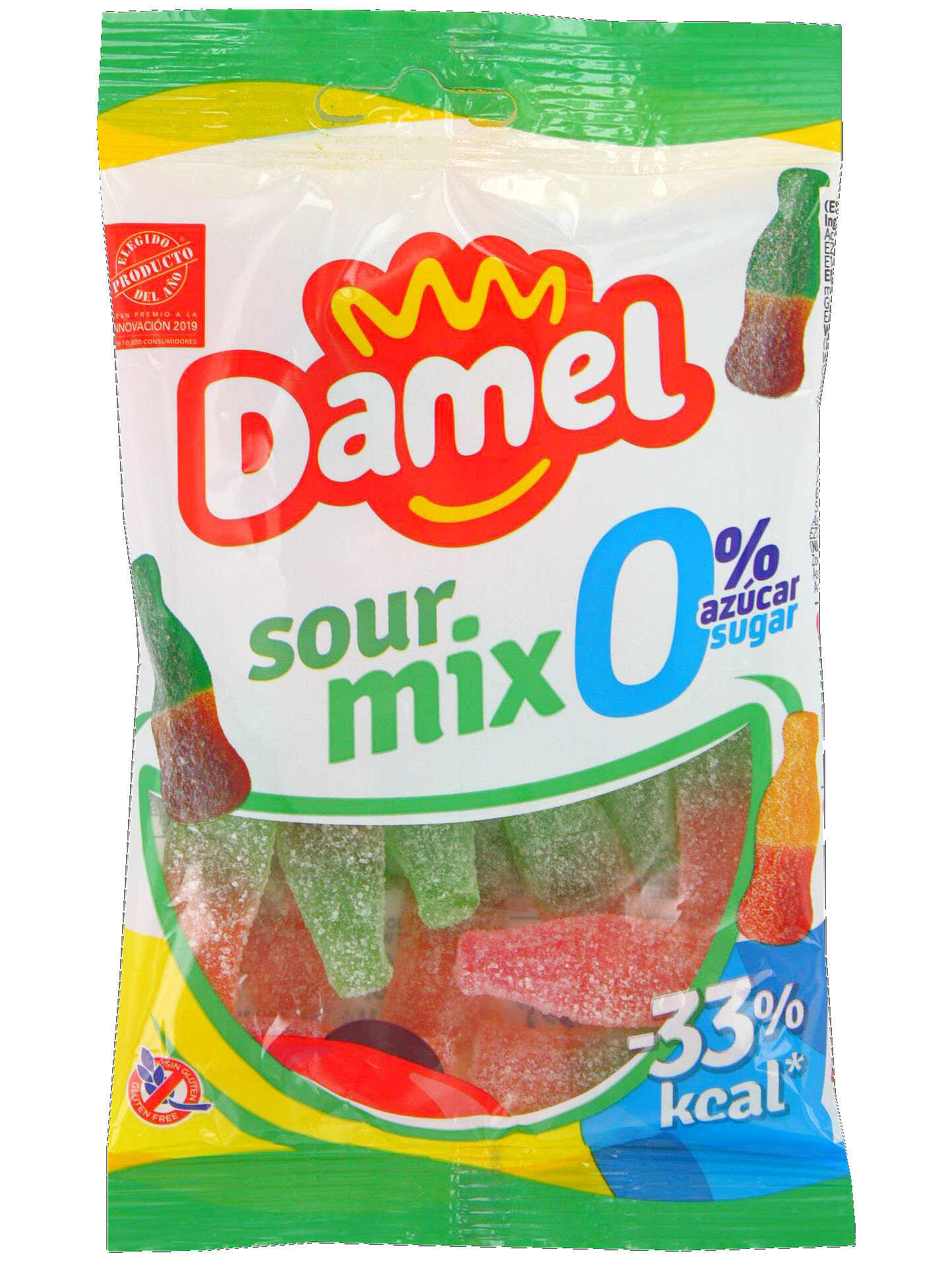
Damel Sour Mix comes in a 100 g pack. It is sold under the Damel brand. On Mamori it sits under Confectionery › Candy, Sweets & Nougat › Jelly Candies. Its label lists 20 ingredients.
Damel Sour Mix at a glance
Damel Sour Mix carries the Gluten Free, Crustaceans Free, Egg Free, Fish Free, Peanut Free, Soy Free, Dairy Free, Tree Nut Free, Celery Free, Mustard Free, Sesame Free, Lupin Free, Mollusks Free, Barley Free, Citrus Fruit Free, Corn Free, Fructose Free, Lactose Free, Latex Free, No Added Sugars, Oats Free, Poultry Free, Rice Free, Rye Free and Wheat Free badges. Nutrition-wise, it's Low Salt/Sodium, Low Saturated Fat, Low Sugars, Low Fiber, Low Protein, High Carbs and Medium in Calories. Worth knowing: it's marked Non-Vegan, Non-Vegetarian, Non-Pescatarian, Non-Low FODMAP, Non-Vegan + Dairy, Non-Vegan + Eggs, Contains Additives, Contains Artificial Flavourings, Contains Beef, Contains Emulsifier, Contains Gelatin, Contains Pork and Contains Seed.
Diet and allergens
Not suitable for vegan, vegetarian or pescatarian diets.
Free from gluten, crustaceans, eggs, fish, peanuts, soy, milk, tree nuts, celery, mustard, sesame, lupin and molluscs.
Based on Mamori's check of the ingredients on the label. Recipes change, so always read the pack if you have an allergy or intolerance.
Size: 100 g
Last updated 26 October 2026
Ingredients
sweeteners, Maltitol syrup, Isomalt, acesulfame-k, Aspartame, Water, gelatin, acidifiers, E330, E296, E270, Flavourings, colourings, safflower extract, E120, E133, E160c, glazing agent, Vegetable Oil:Palm, Carnauba Wax
Additives & flavourings
Additives
- E965: Maltitol (I) Maltitol (Ii) Maltitol Syrup (Sweetener) (Stabiliser): Generally safe
Maltitols (E965) are sugar alcohol sweeteners. They include maltitol and maltitol syrup, made from starch sugars such as maltose, usually from maize or wheat starch.
They are used to sweeten foods with less sugar, add bulk, help keep moisture, and sometimes give a smooth texture or glossy coating. They are common in sugar-free sweets, chewing gum, chocolate, desserts, baked goods and low-sugar products.
Maltitols are generally considered safe at normal amounts and are authorised for use in the EU after safety assessment. Like other sugar alcohols, larger amounts can cause bloating or a laxative effect in some people.
- E953: Isomalt, Isomaltitol: Generally safe
Isomalt (E953), also called isomaltitol, is a sugar alcohol made from sugar beet sugar. It is a low-calorie sweetener and can also be used as a glazing agent.
It is used to add sweetness, bulk, or a smooth coating, especially in sugar-free sweets, chewing gum, chocolates, baked goods, and dessert products. It is often chosen because it is less sweet than sugar and does not brown easily.
Isomalt is generally considered safe. It is allowed in food in the EU after safety assessment, and the sources checked raise no concern at normal amounts.
- E950: Acesulfame K: Generally safe
Acesulfame K, also called acesulfame potassium or E950, is an artificial sweetener. It is a potassium salt of a synthetic sweet-tasting compound and is much sweeter than sugar, so only small amounts are used.
It is used to sweeten foods and drinks without adding much energy. It is often found in sugar-free or reduced-sugar soft drinks, desserts, chewing gum, tabletop sweeteners and some special dietary foods.
It is generally considered safe at normal amounts. It is authorised for use in the EU after safety assessment, and the sources checked raise no concern when it is used within permitted limits.
- E951: Aspartame: Some concerns
Aspartame (E951) is an artificial intense sweetener. It is made from two amino acids, aspartic acid and phenylalanine, joined with a small methanol component, and is much sweeter than sugar.
It is used to give sweetness with very little energy. It is found in many “diet” or “sugar-free” soft drinks, chewing gum, desserts, yoghurts, tabletop sweeteners and some medicines.
Aspartame is allowed for use, but some concerns have been raised. In 2023, IARC classed it as “possibly causing cancer” (Group 2B), while food safety bodies kept the acceptable daily intake; foods containing it must warn people with phenylketonuria that it contains phenylalanine.
- E441: Gelatine (Emulsifier): Generally safe
Gelatine, sometimes listed as E441, is a protein-based ingredient made by processing collagen from animal skin, bones and connective tissue, usually from pigs or cattle.
It helps foods set, thicken, stabilise or give a smooth texture. It is commonly used in jellies, marshmallows, gummy sweets, desserts, yoghurts and some low-fat spreads or meat products.
It is generally considered safe for most people. Under EU law, edible gelatine is treated as a food ingredient rather than a food additive, so it is not classed as an additive in Regulation (EC) No 1333/2008.
- E330: Citric Acid: Generally safe
Citric acid (E330) is a natural organic acid found in citrus fruits and many other plants. The citric acid used in food is usually made by fermentation of sugars using micro-organisms.
It is used as an acidity regulator and antioxidant. It helps give a sharp, sour taste, control pH, and slow colour or flavour changes. It is common in soft drinks, sweets, jams, sauces, canned foods, and many processed foods.
Citric acid is generally considered safe at normal food levels. It is allowed in food in the EU after safety assessment, and the sources checked raise no concern for typical dietary amounts.
- E296: Malic Acid (Acid): Generally safe
Malic acid (E296) is an acid naturally found in many fruits, especially apples. For food use, it is usually made by industrial fermentation or chemical production and is used as a food acid.
It adds a sharp, fruity sour taste and helps control acidity in foods and drinks. It may be found in sweets, soft drinks, jams, fruit products, desserts and some processed foods where a tart flavour or acidity control is needed.
It is generally considered safe at normal food amounts. It is allowed in the EU after safety assessment, and the sources checked raise no concern for typical use.
- E270: Lactic Acid (Preservative): Generally safe
Lactic acid (E270) is an organic acid found naturally in many foods and also made by fermenting sugars, often using bacteria. It is the same type of acid produced in foods such as yoghurt and fermented vegetables.
In food, it is used mainly as an acidity regulator and preservative, helping control pH and slow the growth of some microbes. It may be found in fermented foods, pickled products, drinks, sauces, confectionery and bakery products.
It is generally considered safe. It is allowed in food in the EU after safety assessment, and the sources checked raise no concern at normal amounts.
- E120: Cochineal, Carminic Acid, Carmine (Natural Red 4): Generally safe
Carminic acid and carmine (E120) are red colourants made from cochineal insects. They are also known as cochineal or Natural Red 4, and are not suitable for people avoiding animal-derived ingredients.
They are used to give foods a red, pink, or purple colour. E120 may be found in products such as confectionery, desserts, drinks, yoghurts, processed meats, and sauces where a stable red colour is needed.
E120 is generally considered safe at normal food amounts. It is authorised for use in the EU after EFSA safety assessment, and the sources checked do not raise concerns for typical dietary exposure.
- E133: Brilliant Blue Fcf (Fd&C Blue 1): Some concerns
Brilliant Blue FCF (E133), also known as FD&C Blue 1, is a synthetic blue food colour. It is a water-soluble dye made from petroleum-derived chemical compounds.
It is used to give foods and drinks a bright blue colour, or mixed with other colours to make shades such as green or purple. It can be found in sweets, soft drinks, desserts, ice lollies, decorations and some processed snack foods.
It is allowed for use, but some concerns have been raised. EFSA found that people who eat a lot of foods containing E133 may exceed the safe daily amount, so over-exposure is the main issue.
- E160c: Paprika Extract, Capsanthin, Capsorubin: Generally safe
Paprika extract, capsanthin and capsorubin (E160c) is a natural red-orange food colouring made from paprika peppers. The main colouring substances are carotenoids, especially capsanthin and capsorubin.
It is used to give or strengthen orange, red or reddish-brown colour in foods. It may be found in items such as cheeses, sauces, soups, snacks, meat products and seasonings.
It is generally considered safe at normal food-use amounts. It is authorised for use in the EU after EFSA safety assessment, and the sources checked raise no concern at typical levels of consumption.
- E903: Carnauba Wax: Generally safe
Carnauba wax (E903) is a natural plant wax taken from the leaves of the carnauba palm. It is a hard, glossy wax, also used outside food in coatings and polishes.
In food, it is used as a glazing agent to give a shiny surface and help reduce sticking or moisture loss. It can be found on some sweets, chewing gum, chocolate-coated products, and waxed fruit coatings.
Carnauba wax is generally considered safe at normal food amounts. It is authorised for use in the EU after EFSA safety assessment, and the checked sources raise no concern for typical dietary exposure.
Flavourings
- Flavourings: Flavouring (Regulation (EC) No 1334/2008 on flavourings, Article 16).
Questions and answers
Is Damel Sour Mix vegan?
No. It is not suitable for a vegan diet.
Is Damel Sour Mix vegetarian?
No. It is not suitable for a vegetarian diet.
Is Damel Sour Mix suitable for a pescatarian diet?
No. It is not suitable for a pescatarian diet.
Is Damel Sour Mix suitable for a Low FODMAP diet?
No. It is not suitable for a Low FODMAP diet.
Is Damel Sour Mix suitable for a Vegan + Dairy diet?
No. It is not suitable for a Vegan + Dairy diet.
Is Damel Sour Mix suitable for a Vegan + Eggs diet?
No. It is not suitable for a Vegan + Eggs diet.
Is Damel Sour Mix gluten-free?
Yes. Its ingredients include no gluten, and its label gives no gluten warning.
Does Damel Sour Mix contain milk?
No. Its ingredients include no milk, and its label gives no milk warning.
Is Damel Sour Mix nut-free?
Yes. Its ingredients include no peanuts or tree nuts, and its label gives no nut warning.
Does Damel Sour Mix contain eggs?
No. Its ingredients include no eggs, and its label gives no egg warning.