
Country Jelly Sugar Free Cherry 15 g
Country
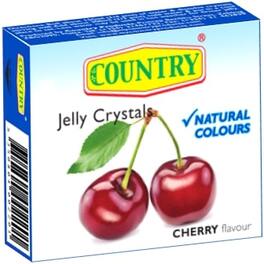
Country Jelly Sugar Free Cherry comes in a 15 g pack. It is sold under the Country brand. On Mamori it sits under Groceries › Jelly, Custard & Desserts › Jelly. Its label lists 8 ingredients.
Country Jelly Sugar Free Cherry at a glance
Country Jelly Sugar Free Cherry carries the Crustaceans Free, Egg Free, Fish Free, Dairy Free, Sulfite Free, Lupin Free, Mollusks Free, Barley Free, Citrus Fruit Free, Corn Free, Lactose Free, Latex Free, No Added Sugars, Oats Free, Poultry Free, Rice Free and Rye Free badges. Nutrition-wise, it's Low Calorie, Low Carbs, Low Salt/Sodium, Low Saturated Fat, Low Sugars, Low Fiber and Low Protein. Worth knowing: it's marked Non-Vegan, Non-Vegetarian, Non-Pescatarian, Non-Low FODMAP, Non-Vegan + Dairy, Non-Vegan + Eggs, Contains Additives, Contains Artificial Flavourings, Contains Beef, Contains Emulsifier, Contains Fructose, Contains Gelatin, Contains Pork, Contains Seed and Contains Wheat.
Diet and allergens
Not suitable for vegan, vegetarian or pescatarian diets.
Free from crustaceans, eggs, fish, milk, sulphites, lupin and molluscs.
May contain: nuts, sesame, soya, celery, mustard, peanuts, wheat gluten.
Based on Mamori's check of the ingredients on the label. Recipes change, so always read the pack if you have an allergy or intolerance.
Size: 15 g
Last updated 26 October 2026
Ingredients
Beef gelatine, adipic acid, fumaric acid, acidity regulator: trisodium citrate, sweetener: aspartame, artificial Cherry Flavour, natural Cherry Flavour, colour: beetroot red
Additives & flavourings
Additives
- E441: Gelatine (Emulsifier): Generally safe
Gelatine, sometimes listed as E441, is a protein-based ingredient made by processing collagen from animal skin, bones and connective tissue, usually from pigs or cattle.
It helps foods set, thicken, stabilise or give a smooth texture. It is commonly used in jellies, marshmallows, gummy sweets, desserts, yoghurts and some low-fat spreads or meat products.
It is generally considered safe for most people. Under EU law, edible gelatine is treated as a food ingredient rather than a food additive, so it is not classed as an additive in Regulation (EC) No 1333/2008.
- E355: Adipic Acid: Generally safe
Adipic acid, or E355, is an acidity regulator. It is an organic acid, usually made industrially, and is related to acids that can occur in small amounts in some natural foods.
It is used to adjust tartness and control acidity in foods and drinks. It may be found in products such as powdered dessert mixes, fillings, confectionery, flavoured drinks, and other foods where a steady sour taste or pH control is needed.
Adipic acid is generally considered safe at normal food-use levels. It is authorised for use in the EU after safety assessment, and the sources checked raise no specific concern at typical amounts.
- E331: Sodium Citrates (I) Monosodium Citrate (Ii) Disodium Citrate (Iii) Sodium Citrate (Trisodium Citrate): Generally safe
Sodium citrates (E331) are sodium salts of citric acid. They include monosodium, disodium and trisodium citrate, and are usually made by neutralising citric acid with a sodium compound.
They are used mainly as acidity regulators, helping control sourness and pH, and can also support antioxidant effects by binding metals. They are found in a wide range of foods, such as soft drinks, dairy products, processed cheese, desserts, jams and some meat products.
Sodium citrates are generally considered safe. They are authorised for use in food in the EU after EFSA safety assessment, and no concern is raised at normal amounts used in foods.
- E951: Aspartame: Some concerns
Aspartame (E951) is an artificial intense sweetener. It is made from two amino acids, aspartic acid and phenylalanine, joined with a small methanol component, and is much sweeter than sugar.
It is used to give sweetness with very little energy. It is found in many “diet” or “sugar-free” soft drinks, chewing gum, desserts, yoghurts, tabletop sweeteners and some medicines.
Aspartame is allowed for use, but some concerns have been raised. In 2023, IARC classed it as “possibly causing cancer” (Group 2B), while food safety bodies kept the acceptable daily intake; foods containing it must warn people with phenylketonuria that it contains phenylalanine.
Flavourings
- artificial Cherry Flavour: Flavouring (Regulation (EC) No 1334/2008 on flavourings, Article 16).
- natural Cherry Flavour: Natural cherry flavouring (Regulation (EC) No 1334/2008 on flavourings, Article 16).
Questions and answers
Is Country Jelly Sugar Free Cherry vegan?
No. It is not suitable for a vegan diet.
Is Country Jelly Sugar Free Cherry vegetarian?
No. It is not suitable for a vegetarian diet.
Is Country Jelly Sugar Free Cherry suitable for a pescatarian diet?
No. It is not suitable for a pescatarian diet.
Is Country Jelly Sugar Free Cherry suitable for a Low FODMAP diet?
No. It is not suitable for a Low FODMAP diet.
Is Country Jelly Sugar Free Cherry suitable for a Vegan + Dairy diet?
No. It is not suitable for a Vegan + Dairy diet.
Is Country Jelly Sugar Free Cherry suitable for a Vegan + Eggs diet?
No. It is not suitable for a Vegan + Eggs diet.
Does Country Jelly Sugar Free Cherry contain milk?
No. Its ingredients include no milk, and its label gives no milk warning.
Does Country Jelly Sugar Free Cherry contain eggs?
No. Its ingredients include no eggs, and its label gives no egg warning.
Does Country Jelly Sugar Free Cherry carry an allergy warning?
Yes. Its label says it may contain: nuts, sesame, soya, celery, mustard, peanuts, wheat gluten.
More in Jelly
- Dole Packaged Foods Llc. Mandarins In Orange Gel
- Foster Clarks Raspberry Jelly
- Decorì The Ingredients The Gelatins
- Red quick gel
- Mrs Darlingtons Chilli Jelly
- Mrs Darlington's Red Currant Jelly With Port
- Waitrose Essential Redcurrant Jelly
- Chivers Kiwi & Pomegranate 9cal Jelly Pots
- Foster Clark's Pomegranate Jelly
- Instick olive lemon
- Materne Mat Pom Potes Banana
- Materne Mat Pom Potes Raspberry