
Conditorei Stracciatella Cake 1.4 kg
On the pack: Conditorei Stracciatella Gateau 1.40 Kg
Conditorei
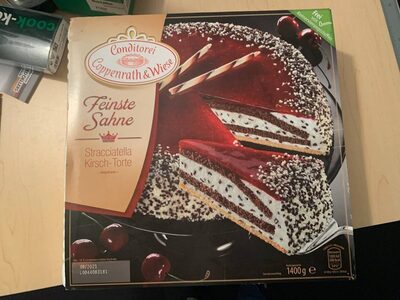
Conditorei Stracciatella Cake comes in a 1.4 kg pack. It is sold under the Conditorei brand. On Mamori it sits under Frozen › Ice Cream and Desserts › Frozen Cakes. Its label lists 54 ingredients.
Conditorei Stracciatella Cake at a glance
Conditorei Stracciatella Cake carries the Crustaceans Free, Fish Free, Celery Free, Mustard Free, Sesame Free, Sulfite Free, Lupin Free, Mollusks Free, Barley Free, Citrus Fruit Free, Latex Free, Oats Free, Rice Free and Rye Free badges. Nutrition-wise, it's Low Salt/Sodium, Low Protein, High Carbs, High Saturated Fat, High in Sugars, Medium in Fiber and Medium in Calories. Worth knowing: it's marked Non-Vegan, Non-Vegetarian, Non-Pescatarian, Non-Low FODMAP, Non-Vegan + Dairy, Non-Vegan + Eggs, Contains Gluten, Contains Egg, Contains Soy, Contains Dairy, Contains Additives, Contains Artificial Flavourings, Contains Beef, Contains Corn, Contains Emulsifier, Contains Fructose, Contains Gelatin, Lactose, Contains Added Sugars, Contains Pork, Contains Poultry, Contains Seed and Contains Wheat.
Diet and allergens
Not suitable for vegan, vegetarian or pescatarian diets.
Contains gluten, eggs, soy and milk.
Free from crustaceans, fish, celery, mustard, sesame, sulphites, lupin and molluscs.
May contain: Nuts.
Based on Mamori's check of the ingredients on the label. Recipes change, so always read the pack if you have an allergy or intolerance.
Size: 1.4 kg
Last updated 2 November 2026
Ingredients
CAINE, sugar, sour cherries, Wheat Flour, Chocolate, sugar, cocoa mass, cocoa butter, emulsifier soy lecithin, Water, Glucose-fructose syrup, Whole Egg, condensed milk, Invert Sugar Syrup, Vegetable fat, Vegetable Fat: Palm, Vegetable Oil: Rapeseed, white chocolate, sugar, cocoa butter, whole milk powder, emulsifier lecithins, Apple jam, Glucose Syrup, apple, gelling agent pectins, Acidifier Citric Acid, modified starch, Decorative sprinkles, sugar, cocoa butter, whole milk powder, cocoa mass, Lactose, Butter Oil, emulsifier soy lecithin, Natural Flavor, whole milk powder, strongly defatted cocoa, edible gelatin, Wheat Starch, sweet whey powder, Emulsifier: Mono- and Diglycerides of Fatty Acids, natural vanilla flavor, Acidifier: Citric acid, Leavening agents, Sodium Carbonates, sodium citrates, Natural Flavor, table salt, Gelling Agent: Pectins, Acidity regulator, sodium citrates, Calcium Chloride
Additives & flavourings
Additives
- E707: Penicillin G Procaine: Not allowed in the EU (Regulation (EC) No 1333/2008, Article 4(1) and Annex II)
Penicillin G procaine, E707, is an antibiotic made by combining benzylpenicillin with procaine to form a longer-acting penicillin salt. It is not a normal food ingredient in the way colours, preservatives, or emulsifiers are.
It may be relevant to food through controls on veterinary medicines, where antibiotics can leave residues in animal-derived foods such as meat or milk if not properly managed. Its role is to treat bacterial infections in animals, not to improve food.
Safety is controlled through legal residue limits and withdrawal periods. In the EU, it is allowed within set limits, with monitoring intended to keep residues in food below permitted levels.
- E322: Lecithins: Generally safe
Lecithins (E322) are a group of natural fatty substances found in plants and animals. Food-grade lecithin is usually made from soya, sunflower, rapeseed or egg, and in some cases may be animal derived.
They are mainly used as emulsifiers, helping oil and water mix and keeping textures smooth. They are found in foods such as chocolate, spreads, baked goods, sauces, margarines and instant powders.
Lecithins are generally considered safe at normal food amounts and are allowed in the EU after safety assessment. People with relevant allergies should note the source, especially soya or egg.
- E440: Pectins (I) Pectin (Ii) Amidated Pectin: Generally safe
Pectins (E440) are natural gelling fibres found in the cell walls of fruits and vegetables, especially apples and citrus peel. E440 includes ordinary pectin and amidated pectin, a modified form that gels more easily in some foods.
They are used as thickeners, stabilisers and gelling agents. You may find them in jams, jellies, fruit spreads, desserts, confectionery, yoghurts and some drinks or sauces where a thicker texture is needed.
Pectins are generally considered safe. They are authorised for use in food in the EU after safety assessment, and the sources checked raise no concern at normal food amounts.
- E330: Citric Acid: Generally safe
Citric acid (E330) is a natural organic acid found in citrus fruits and many other plants. The citric acid used in food is usually made by fermentation of sugars using micro-organisms.
It is used as an acidity regulator and antioxidant. It helps give a sharp, sour taste, control pH, and slow colour or flavour changes. It is common in soft drinks, sweets, jams, sauces, canned foods, and many processed foods.
Citric acid is generally considered safe at normal food levels. It is allowed in food in the EU after safety assessment, and the sources checked raise no concern for typical dietary amounts.
- E1401: Modified Starch ((Acid-Treated Starch) Stabiliser): Generally safe
Acid-treated starch, often labelled E1401 in some systems, is a modified starch. It is made by treating ordinary starch from plants such as maize, potato or wheat with acid to change how it behaves in food.
It helps thicken, stabilise or improve texture, especially where a smooth, consistent result is needed. Modified starches are used in foods such as sauces, soups, desserts, fillings and processed meals.
It is generally considered safe. Under EU law, acid-treated starch is not classed as a food additive; it is treated as a food ingredient instead.
- E441: Gelatine (Emulsifier): Generally safe
Gelatine, sometimes listed as E441, is a protein-based ingredient made by processing collagen from animal skin, bones and connective tissue, usually from pigs or cattle.
It helps foods set, thicken, stabilise or give a smooth texture. It is commonly used in jellies, marshmallows, gummy sweets, desserts, yoghurts and some low-fat spreads or meat products.
It is generally considered safe for most people. Under EU law, edible gelatine is treated as a food ingredient rather than a food additive, so it is not classed as an additive in Regulation (EC) No 1333/2008.
- E471: Mono- And Diglycerides Of Fatty Acids (Glyceryl Monostearate, Glyceryl Distearate): Generally safe
Mono- and diglycerides of fatty acids, or E471, are emulsifiers made from glycerol and fatty acids. The fatty acids can come from vegetable oils or animal fats, so the source is not always clear unless stated by the producer.
They help oil and water mix, improve texture, and keep foods stable. They are often used in baked goods, spreads, desserts, ice cream, sauces, and processed foods where a smooth or consistent texture is needed.
E471 is generally considered safe. It is allowed in food in the EU after safety assessment, and the sources we check raise no concern at normal amounts.
- E500: Sodium Carbonates: (I) Sodium Carbonate (Ii) Sodium Bicarbonate (Sodium Hydrogen Carbonate) (Iii) Sodium Sesquicarbonate (Acidity Regulator): Generally safe
Sodium carbonates (E500) are a group of sodium salts, including sodium carbonate, sodium bicarbonate and sodium sesquicarbonate. The best-known is sodium bicarbonate, also called bicarbonate of soda.
They are used to control acidity, help baked goods rise by releasing carbon dioxide, and reduce clumping in some powdered foods. They can be found in baking powders, biscuits, cakes, self-raising flour, cocoa mixes and other dry food mixes.
E500 is generally considered safe. It is allowed in food in the EU after safety assessment, and the sources checked do not raise concerns at normal food amounts.
- E331: Sodium Citrates (I) Monosodium Citrate (Ii) Disodium Citrate (Iii) Sodium Citrate (Trisodium Citrate): Generally safe
Sodium citrates (E331) are sodium salts of citric acid. They include monosodium, disodium and trisodium citrate, and are usually made by neutralising citric acid with a sodium compound.
They are used mainly as acidity regulators, helping control sourness and pH, and can also support antioxidant effects by binding metals. They are found in a wide range of foods, such as soft drinks, dairy products, processed cheese, desserts, jams and some meat products.
Sodium citrates are generally considered safe. They are authorised for use in food in the EU after EFSA safety assessment, and no concern is raised at normal amounts used in foods.
- E509: Calcium Chloride (Sequestrant): Some concerns
Calcium chloride (E509) is a salt made from calcium and chloride. In food, it is used as an acidity regulator, firming agent, stabiliser, and anti-caking agent.
It can help keep fruit and vegetables firm, support cheese making, improve texture in tofu, and prevent powders or salts from clumping. It may also be used where control of acidity or mineral balance is needed.
It is allowed for use in food, but some concerns have been raised about high intakes. EFSA found that people who consume a lot of foods containing calcium chloride could exceed the safe daily amount.
Flavourings
- Natural Flavor: Natural flavouring (Regulation (EC) No 1334/2008 on flavourings, Article 16).
- natural vanilla flavor: Natural vanilla flavouring (Regulation (EC) No 1334/2008 on flavourings, Article 16).
- Natural Flavor: Natural flavouring (Regulation (EC) No 1334/2008 on flavourings, Article 16).
Questions and answers
Is Conditorei Stracciatella Cake vegan?
No. It contains eggs and milk, so it is not suitable for a vegan diet.
Is Conditorei Stracciatella Cake vegetarian?
No. It is not suitable for a vegetarian diet.
Is Conditorei Stracciatella Cake suitable for a pescatarian diet?
No. It is not suitable for a pescatarian diet.
Is Conditorei Stracciatella Cake suitable for a Low FODMAP diet?
No. It is not suitable for a Low FODMAP diet.
Is Conditorei Stracciatella Cake suitable for a Vegan + Dairy diet?
No. It is not suitable for a Vegan + Dairy diet.
Is Conditorei Stracciatella Cake suitable for a Vegan + Eggs diet?
No. It is not suitable for a Vegan + Eggs diet.
Is Conditorei Stracciatella Cake gluten-free?
No. It contains gluten.
Does Conditorei Stracciatella Cake contain milk?
Yes. It contains milk.
Does Conditorei Stracciatella Cake contain eggs?
Yes. It contains eggs.
Which allergens does Conditorei Stracciatella Cake contain?
It contains gluten, eggs, soy and milk. Its label also says it may contain: Nuts.
More in Frozen Cakes
- Motta Nougatine Word
- Motta Norwegian Fashion
- Conditorei Strawberry Gateau
- Carrefour Vanilla and Cocoa Dessert
- Carrefour Mini Vasch Panna Cotta
- Almondy Strawberry Mouse Cake
- Conditorei Chocolate Gateau
- beldessert Lava Cake Chocolate
- Conditorei Coppenrath & Wiese Strawberry Cheesecake
- Almondy Cake With Daim
- Terre D'Italia Apple Strudel
- beldessert Lava Cake Chocolate & Salted Caramel