
Cheetos Sticks 96 g
Cheetos
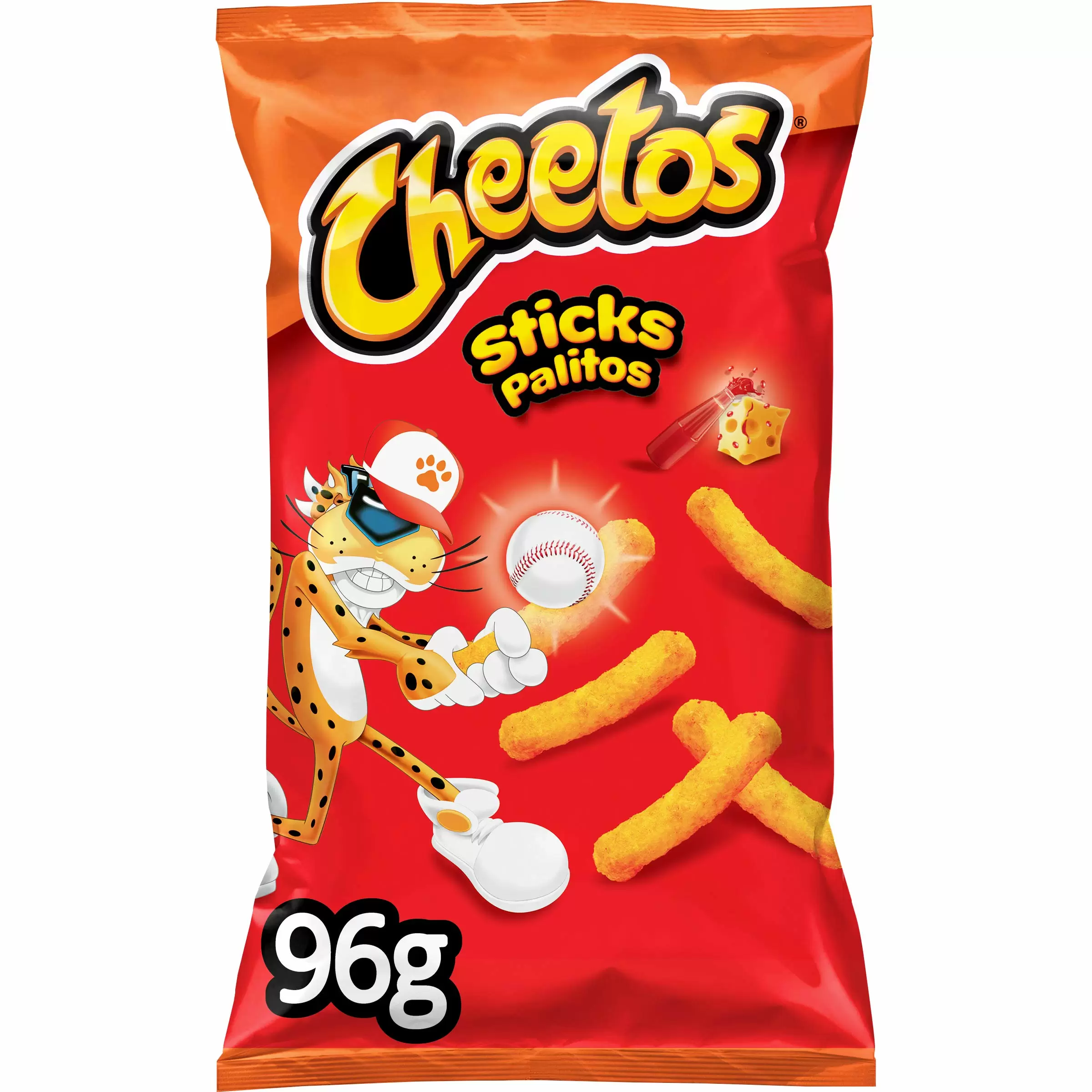
Cheetos Sticks comes in a 96 g pack. It is sold under the Cheetos brand. On Mamori it sits under Snacks › Snacks & Crisps › Corn Snack. Its label lists 20 ingredients.
Cheetos Sticks at a glance
Cheetos Sticks fits Pescatarian and Vegan + Dairy diets. It also carries the Crustaceans Free, Egg Free, Fish Free, Peanut Free, Tree Nut Free, Celery Free, Mustard Free, Sesame Free, Sulfite Free, Lupin Free, Mollusks Free, Barley Free, Beef Free, Citrus Fruit Free, Gelatin Free, Latex Free, Oats Free, Pork Free, Poultry Free and Rye Free badges. Nutrition-wise, it's High Calorie, High Carbs, High Salt/Sodium, Medium in Fiber, Medium in Protein, Medium Saturated Fat and Medium in Sugars. Worth knowing: it's marked Non-Vegan, Non-Vegetarian, Non-Low FODMAP, Non-Vegan + Eggs, Contains Gluten, Contains Dairy, Contains Additives, Contains Artificial Flavourings, Contains Corn, Contains Emulsifier, Contains Fructose, Lactose, Contains Added Sugars, Contains Rice, Contains Seed and Contains Wheat.
Diet and allergens
Suitable for a pescatarian diet.
Not suitable for vegan or vegetarian diets.
Contains gluten and milk.
Free from crustaceans, eggs, fish, peanuts, tree nuts, celery, mustard, sesame, sulphites, lupin and molluscs.
May contain: soy.
Based on Mamori's check of the ingredients on the label. Recipes change, so always read the pack if you have an allergy or intolerance.
Size: 96 g
Last updated 2 November 2026
Ingredients
corn flour, rapeseed oil, potato flakes, wheat flour, cheese and ketchup flavoring base, lactose, flavorings, sugar, flavor enhancers, monosodium glutamate, disodium inosinate, disodium guanylate, whey powder, cheese powder, sweetener: aspartame, spices, rice flour, maltodextrin, salt, color: paprika extract
Additives & flavourings
Additives
- E621: monosodium glutamate: Some concerns
Monosodium glutamate, or MSG (E621), is the sodium salt of glutamic acid, an amino acid found naturally in many foods. It is made as a purified flavour enhancer.
It boosts savoury “umami” taste and is used in foods such as soups, sauces, seasonings, savoury snacks, ready meals and processed meat or vegetable dishes.
It is allowed in food, but some concerns have been raised. EFSA found that people who eat a lot of foods containing glutamates can go over the safe daily amount, so exposure may be high for frequent consumers.
- E631: Disodium Inosinate: Generally safe
Disodium inosinate, or E631, is a flavour enhancer. It is the sodium salt of inosinic acid, a substance related to naturally occurring compounds found in some foods. It can be made from animal or microbial sources, so it may not always be suitable for vegetarian or vegan diets.
It is used to boost savoury, “umami” flavours, often together with glutamates such as MSG. It may be found in snack foods, seasoning mixes, instant noodles, soups, sauces and processed savoury foods.
It is allowed in food in the EU after safety assessment, and is generally considered safe at normal amounts used in foods. The sources checked raise no specific concern for typical dietary exposure.
- E627: Disodium Guanylate: Generally safe
Disodium guanylate (E627) is a flavour enhancer made from guanylic acid, a substance related to natural nucleotides found in living cells. It can be produced by fermentation or extracted from natural sources, and may sometimes be animal derived.
It is used to boost savoury, meaty or “umami” flavours, often together with monosodium glutamate (MSG). It may be found in foods such as soups, sauces, seasonings, savoury snacks, instant noodles and processed meat products.
E627 is generally considered safe at normal amounts used in food. It is authorised for use in the EU after safety assessment, and the sources checked raise no concern for typical dietary exposure.
- E951: Aspartame: Some concerns
Aspartame (E951) is an artificial intense sweetener. It is made from two amino acids, aspartic acid and phenylalanine, joined with a small methanol component, and is much sweeter than sugar.
It is used to give sweetness with very little energy. It is found in many “diet” or “sugar-free” soft drinks, chewing gum, desserts, yoghurts, tabletop sweeteners and some medicines.
Aspartame is allowed for use, but some concerns have been raised. In 2023, IARC classed it as “possibly causing cancer” (Group 2B), while food safety bodies kept the acceptable daily intake; foods containing it must warn people with phenylketonuria that it contains phenylalanine.
- E160c: Paprika Extract, Capsanthin, Capsorubin: Generally safe
Paprika extract, capsanthin and capsorubin (E160c) is a natural red-orange food colouring made from paprika peppers. The main colouring substances are carotenoids, especially capsanthin and capsorubin.
It is used to give or strengthen orange, red or reddish-brown colour in foods. It may be found in items such as cheeses, sauces, soups, snacks, meat products and seasonings.
It is generally considered safe at normal food-use amounts. It is authorised for use in the EU after EFSA safety assessment, and the sources checked raise no concern at typical levels of consumption.
Flavourings
- flavorings: Flavouring (Regulation (EC) No 1334/2008 on flavourings, Article 16).
Questions and answers
Is Cheetos Sticks vegan?
No. It contains milk, so it is not suitable for a vegan diet.
Is Cheetos Sticks vegetarian?
No. It is not suitable for a vegetarian diet.
Is Cheetos Sticks suitable for a pescatarian diet?
Yes. It is suitable for a pescatarian diet.
Is Cheetos Sticks suitable for a Low FODMAP diet?
No. It is not suitable for a Low FODMAP diet.
Is Cheetos Sticks suitable for a Vegan + Dairy diet?
Yes. It is suitable for a Vegan + Dairy diet.
Is Cheetos Sticks suitable for a Vegan + Eggs diet?
No. It is not suitable for a Vegan + Eggs diet.
Is Cheetos Sticks gluten-free?
No. It contains gluten.
Does Cheetos Sticks contain milk?
Yes. It contains milk.
Is Cheetos Sticks nut-free?
Yes. Its ingredients include no peanuts or tree nuts, and its label gives no nut warning.
Does Cheetos Sticks contain eggs?
No. Its ingredients include no eggs, and its label gives no egg warning.
Which allergens does Cheetos Sticks contain?
It contains gluten and milk. Its label also says it may contain: soy.
More in Corn Snack
- Lidl Bio organic corn snack
- Fatina Mais grillé
- Conad Cornetti di mais al gusto
- Verdemio Gallette di mais biologico
- Certossa Corn cakes
- Gullón Dark chocolate and corn galette
- Organix Gruffalo Cheese & Onion Organic Puffs 12 Months Plus
- Organix Gruffalo Barbeque Organic Snack Puffs 12m+
- Organix Cheese & Herb Puffs Organic 10m+
- Fiorentini Si&no More Bio Triangle Corn Salt
- Curtiriso Rice & Corn Flakes
- Curtiriso Corn Cakes Organic