
Valsoia Biscuit and lemon
On the pack: Biscotto e limone
Valsoia
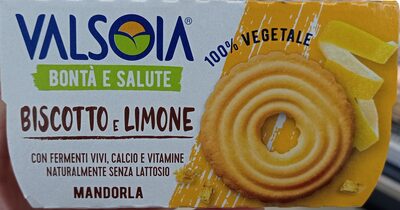
Valsoia Biscuit and lemon is listed on Mamori. It is sold under the Valsoia brand. On Mamori it sits under Confectionery › Biscuits, Wafers & Cookies › Plain Biscuits. Its label lists 23 ingredients.
Valsoia Biscuit and lemon at a glance
Valsoia Biscuit and lemon fits Vegan, Vegetarian, Pescatarian, Vegan + Dairy and Vegan + Eggs diets. It also carries the Crustaceans Free, Egg Free, Fish Free, Dairy Free, Celery Free, Mustard Free, Sesame Free, Lupin Free, Mollusks Free, Beef Free, Emulsifier Free, Gelatin Free, Lactose Free, Latex Free, Pork Free and Poultry Free badges. Nutrition-wise, it's Low Salt/Sodium, Low Saturated Fat, Low Fiber, Low Protein, Medium in Calories, Medium Carbs and Medium in Sugars. Worth knowing: it's marked Non-Low FODMAP, Contains Gluten, Contains Tree Nut, Contains Additives, Contains Artificial Flavourings, Contains Barley, Contains Citrus Fruit, Contains Corn, Contains Fructose, Contains Added Sugars, Contains Oats, Contains Rice, Contains Rye, Contains Seed and Contains Wheat.
Diet and allergens
Suitable for vegan, vegetarian and pescatarian diets.
Contains gluten and tree nuts.
Free from crustaceans, eggs, fish, milk, celery, mustard, sesame, lupin and molluscs.
May contain: soy, other nuts, rye, barley, oats, spelt, kamut.
Based on Mamori's check of the ingredients on the label. Recipes change, so always read the pack if you have an allergy or intolerance.
Last updated 2 November 2026
Ingredients
almond drink, water, almond paste, sugar, water, pea protein, biscuit, wheat flour, water, salt, dextrose, lemon peel, modified starch, concentrated lemon juice, citrus fiber, thickener: pectins, calcium phosphates, flavoring, salt, vitamins, vitamin B12, vitamin D2, live cultures
Additives & flavourings
Additives
- E1401: Modified Starch ((Acid-Treated Starch) Stabiliser): Generally safe
Acid-treated starch, often labelled E1401 in some systems, is a modified starch. It is made by treating ordinary starch from plants such as maize, potato or wheat with acid to change how it behaves in food.
It helps thicken, stabilise or improve texture, especially where a smooth, consistent result is needed. Modified starches are used in foods such as sauces, soups, desserts, fillings and processed meals.
It is generally considered safe. Under EU law, acid-treated starch is not classed as a food additive; it is treated as a food ingredient instead.
- E440: Pectins (I) Pectin (Ii) Amidated Pectin: Generally safe
Pectins (E440) are natural gelling fibres found in the cell walls of fruits and vegetables, especially apples and citrus peel. E440 includes ordinary pectin and amidated pectin, a modified form that gels more easily in some foods.
They are used as thickeners, stabilisers and gelling agents. You may find them in jams, jellies, fruit spreads, desserts, confectionery, yoghurts and some drinks or sauces where a thicker texture is needed.
Pectins are generally considered safe. They are authorised for use in food in the EU after safety assessment, and the sources checked raise no concern at normal food amounts.
- E341: Calcium Phosphates (I) Monocalcium Phosphate (Ii) Dicalcium Phosphate (Iii) Tricalcium Phosphate: Some concerns
Calcium phosphates (E341) are mineral salts of calcium and phosphate. The group includes monocalcium phosphate, dicalcium phosphate and tricalcium phosphate, and they are forms of the same nutrients found naturally in bones and teeth.
They are used to control acidity, help powders flow, support raising agents, and sometimes add calcium. They can be found in foods such as flour mixes, baked goods, powdered drinks, processed cheese, and some supplements or fortified foods.
They are allowed in food, but there are some concerns. EFSA found that people who eat a lot of foods containing phosphate additives can exceed the safe daily amount, and people with kidney disease are often advised to limit phosphate intake.
Flavourings
- flavoring: Flavouring (Regulation (EC) No 1334/2008 on flavourings, Article 16).
Questions and answers
Is Valsoia Biscuit and lemon vegan?
Yes. It is suitable for a vegan diet.
Is Valsoia Biscuit and lemon vegetarian?
Yes. It is suitable for a vegetarian diet.
Is Valsoia Biscuit and lemon suitable for a pescatarian diet?
Yes. It is suitable for a pescatarian diet.
Is Valsoia Biscuit and lemon suitable for a Low FODMAP diet?
No. It is not suitable for a Low FODMAP diet.
Is Valsoia Biscuit and lemon suitable for a Vegan + Dairy diet?
Yes. It is suitable for a Vegan + Dairy diet.
Is Valsoia Biscuit and lemon suitable for a Vegan + Eggs diet?
Yes. It is suitable for a Vegan + Eggs diet.
Is Valsoia Biscuit and lemon gluten-free?
No. It contains gluten.
Does Valsoia Biscuit and lemon contain milk?
No. Its ingredients include no milk, and its label gives no milk warning.
Is Valsoia Biscuit and lemon nut-free?
No. It contains tree nuts.
Does Valsoia Biscuit and lemon contain eggs?
No. Its ingredients include no eggs, and its label gives no egg warning.
Which allergens does Valsoia Biscuit and lemon contain?
It contains gluten and tree nuts. Its label also says it may contain: soy, other nuts, rye, barley, oats, spelt, kamut.
More in Plain Biscuits
- Le Veneziane Biscotti Dietetici senza Glutine con Cacao e Nocciole
- Lotus Biscoff Karamell Kekse
- Nutri Free Biscotti del mattino senza glutine
- Lazzaroni Wholesale Zerole Whole Wheat Cookies No Added Sugar
- Cartwright & Butler Butter Fudge
- Realforno Fior di Integrale
- Marks & Spencers All butter Viennese swirls
- Italiamo Cream Flower
- DEVON Nice Coconut Biscuits
- Realforno Chocolate flower
- D. Lazzaroni & C. Integral
- Bisquini Delicious butter cookies