
Bering Tsarskaya Black Caviar Imitation 220 g
Bering
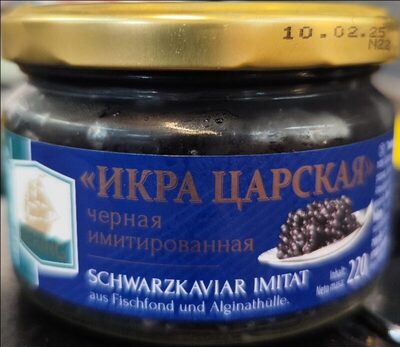
Bering Tsarskaya Black Caviar Imitation comes in a 220 g pack. It is sold under the Bering brand. On Mamori it sits under Meat and Seafood › Seafood › Caviar. Its label lists 17 ingredients.
Bering Tsarskaya Black Caviar Imitation at a glance
Bering Tsarskaya Black Caviar Imitation fits a Pescatarian diet. It also carries the Gluten Free, Crustaceans Free, Egg Free, Peanut Free, Soy Free, Dairy Free, Tree Nut Free, Celery Free, Mustard Free, Sesame Free, Sulfite Free, Lupin Free, Mollusks Free, Barley Free, Beef Free, Citrus Fruit Free, Fructose Free, Gelatin Free, Lactose Free, Latex Free, Oats Free, Pork Free, Poultry Free, Rice Free, Rye Free and Wheat Free badges. Nutrition-wise, it's Low Carbs, Low Sugars, Low Fiber, Low Protein, High Salt/Sodium, Medium in Calories and Medium Saturated Fat. Worth knowing: it's marked Non-Vegan, Non-Vegetarian, Non-Low FODMAP, Non-Vegan + Dairy, Non-Vegan + Eggs, Contains Fish, Contains Additives, Contains Artificial Flavourings, Contains Corn, Contains Emulsifier, Contains Added Sugars and Contains Seed.
Diet and allergens
Suitable for a pescatarian diet.
Not suitable for vegan or vegetarian diets.
Contains fish.
Free from gluten, crustaceans, eggs, peanuts, soy, milk, tree nuts, celery, mustard, sesame, sulphites, lupin and molluscs.
Based on Mamori's check of the ingredients on the label. Recipes change, so always read the pack if you have an allergy or intolerance.
Size: 220 g
Last updated 26 October 2026
Ingredients
Salt, Fish oil, Sunflower oil, Dextrose, E321, Disodium inosinate, Flavor enhancer monosodium glutamate, Thickening agents, E401, E466, E1442, E153, Yeast extract, Water, E627, Fish broth, Acidifier: citric acid
Additives
- E321: Butylated Hydroxytoluene (Bht): Generally safe
Butylated hydroxytoluene, or BHT (E321), is a synthetic antioxidant. It is a fat-soluble phenolic compound made to slow the breakdown of fats and oils.
In food, BHT helps prevent fats from going rancid and protects flavour, colour and shelf life. It may be used in fatty foods such as oils, shortenings, snack products, chewing gum and some processed foods where oxidation is a concern.
BHT is generally considered safe at normal food-use levels. It is authorised for use in the EU after EFSA safety assessment, and the sources checked raise no concern at typical amounts.
- E631: Disodium Inosinate: Generally safe
Disodium inosinate, or E631, is a flavour enhancer. It is the sodium salt of inosinic acid, a substance related to naturally occurring compounds found in some foods. It can be made from animal or microbial sources, so it may not always be suitable for vegetarian or vegan diets.
It is used to boost savoury, “umami” flavours, often together with glutamates such as MSG. It may be found in snack foods, seasoning mixes, instant noodles, soups, sauces and processed savoury foods.
It is allowed in food in the EU after safety assessment, and is generally considered safe at normal amounts used in foods. The sources checked raise no specific concern for typical dietary exposure.
- E621: monosodium glutamate: Some concerns
Monosodium glutamate, or MSG (E621), is the sodium salt of glutamic acid, an amino acid found naturally in many foods. It is made as a purified flavour enhancer.
It boosts savoury “umami” taste and is used in foods such as soups, sauces, seasonings, savoury snacks, ready meals and processed meat or vegetable dishes.
It is allowed in food, but some concerns have been raised. EFSA found that people who eat a lot of foods containing glutamates can go over the safe daily amount, so exposure may be high for frequent consumers.
- E401: Sodium Alginate (Thickener) (Stabiliser) (Gelling Agent): Generally safe
Sodium alginate (E401) is the sodium salt of alginic acid, a natural substance extracted from brown seaweed. It is a type of soluble fibre and is used as a thickener, stabiliser and gelling agent.
In food, it helps liquids become thicker, keeps mixtures smooth, and can form gels. It may be used in sauces, desserts, ice cream, processed cheese, fillings and other foods where texture and stability are needed.
It is generally considered safe. It is allowed in food in the EU after EFSA safety assessment, and the sources checked raise no concern at normal amounts.
- E466: Sodium Carboxy Methyl Cellulose, Cellulose Gum: Generally safe
Sodium carboxy methyl cellulose, also called cellulose gum or E466, is a modified cellulose. Cellulose is a natural fibre found in plant cell walls, and E466 is made by chemically changing it so it dissolves or disperses in water.
It is used as a thickener, stabiliser and emulsifier. It helps give foods a smooth texture, keep ingredients mixed, and control thickness. It can be found in products such as sauces, dressings, desserts, ice cream, baked goods and some reduced-fat foods.
E466 is generally considered safe. It is authorised for use in the EU after safety assessment, and the sources checked raise no concern at normal food amounts.
- E1442: Hydroxy Propyl Distarch Phosphate (Stabiliser): Generally safe
Hydroxy propyl distarch phosphate (E1442) is a modified starch. It is made by treating food starch, often from maize, potato, tapioca or wheat, so it becomes more stable during heating, cooling or mixing.
It is used to thicken, stabilise and improve texture in foods. You may find it in sauces, soups, dressings, desserts, fillings, processed dairy products and other foods that need a smooth, stable consistency.
It is generally considered safe at normal amounts in food. It is authorised for use in the EU after safety assessment, and the sources checked raise no concern for typical dietary exposure.
- E153: Vegetable Carbon: Generally safe
Vegetable carbon (E153) is a black food colour. It is a form of carbon made by heating plant material such as wood, shells, or other vegetable matter at high temperature, then processing it for use in food.
It is used to give foods a deep grey or black colour. It may be found in some confectionery, decorations, bakery products, cheeses, or coatings where a dark colour is wanted.
It is generally considered safe at normal food amounts. It is authorised for use in the EU after safety assessment, and EFSA’s review did not raise concerns for typical uses.
- E627: Disodium Guanylate: Generally safe
Disodium guanylate (E627) is a flavour enhancer made from guanylic acid, a substance related to natural nucleotides found in living cells. It can be produced by fermentation or extracted from natural sources, and may sometimes be animal derived.
It is used to boost savoury, meaty or “umami” flavours, often together with monosodium glutamate (MSG). It may be found in foods such as soups, sauces, seasonings, savoury snacks, instant noodles and processed meat products.
E627 is generally considered safe at normal amounts used in food. It is authorised for use in the EU after safety assessment, and the sources checked raise no concern for typical dietary exposure.
- E330: Citric Acid: Generally safe
Citric acid (E330) is a natural organic acid found in citrus fruits and many other plants. The citric acid used in food is usually made by fermentation of sugars using micro-organisms.
It is used as an acidity regulator and antioxidant. It helps give a sharp, sour taste, control pH, and slow colour or flavour changes. It is common in soft drinks, sweets, jams, sauces, canned foods, and many processed foods.
Citric acid is generally considered safe at normal food levels. It is allowed in food in the EU after safety assessment, and the sources checked raise no concern for typical dietary amounts.
Questions and answers
Is Bering Tsarskaya Black Caviar Imitation vegan?
No. It contains fish, so it is not suitable for a vegan diet.
Is Bering Tsarskaya Black Caviar Imitation vegetarian?
No. It is not suitable for a vegetarian diet.
Is Bering Tsarskaya Black Caviar Imitation suitable for a pescatarian diet?
Yes. It is suitable for a pescatarian diet.
Is Bering Tsarskaya Black Caviar Imitation suitable for a Low FODMAP diet?
No. It is not suitable for a Low FODMAP diet.
Is Bering Tsarskaya Black Caviar Imitation suitable for a Vegan + Dairy diet?
No. It is not suitable for a Vegan + Dairy diet.
Is Bering Tsarskaya Black Caviar Imitation suitable for a Vegan + Eggs diet?
No. It is not suitable for a Vegan + Eggs diet.
Is Bering Tsarskaya Black Caviar Imitation gluten-free?
Yes. Its ingredients include no gluten, and its label gives no gluten warning.
Does Bering Tsarskaya Black Caviar Imitation contain milk?
No. Its ingredients include no milk, and its label gives no milk warning.
Is Bering Tsarskaya Black Caviar Imitation nut-free?
Yes. Its ingredients include no peanuts or tree nuts, and its label gives no nut warning.
Does Bering Tsarskaya Black Caviar Imitation contain eggs?
No. Its ingredients include no eggs, and its label gives no egg warning.
Which allergens does Bering Tsarskaya Black Caviar Imitation contain?
It contains fish.