
Atkins Chocolate Ready To Drink 330 ml
Atkins
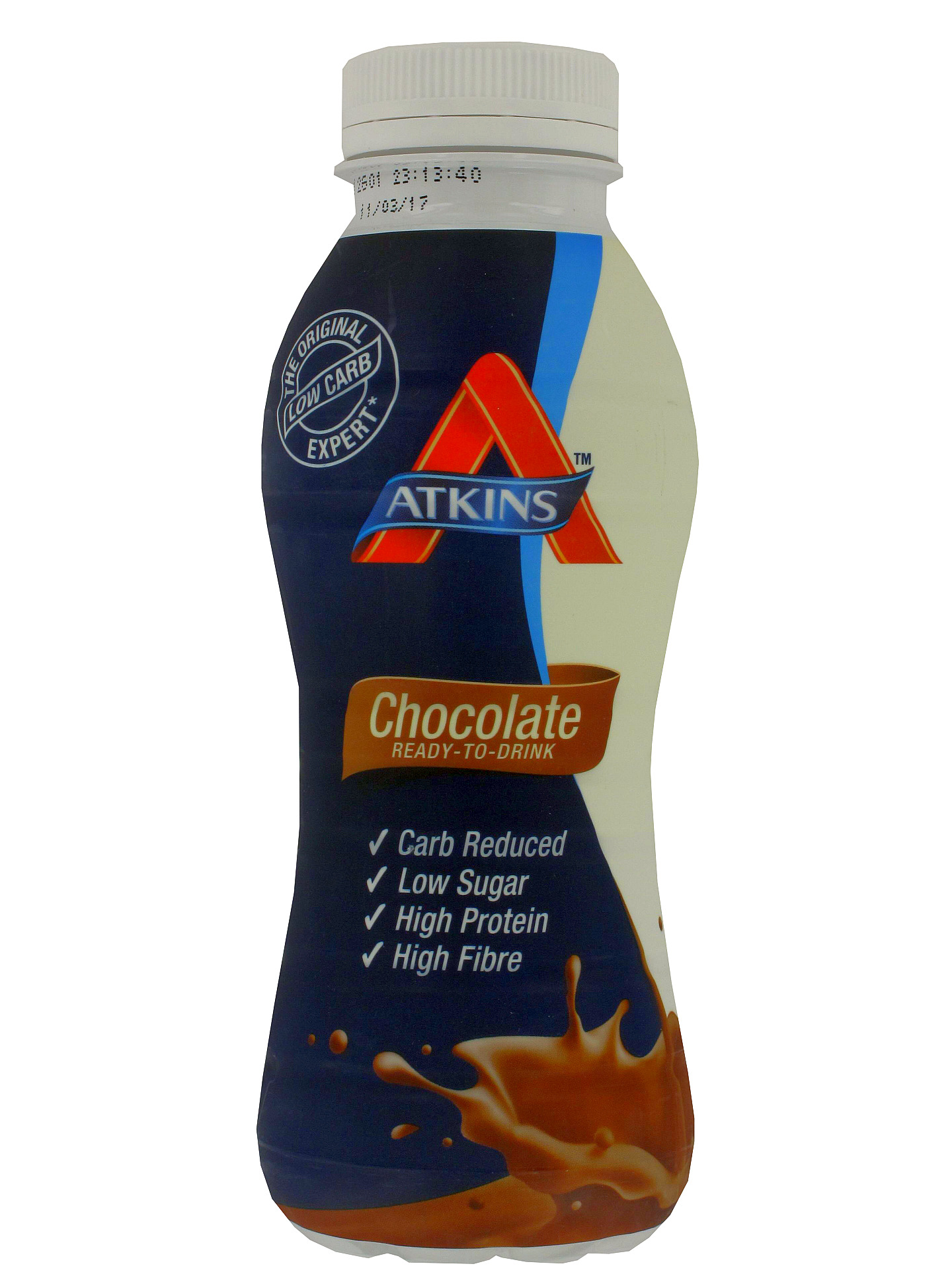
Atkins Chocolate Ready To Drink comes in a 330 ml pack. It is sold under the Atkins brand. On Mamori it sits under Beverages › Energy & Sports Drinks › Protein Shake. Its label lists 18 ingredients.
Atkins Chocolate Ready To Drink at a glance
Atkins Chocolate Ready To Drink fits Vegetarian, Pescatarian and Vegan + Dairy diets. It also carries the Gluten Free, Crustaceans Free, Egg Free, Fish Free, Peanut Free, Soy Free, Tree Nut Free, Celery Free, Mustard Free, Sesame Free, Sulfite Free, Lupin Free, Mollusks Free, Barley Free, Beef Free, Citrus Fruit Free, Fructose Free, Gelatin Free, Latex Free, No Added Sugars, Oats Free, Pork Free, Poultry Free, Rice Free, Rye Free, Seed Free and Wheat Free badges. Nutrition-wise, it's Low Carbs, Low Salt/Sodium, Low Sugars, Low Protein, Medium in Fiber, Medium in Calories and Medium Saturated Fat. Worth knowing: it's marked Non-Vegan, Non-Low FODMAP, Non-Vegan + Eggs, Contains Dairy, Contains Additives, Contains Artificial Flavourings, Contains Corn, Contains Emulsifier and Lactose.
Diet and allergens
Suitable for vegetarian and pescatarian diets.
Not suitable for a vegan diet.
Contains milk.
Free from gluten, crustaceans, eggs, fish, peanuts, soy, tree nuts, celery, mustard, sesame, sulphites, lupin and molluscs.
Based on Mamori's check of the ingredients on the label. Recipes change, so always read the pack if you have an allergy or intolerance.
Size: 330 ml
Last updated 2 November 2026
Ingredients
Water, Skimmed Milk, milk proteins, cream, Corn oil, Low-fat cocoa powder, Chicory root fiber, stabilizers, Cellulose, carboxymethylcellulose, carrageenans, sodium polyphosphate, Flavors, salt, sweeteners, Sucralose, acesulfame-k, antioxidant: ascorbyl palmitate
Additives & flavourings
Additives
- E469: Enzymatically Hydrolysed Carboxy Methyl Cellulose: Generally safe
Enzymatically hydrolysed carboxy methyl cellulose, or E469, is a modified cellulose gum. It is made from cellulose, the main structural fibre in plants, which is chemically changed and then broken down further using enzymes.
It is used as a thickener, stabiliser and emulsifier. This means it can help give foods a smooth texture, keep ingredients evenly mixed, and improve consistency in processed foods such as sauces, desserts, fillings and other prepared products.
E469 is generally considered safe at normal amounts used in food. It is authorised for use in the EU after safety assessment, and the sources checked raise no specific concern for typical dietary exposure.
- E407: Carrageenan (Thickener) (Stabiliser) (Gelling Agent): Some concerns
Carrageenan, or E407, is a thickening and gelling additive made from red seaweed. It is a large carbohydrate substance used to change the texture of foods.
It helps foods become thicker, creamier or more stable, and can also help gels form. It is often used in dairy desserts, flavoured milks, ice cream, plant-based drinks, sauces and processed meats.
It is allowed in food, but some concerns have been raised. EFSA found that people who eat a lot of foods containing carrageenan could go over the safe daily amount, so high intake is the main issue.
- E452: Polyphosphates (I) Sodium Polyphosphates (Ii) Potassium Polyphosphates (Iii) Sodium Calcium Polyphosphate (Iv) Calcium Polyphosphates (V) Ammonium Polyphosphate: Some concerns
Polyphosphates (E452) are phosphate salts, including sodium, potassium, sodium calcium, calcium and ammonium polyphosphates. They are made from phosphoric acid compounds and belong to the wider group of phosphate additives.
They help foods hold water, keep texture stable, emulsify mixtures and improve thickness. They are used in foods such as processed meat and fish products, cheese products, sauces, desserts and some bakery or potato products.
They are allowed in food, but some concerns have been raised. EFSA found that people who eat a lot of foods containing phosphate additives can exceed the safe daily amount, so exposure may be high for frequent consumers.
- E955: Sucralose (Trichlorogalactosucrose): Generally safe
Sucralose (E955), also called trichlorogalactosucrose, is an artificial high-intensity sweetener. It is made by chemically modifying sugar, which makes it taste very sweet while adding little or no energy in the small amounts used.
It is used to sweeten foods and drinks without using much sugar. You may find it in low-sugar or sugar-free drinks, desserts, yoghurts, chewing gum, tabletop sweeteners, and some special diet foods.
Sucralose is generally considered safe at normal amounts. It is authorised for use in the EU after safety assessment, and the sources checked raise no concern for typical food use.
- E950: Acesulfame K: Generally safe
Acesulfame K, also called acesulfame potassium or E950, is an artificial sweetener. It is a potassium salt of a synthetic sweet-tasting compound and is much sweeter than sugar, so only small amounts are used.
It is used to sweeten foods and drinks without adding much energy. It is often found in sugar-free or reduced-sugar soft drinks, desserts, chewing gum, tabletop sweeteners and some special dietary foods.
It is generally considered safe at normal amounts. It is authorised for use in the EU after safety assessment, and the sources checked raise no concern when it is used within permitted limits.
- E304: Fatty Acid Esters Of Ascorbic Acid (Ascorbyl Palmitate): Generally safe
Fatty acid esters of ascorbic acid (E304) are antioxidants made by combining vitamin C, also called ascorbic acid, with fatty acids such as palmitic or stearic acid. The fatty acids can come from plant or animal sources.
They help protect fats and oils from oxidation, which can cause rancid flavours and colour changes. They are used in foods where fat stability matters, such as oils, fat spreads, snacks, bakery products and some processed foods.
E304 is generally considered safe at normal food amounts. It is authorised for use in the EU after safety assessment, and the sources checked raise no specific concern for typical dietary exposure.
Flavourings
- Flavors: Flavouring (Regulation (EC) No 1334/2008 on flavourings, Article 16).
Questions and answers
Is Atkins Chocolate Ready To Drink vegan?
No. It contains milk, so it is not suitable for a vegan diet.
Is Atkins Chocolate Ready To Drink vegetarian?
Yes. It is suitable for a vegetarian diet.
Is Atkins Chocolate Ready To Drink suitable for a pescatarian diet?
Yes. It is suitable for a pescatarian diet.
Is Atkins Chocolate Ready To Drink suitable for a Low FODMAP diet?
No. It is not suitable for a Low FODMAP diet.
Is Atkins Chocolate Ready To Drink suitable for a Vegan + Dairy diet?
Yes. It is suitable for a Vegan + Dairy diet.
Is Atkins Chocolate Ready To Drink suitable for a Vegan + Eggs diet?
No. It is not suitable for a Vegan + Eggs diet.
Is Atkins Chocolate Ready To Drink gluten-free?
Yes. Its ingredients include no gluten, and its label gives no gluten warning.
Does Atkins Chocolate Ready To Drink contain milk?
Yes. It contains milk.
Is Atkins Chocolate Ready To Drink nut-free?
Yes. Its ingredients include no peanuts or tree nuts, and its label gives no nut warning.
Does Atkins Chocolate Ready To Drink contain eggs?
No. Its ingredients include no eggs, and its label gives no egg warning.
Which allergens does Atkins Chocolate Ready To Drink contain?
It contains milk.
More in Protein Shake
- Protein Chocomelk
- HERBALIFE NUTRITION TRI BLEND Select Protein shake mix Banana flavor
- HERBALIFE NUTRITION TRI BLEND Select Protein shake mix Banana flavor
- HERBALIFE NUTRITION TRI BLEND Select Protein shake mix Banana flavor
- Milbona High Protein Drink Cacao
- Arla Food To Go Chocolate Caramel Protein
- Arla protein Food to go
- Optisana Sports Protein Clear Drink Lidl
- Land PROTEIN+ Strawberry and Lemon
- Milbona High Protein Drink Vanilla Flavor
- Pure Protein Complete Protein Shake Chocolate Peanut Butter
- Applied Nutrition High Protein Shake Fudge Brownie