
Levissima Water 75 cl
On the pack: Acqua Levissima Water
Levissima
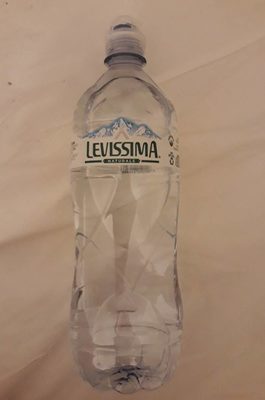
Levissima Water comes in a 75 cl pack. It is sold under the Levissima brand. On Mamori it sits under Beverages › Water › Water Still. Its label lists 32 ingredients.
Levissima Water at a glance
Levissima Water fits Vegetarian, Pescatarian and Vegan + Eggs diets. It also carries the Crustaceans Free, Egg Free, Fish Free, Peanut Free, Dairy Free, Tree Nut Free, Celery Free, Mustard Free, Sesame Free, Sulfite Free, Lupin Free, Mollusks Free, Beef Free, Gelatin Free, Lactose Free, Latex Free, No Added Sugars, Oats Free, Pork Free, Rye Free and Wheat Free badges. Nutrition-wise, it's Low Calorie, Low Carbs, Low Salt/Sodium, Low Saturated Fat, Low Sugars, Low Fiber and Low Protein. Worth knowing: it's marked Non-Vegan, Non-Low FODMAP, Non-Vegan + Dairy, Contains Additives, Contains Artificial Flavourings, Contains Barley, Contains Citrus Fruit, Contains Corn, Contains Emulsifier, Contains Fructose, Contains Poultry, Contains Rice and Contains Seed.
Diet and allergens
Suitable for vegetarian and pescatarian diets.
Not suitable for a vegan diet.
Free from crustaceans, eggs, fish, peanuts, milk, tree nuts, celery, mustard, sesame, sulphites, lupin and molluscs.
Based on Mamori's check of the ingredients on the label. Recipes change, so always read the pack if you have an allergy or intolerance.
Size: 75 cl
Last updated 26 October 2026
Ingredients
ammonium chloride, amyris balsamifera bark oil, aqua, avena strigosa seed extract, biotin, cananga odorata flower oil, chamomilla recutita flower oil, citric acid, citrus aurantium bergamia fruit oil, cocamidopropyl betaine, coco-glucoside, cymbopogon martini oil, decy glucoside, disodium cocoyl glutamate, geraniol, glycerin, hydroxypropyltrimonium hydrolyzed corn starch, lecithin, linalool, mentha piperita oil, panthenol, phenoxyethanol, pimpinella anisum fruit oil, pogostemon cablin oil, potassium sorbate, rosa damascena extract, santalum album oil, sodium coco-sulfate, sodium cocoyl glutamate, sodium sulfate, tetrasodium glutamate diacetate, vanilla planifolia fruit extract
Additives
- E510: Ammonium Chloride, Ammonia Solution (Acidity Regulator): Generally safe
Ammonium chloride, often linked with E510, is a simple ammonium salt made from ammonia and hydrochloric acid. In EU law, ammonium chloride is not classed as a food additive; it is treated as a food ingredient instead.
It can affect acidity and can also help reduce clumping in some dry mixtures. It is best known in food as the salty, sharp-tasting ingredient used in some liquorice and confectionery.
It is generally considered safe when used in normal food amounts. The main regulatory point is that, in the EU, it is not authorised as an additive because it is not legally treated as one.
- E330: Citric Acid: Generally safe
Citric acid (E330) is a natural organic acid found in citrus fruits and many other plants. The citric acid used in food is usually made by fermentation of sugars using micro-organisms.
It is used as an acidity regulator and antioxidant. It helps give a sharp, sour taste, control pH, and slow colour or flavour changes. It is common in soft drinks, sweets, jams, sauces, canned foods, and many processed foods.
Citric acid is generally considered safe at normal food levels. It is allowed in food in the EU after safety assessment, and the sources checked raise no concern for typical dietary amounts.
- E946: Octafluorocyclobutane: Not allowed in the EU (Regulation (EC) No 1333/2008, Article 4(1) and Annex II)
Octafluorocyclobutane, E946, is a fluorinated gas made from carbon and fluorine. It is a synthetic substance and is listed as a food additive mainly because of its use as a gas in food processing or packaging.
In food, gases like E946 can be used to help displace air, protect products from oxygen, or create pressure in certain packaging or dispensing systems. It is not a sweetener in the usual sense and is not used to add flavour or nutrition.
E946 is allowed in the EU within set limits. Its safety status should be viewed neutrally: it is permitted only for specific uses, and levels must comply with food additive rules.
- E960: Steviol Glycosides: Some concerns
Steviol glycosides, E960, are intensely sweet substances extracted from the leaves of the stevia plant. They are used as low-calorie sweeteners and are much sweeter than sugar, so only small amounts are needed.
They are found in foods and drinks such as soft drinks, flavoured dairy products, desserts, confectionery, tabletop sweeteners and some reduced-sugar products. Their main role is to add sweetness without adding much energy.
E960 is allowed in food, but some concerns have been raised. EFSA found that people who consume a lot of products sweetened with steviol glycosides could exceed the safe daily amount.
- E489: Methyl Glucoside-Coconut Oil Ester: Not allowed in the EU (Regulation (EC) No 1333/2008, Article 4(1) and Annex II)
Methyl glucoside-coconut oil ester, E489, is an emulsifier made by reacting methyl glucoside, a sugar-derived compound, with fatty acids from coconut oil. It is a surfactant, meaning it helps oily and watery ingredients mix.
In food, it can help stabilise emulsions, improve texture, and stop ingredients from separating. Additives with this function may be used in products such as sauces, dressings, desserts, fillings, or other processed foods where a smooth, stable texture is needed.
E489 is allowed in the EU within set limits. It is not rated here, so its safety is best described neutrally rather than as high or low concern.
- E422: Glycerol (Emulsifier): Generally safe
Glycerol, or E422, is a clear, sweet-tasting liquid also known as glycerine. It is a type of sugar alcohol and can be made from vegetable oils, animal fats, or produced synthetically.
In food, it helps keep moisture in, thickens texture, stabilises mixtures, and can help emulsions stay smooth. It is used in a range of foods where softness, moisture retention, or smooth texture is needed, such as confectionery, baked goods, icings, and some drinks.
Glycerol is generally considered safe at normal food amounts. It is allowed in food in the EU after safety assessment, and the sources checked raise no concern for typical use.
- E322: Lecithins: Generally safe
Lecithins (E322) are a group of natural fatty substances found in plants and animals. Food-grade lecithin is usually made from soya, sunflower, rapeseed or egg, and in some cases may be animal derived.
They are mainly used as emulsifiers, helping oil and water mix and keeping textures smooth. They are found in foods such as chocolate, spreads, baked goods, sauces, margarines and instant powders.
Lecithins are generally considered safe at normal food amounts and are allowed in the EU after safety assessment. People with relevant allergies should note the source, especially soya or egg.
- E231: Orthophenyl Phenol: Not allowed in the EU (Regulation (EC) No 1333/2008, Article 4(1) and Annex II)
Orthophenyl phenol, or E231, is a synthetic phenolic compound used as a preservative. It is related to phenol-based substances and is valued for its ability to slow the growth of moulds and fungi.
In food use, E231 has mainly been used as a surface treatment for citrus fruits to help prevent mould during storage and transport. It may be applied to the peel rather than mixed into the food itself.
Its safety is controlled by regulation, and it is allowed in the EU within set limits for approved uses. As with other preservatives, these limits are set to keep exposure within accepted safety margins.
- E202: Potassium Sorbate: Some concerns
Potassium sorbate (E202) is the potassium salt of sorbic acid. It is a preservative used to slow the growth of moulds and yeasts in food and drink.
It is often used in products where spoilage by yeasts or moulds is a concern, such as sauces, bakery fillings, cheese products, fruit preparations, drinks and some processed foods.
It is allowed in food, but some concerns have been raised. EFSA found that people who eat a lot of foods containing sorbates could go over the safe daily amount, so overall exposure is the main issue.
- E539: Sodium Thiosulfate: Not allowed in the EU (Regulation (EC) No 1333/2008, Article 4(1) and Annex II)
Sodium thiosulfate, E539, is an inorganic sodium salt. It is a sulphur-containing compound and is used in small amounts as a food additive.
In food, it can act as an acidity regulator and anti-caking agent, helping control acidity or keep powdered ingredients flowing freely. It may be used where these functions are needed, especially in some dry or processed foods.
E539 is allowed in the EU within set limits. It is not currently rated here, so this should be read as neutral information rather than a positive or negative safety judgement.
- E514: Sodium Sulfates (I) Sodium Sulfate (Ii) Sodium Bisulfate: Generally safe
Sodium sulphates (E514) are mineral salts of sulphuric acid, mainly sodium sulphate and sodium bisulphate. They are inorganic compounds used in small amounts in food.
They help control acidity and can also act as anti-caking agents, helping powders stay free-flowing. They may be used in foods where acidity control or dry powder handling is needed, such as some processed foods and powdered mixes.
E514 is generally considered safe at normal food-use levels. It is allowed in the EU after safety assessment, and the sources checked raise no concern for typical amounts in food.
- E621: monosodium glutamate: Some concerns
Monosodium glutamate, or MSG (E621), is the sodium salt of glutamic acid, an amino acid found naturally in many foods. It is made as a purified flavour enhancer.
It boosts savoury “umami” taste and is used in foods such as soups, sauces, seasonings, savoury snacks, ready meals and processed meat or vegetable dishes.
It is allowed in food, but some concerns have been raised. EFSA found that people who eat a lot of foods containing glutamates can go over the safe daily amount, so exposure may be high for frequent consumers.
Questions and answers
Is Levissima Water vegan?
No. It is not suitable for a vegan diet.
Is Levissima Water vegetarian?
Yes. It is suitable for a vegetarian diet.
Is Levissima Water suitable for a pescatarian diet?
Yes. It is suitable for a pescatarian diet.
Is Levissima Water suitable for a Low FODMAP diet?
No. It is not suitable for a Low FODMAP diet.
Is Levissima Water suitable for a Vegan + Dairy diet?
No. It is not suitable for a Vegan + Dairy diet.
Is Levissima Water suitable for a Vegan + Eggs diet?
Yes. It is suitable for a Vegan + Eggs diet.
Does Levissima Water contain milk?
No. Its ingredients include no milk, and its label gives no milk warning.
Is Levissima Water nut-free?
Yes. Its ingredients include no peanuts or tree nuts, and its label gives no nut warning.
Does Levissima Water contain eggs?
No. Its ingredients include no eggs, and its label gives no egg warning.
More in Water Still
- blues Acqua minerale naturale
- Kirkland Water
- sidi ali Natural mineral water
- Volvic Water
- Perfectly Clear Still Summerfruits Spring Water
- Nestlé mineral water
- Uliveto Natural mineral water
- Danone EVIAN RECYCLED PLASTIC R
- Nestlé mineral water
- ACTiPH Alkaline Ionised Water Actiph Water Ph9+
- Cristaline Spring Water
- Nestlé San Pellegrino Sparkling Water