
Herbalife Aberlour 12-year Old Malt Whisky Double Cask Matured
Herbalife
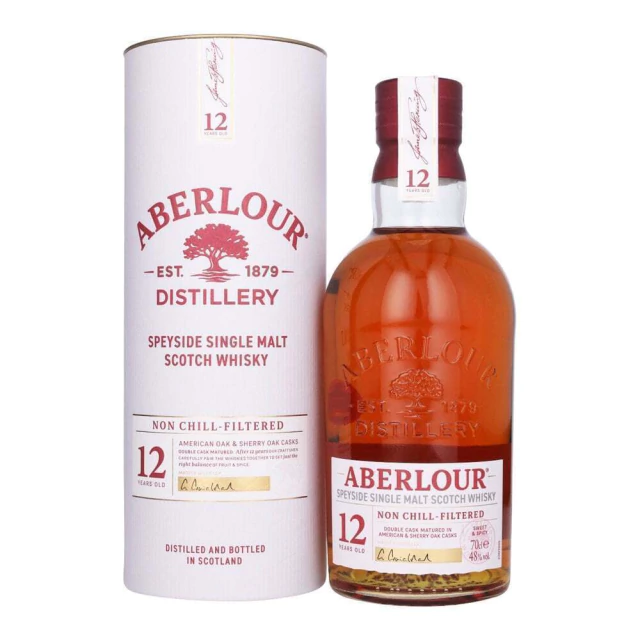
Herbalife Aberlour 12-year Old Malt Whisky Double Cask Matured is listed on Mamori. It is sold under the Herbalife brand. On Mamori it sits under Alcoholic Beverages › Spirits › Whiskey. Its label lists 43 ingredients.
Herbalife Aberlour 12-year Old Malt Whisky Double Cask Matured at a glance
Herbalife Aberlour 12-year Old Malt Whisky Double Cask Matured fits a Vegan + Eggs diet. It also carries the Gluten Free, Crustaceans Free, Egg Free, Fish Free, Peanut Free, Dairy Free, Tree Nut Free, Celery Free, Mustard Free, Sesame Free, Sulfite Free, Lupin Free, Mollusks Free, Barley Free, Beef Free, Citrus Fruit Free, Gelatin Free, Lactose Free, Pork Free, Poultry Free, Rice Free, Rye Free and Wheat Free badges. Nutrition-wise, it's High Fiber, High Protein, High Calorie, High Carbs, High Salt/Sodium, High in Sugars and Medium Saturated Fat. Worth knowing: it's marked Non-Vegan, Non-Vegetarian, Non-Pescatarian, Non-Low FODMAP, Non-Vegan + Dairy, Contains Soy, Contains Additives, Contains Artificial Flavourings, Contains Corn, Contains Emulsifier, Contains Fructose, Contains Latex, Contains Added Sugars, Contains Oats and Contains Seed.
Diet and allergens
Not suitable for vegan, vegetarian or pescatarian diets.
Contains soy.
Free from gluten, crustaceans, eggs, fish, peanuts, milk, tree nuts, celery, mustard, sesame, sulphites, lupin and molluscs.
Based on Mamori's check of the ingredients on the label. Recipes change, so always read the pack if you have an allergy or intolerance.
Last updated 2 November 2026
Ingredients
soy protein isolate, fructose, inulin, oat fiber, soybean oil, flavors, mineral blend, calcium citrate, magnesium oxide, ferrous fumarate, sodium selenite, zinc oxide, manganese carbonate, chromium chloride: III, potassium iodide, copper citrate, potassium phosphate, emulsifier: soy lecithin, thickeners, xanthan gum, carrageenan, guar gum, pectin, coloring: beet red, vitamin blend, L-ascorbic acid, DL-alpha-tocopheryl acetate, beta-carotene, nicotinamide, D-calcium pantothenate, D-biotin, cholecalciferol, pyridoxine hydrochloride, thiamine hydrochloride, cyanocobalamin, pteroylmonoglutamic acid, riboflavin, sodium chloride, anti-caking agent: silicon dioxide, papaya powder, parsley powder, blueberry juice powder, pomegranate juice powder
Additives & flavourings
Additives
- E333: Calcium Citrates (I) Monocalcium Citrate (Ii) Dicalcium Citrate (Iii) Calcium Citrate (Tricalcium Citrate): Generally safe
Calcium citrates (E333) are calcium salts of citric acid. They include mono-, di- and tricalcium citrate, and are made by combining citric acid with calcium compounds.
They are used as acidity regulators, to help control sourness and pH, and can also support antioxidant effects by binding minerals that speed up spoilage. They may be used in drinks, dairy products, jams, confectionery and other processed foods where acidity control is needed.
Calcium citrates are generally considered safe at normal food amounts. They are authorised for use in the EU after safety assessment, and the sources checked raise no concern for typical dietary exposure.
- E530: Magnesium Oxide (Acidity Regulator): Generally safe
Magnesium oxide (E530) is a mineral compound made from magnesium and oxygen. It is a white, powdery substance and is used in food as an acidity regulator and anti-caking agent.
It helps control acidity and keeps powders free-flowing by reducing clumping. It may be used in powdered foods and ingredients where moisture can cause caking, such as dry mixes or seasonings.
Magnesium oxide is generally considered safe at normal food-use amounts. It is authorised for use in the EU after safety assessment, and the sources checked raise no specific concern for typical dietary exposure.
- E509: Calcium Chloride (Sequestrant): Some concerns
Calcium chloride (E509) is a salt made from calcium and chloride. In food, it is used as an acidity regulator, firming agent, stabiliser, and anti-caking agent.
It can help keep fruit and vegetables firm, support cheese making, improve texture in tofu, and prevent powders or salts from clumping. It may also be used where control of acidity or mineral balance is needed.
It is allowed for use in food, but some concerns have been raised about high intakes. EFSA found that people who consume a lot of foods containing calcium chloride could exceed the safe daily amount.
- E344: Lecithin Citrate: Not allowed in the EU (Regulation (EC) No 1333/2008, Article 4(1) and Annex II)
Lecithin citrate (E344) is a modified form of lecithin, a fatty substance usually obtained from plant oils such as soya or sunflower. It is combined with citric acid, the same acid found naturally in citrus fruits.
In food, it can help slow oxidation, which means it helps protect fats and oils from going rancid. It may also help mixtures of oil and water stay evenly blended, so it is used where these technical functions are needed.
Its safety is not rated here. It is allowed in the EU within set limits, meaning its use is controlled by food additive rules.
- E340: Potassium Phosphates (I) Monopotassium Phosphate (Ii) Dipotassium Phosphate (Iii) Tripotassium Phosphate: Some concerns
Potassium phosphates (E340) are potassium salts of phosphoric acid. The group includes monopotassium phosphate, dipotassium phosphate and tripotassium phosphate. They are mineral-based phosphates used as acidity regulators and antioxidant-related stabilisers.
In food, E340 helps control acidity, stabilise mixtures, bind water and support texture. It may be used in processed meats, processed cheese, bakery products, powdered drinks, desserts and other processed foods where phosphate salts are useful.
E340 is allowed in food, but some concerns have been raised. EFSA found that people who eat many foods containing added phosphates can exceed the safe daily amount, and phosphate intake is a particular concern for people with kidney disease.
- E415: Xanthan Gum (Thickener): Generally safe
Xanthan gum (E415) is a thickening and stabilising gum made by fermenting sugars with the bacterium Xanthomonas campestris, then purifying and drying the resulting substance.
It helps foods hold water, thicken, and keep ingredients evenly mixed. It is often used in sauces, dressings, desserts, bakery products, gluten-free foods, and drinks where a smooth or stable texture is needed.
Xanthan gum is generally considered safe. It is allowed in food in the EU after EFSA assessment, and the sources checked do not raise concerns at normal amounts used in foods.
- E407: Carrageenan (Thickener) (Stabiliser) (Gelling Agent): Some concerns
Carrageenan, or E407, is a thickening and gelling additive made from red seaweed. It is a large carbohydrate substance used to change the texture of foods.
It helps foods become thicker, creamier or more stable, and can also help gels form. It is often used in dairy desserts, flavoured milks, ice cream, plant-based drinks, sauces and processed meats.
It is allowed in food, but some concerns have been raised. EFSA found that people who eat a lot of foods containing carrageenan could go over the safe daily amount, so high intake is the main issue.
- E412: Guar Gum (Thickener): Generally safe
Guar gum (E412) is a thickening fibre made from the seeds of the guar plant, a type of legume. It is a natural polysaccharide, meaning a long-chain carbohydrate that absorbs water easily.
It is used to thicken, stabilise or improve texture in foods such as sauces, dressings, dairy products, ice cream, gluten-free baked goods and processed foods. It can also help stop ingredients from separating.
Guar gum is generally considered safe at normal food amounts. It is allowed in food in the EU after safety assessment, and the sources checked raise no concern for typical use.
- E440: Pectins (I) Pectin (Ii) Amidated Pectin: Generally safe
Pectins (E440) are natural gelling fibres found in the cell walls of fruits and vegetables, especially apples and citrus peel. E440 includes ordinary pectin and amidated pectin, a modified form that gels more easily in some foods.
They are used as thickeners, stabilisers and gelling agents. You may find them in jams, jellies, fruit spreads, desserts, confectionery, yoghurts and some drinks or sauces where a thicker texture is needed.
Pectins are generally considered safe. They are authorised for use in food in the EU after safety assessment, and the sources checked raise no concern at normal food amounts.
- E300: Ascorbic Acid (Vitamin C): Generally safe
Ascorbic acid (E300) is vitamin C, a water-soluble substance found naturally in many fruits and vegetables. As a food additive, it is usually made by controlled industrial production and used in purified form.
It helps prevent oxidation, which can stop foods from browning or developing off-flavours. It can also adjust acidity. It is used in a range of foods, especially fruit products, drinks, bakery products, meat products and foods where colour or freshness needs protecting.
It is generally considered safe at normal food amounts. It is authorised for use in the EU after safety assessment, and EFSA’s re-evaluation did not raise concern for its use as a food additive.
- E160a: Carotenes: Generally safe
Carotenes (E160a) are orange-yellow colourants, including alpha-carotene, beta-carotene and gamma-carotene. They are pigments found naturally in plants such as carrots and leafy greens, and can also be made synthetically or obtained from natural sources. Some forms may be animal derived.
They are used to add or restore yellow to orange colour in foods. They may be found in products such as margarines, dairy products, desserts, sauces, drinks and confectionery.
E160a is allowed in food in the EU after safety assessment. It is generally considered safe at normal food amounts, and the sources checked raise no concern for typical use.
- E551: Silicon Dioxide (Silica): Generally safe
Silicon dioxide (E551), also called silica, is a naturally occurring mineral substance made of silicon and oxygen. It is found in rocks, sand and many plants, and the food additive form is a fine, inert powder.
In food, it is mainly used as an anti-caking agent to help powders and granules flow freely. It may be found in products such as powdered seasonings, salt substitutes, dried soups, instant drinks and food supplement powders.
It is generally considered safe at normal food-use levels. It is authorised for use in the EU after safety assessment, and the sources checked raise no concern at typical amounts.
Flavourings
- flavors: Flavouring (Regulation (EC) No 1334/2008 on flavourings, Article 16).
Questions and answers
Is Herbalife Aberlour 12-year Old Malt Whisky Double Cask Matured vegan?
No. It is not suitable for a vegan diet.
Is Herbalife Aberlour 12-year Old Malt Whisky Double Cask Matured vegetarian?
No. It is not suitable for a vegetarian diet.
Is Herbalife Aberlour 12-year Old Malt Whisky Double Cask Matured suitable for a pescatarian diet?
No. It is not suitable for a pescatarian diet.
Is Herbalife Aberlour 12-year Old Malt Whisky Double Cask Matured suitable for a Low FODMAP diet?
No. It is not suitable for a Low FODMAP diet.
Is Herbalife Aberlour 12-year Old Malt Whisky Double Cask Matured suitable for a Vegan + Dairy diet?
No. It is not suitable for a Vegan + Dairy diet.
Is Herbalife Aberlour 12-year Old Malt Whisky Double Cask Matured suitable for a Vegan + Eggs diet?
Yes. It is suitable for a Vegan + Eggs diet.
Is Herbalife Aberlour 12-year Old Malt Whisky Double Cask Matured gluten-free?
Yes. Its ingredients include no gluten, and its label gives no gluten warning.
Does Herbalife Aberlour 12-year Old Malt Whisky Double Cask Matured contain milk?
No. Its ingredients include no milk, and its label gives no milk warning.
Is Herbalife Aberlour 12-year Old Malt Whisky Double Cask Matured nut-free?
Yes. Its ingredients include no peanuts or tree nuts, and its label gives no nut warning.
Does Herbalife Aberlour 12-year Old Malt Whisky Double Cask Matured contain eggs?
No. Its ingredients include no eggs, and its label gives no egg warning.
Which allergens does Herbalife Aberlour 12-year Old Malt Whisky Double Cask Matured contain?
It contains soy.
More in Whiskey
- Suntory Toki Blended Japanese Whisky
- Jim Beam Bourbon Whisky
- Big Peat Scotch Whisky
- Anthon Berg Single Malts Scotch Collection
- Talisker Storm
- Monkey Shoulder Blended Malt Scotch Whisky
- TULLAMORE DEW COMPANY Tullamore Dew Irish Whiskey
- Heidrun Jack Daniels Honey
- Akashi Japanese Blended Whisky
- J&B Scotch Whiskey
- THE FAMOUS GROUSE Famous Grouse Scotch Whisky
- Bell's Blended Scotch Whisky